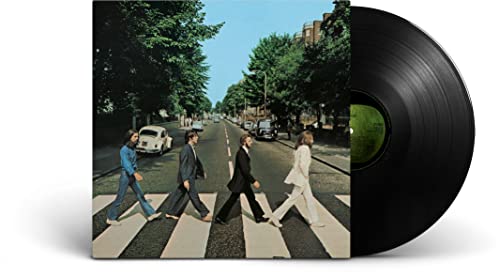
Abbey Road is one of those records I can put on almost too often, because it tells me immediately whether a system has its act together. On a good setup, the presentation feels clean, wide, and very controlled, with that famous Beatles polish coming through without everything sounding brittle or overcooked.
What I always notice first is how much separation there is in the mix. The vocals sit in their own space, the guitars have bite without turning harsh, and the low end stays tight instead of smearing across the room. It’s the kind of album that rewards a turntable and cartridge combo that can keep detail intact without getting shouty.
I also like how the record handles dynamics. Quiet passages feel genuinely quiet, then the bigger moments open up with a nice sense of lift, which makes the whole side-to-side journey feel more alive than a lot of classic rock pressings do.
02Pressing and Surface Noise
This is the sort of album where pressing quality really matters, because there’s so much space around the instruments that any noise sticks out. When Abbey Road is pressed well, the background stays out of the way and the music gets to do its thing without me constantly noticing the record itself.
I’ve found that a clean copy makes a huge difference here. If there’s any crackle, groove wear, or off-center wobble, it tends to pull me out of the experience faster than on a denser, more aggressive record.
That’s why I’d call this a very revealing listen. It doesn’t flatter a rough setup, but it does reward a quiet pressing and a properly dialed-in stylus with a presentation that feels smooth and relaxed.
03Track Flow and Album Experience
Abbey Road works best as a full album, not as a pile of individual tracks, and I think that matters a lot for how I judge it. The sequencing has real momentum, and the transitions make me want to keep the record spinning instead of skipping around.
Side two especially still feels like a proper event. It has that long-form, almost suite-like feel that makes the whole record bigger than the sum of its parts, and on vinyl it has a natural pacing that digital playback sometimes flattens out.
For me, that makes it a great test record for a system’s musical flow. If my setup can keep me engaged through the whole thing without sounding mechanical or clinical, it’s doing something right.
04How It Exposes Your Setup
This album is forgiving in some ways and brutally honest in others. A warm system can make it sound rich and inviting, but if the treble is too forward or the alignment is off, the upper mids can get a little edgy and the whole thing loses that easy Beatles glow.
I also hear cartridge quality pretty clearly on this one. Better tracking keeps the complex passages from getting congested, while a weaker setup can make the dense sections feel crowded and slightly hard around the edges.
That’s part of why I like using Abbey Road as a reference listen in the real world. It’s familiar enough that I know when something feels off, but musical enough that I’m not just listening for faults.
I’d recommend Abbey Road to pretty much anyone building a serious vinyl library, but especially to listeners who care about soundstage, tonal balance, and album flow. It’s a record that feels at home on a modest system, but it really comes alive when the setup is quiet, well-aligned, and capable of good separation.
If your system leans bright, this one can let you know pretty fast. If it leans smooth and controlled, though, Abbey Road tends to sound effortless in a way that makes me want to keep coming back to it.
For me, that’s the real appeal: it’s iconic, yes, but it’s also just a genuinely satisfying vinyl listen. I never feel like I’m spinning it only because I “should”; I spin it because it still sounds like a record worth hearing.