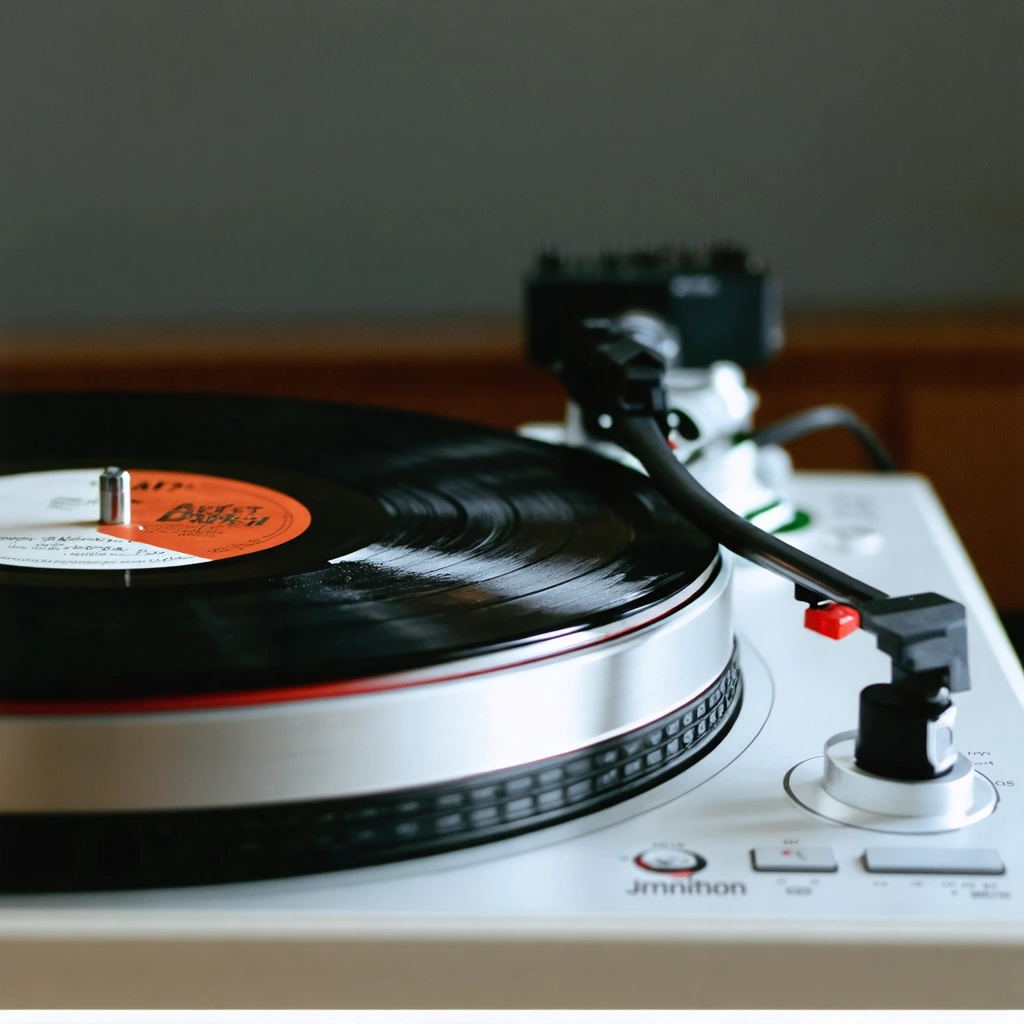
The ART DJPREII does the one thing a phono preamp absolutely has to do: it gets the signal into usable shape without making a mess of it. In my room, it sounded clean, a little matter-of-fact, and surprisingly quiet for something this basic, which is really what I want from a box like this.
I wouldn’t call it lush or especially flattering, though. It doesn’t add much warmth or polish of its own, so if your cartridge already leans bright or thin, you’ll hear that pretty clearly.
What I do like is that it stays out of the way. Records keep their shape, bass doesn’t turn to mush, and vocals come through with enough clarity that I never felt like I was fighting the preamp to hear what was on the record.
02Gain Control and Cartridge Matching
The front-panel gain control is the real reason this thing earns a spot on so many starter and backup setups. Being able to nudge the level to match different cartridges is genuinely useful, especially if you’ve got a system that isn’t perfectly matched on paper.
In practice, it makes the DJPREII a lot more forgiving than the usual fixed-gain budget phono stage. I could dial things in by ear instead of crossing my fingers and hoping the rest of the system would sort it out.
I also appreciate that it’s not trying to be clever about it. The control is simple, easy to understand, and it gives the preamp a flexibility that most bare-bones units in this category just don’t have.
03Build and Everyday Handling
This is not a boutique-looking piece of hi-fi jewelry, and I’m fine with that. The ART DJPREII feels practical first, with a small metal case that does the job and doesn’t pretend to be more glamorous than it is.
It’s light, compact, and easy to tuck behind a turntable or on a crowded shelf, which matters more than people admit. I’ve used enough tiny phono stages to know that a box this size can either disappear into a setup or become a cable-management headache, and this one mostly disappears.
The controls and connections are straightforward, and that makes it easy to live with. I never had to babysit it, and it behaved like the kind of component you install once and then forget about until you need it.
04Setup and Noise Performance
Setup is about as painless as phono gear gets. Plug in the turntable, run the output to your amp or powered speakers, set the gain where it makes sense, and you’re basically done.
Noise performance is important here because a phono preamp can ruin the whole experience if it hums or hisses too much. The DJPREII stayed respectable in my setup, and while it’s not dead silent in the way pricier stages can be, it didn’t call attention to itself.
That’s the key thing with this unit: it doesn’t make me work for decent playback. If your grounding and cabling are sorted, it gets out of the way and lets the records do their thing.
I think this is best for someone who wants a straightforward phono preamp that solves a real problem without turning into a project. It’s especially appealing if you’re running a budget or midrange turntable and need something flexible enough to play nicely with different cartridges and systems.
It also makes sense as a backup or utility preamp, because it’s the kind of box you can keep around and trust when you need it. I’d rather have this on hand than a prettier unit that does less and gives me fewer options.
If you’re chasing a more romantic, richly voiced sound, this probably won’t be your endgame. But if you want a sensible, adjustable, no-nonsense phono stage that does its job without drama, the DJPREII fits that brief very well.