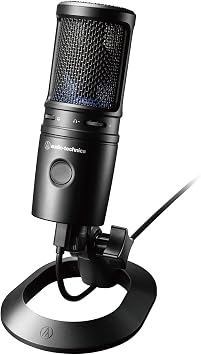
Specs that matter in practice
| Spec |
What you get |
Why it matters |
| Connection type |
USB-C connectivity |
Fast, simple computer hookup without an audio interface |
| Polar pattern |
Cardioid polar pattern |
Favors sound from the front, useful for solo voice work |
| Monitoring |
Headphone monitoring jack |
Lets you hear yourself in real time while recording |
| Controls |
Mute control |
Handy for streaming, calls, and quick live sessions |
| Mounting basics |
Desktop stand compatibility, boom arm mounting |
Usable out of the box, better with an arm |
| Ideal use case |
Spoken audio |
Best for podcasting, commentary, voiceovers, and streaming |
If you see “cardioid condenser” and your eyes glaze over, here’s the plain-English version: it’s built to focus on your voice from the front, but it still hears more room detail than a dynamic mic.
Against the older AT2020USB+, the newer model brings more modern convenience. Against a basic XLR chain, it gives up upgrade flexibility but wins on desk simplicity.
Do you need this for vinyl content?
You need a mic like this if you’re making spoken content around records: podcasting about albums, adding intros to digitized uploads, filming setup videos, livestreaming commentary, or recording voiceovers for collection tours.
You don't need it to capture the turntable audio path itself. It won't replace a phono preamp, and it won't fix poor playback from your deck.
That confusion comes up a lot, so here’s the clean version: a phono preamp is for the turntable signal chain, not for a USB microphone. If you’re unsure where that box fits, start with our guide on what a phono preamp does and then check the turntable setup guide.
If you’re narrating a record-cleaning tutorial in Audacity or GarageBand, this mic helps. If you’re transferring the sound of the record itself, you still need the right turntable output path. If you're still sorting out your signal chain, our guide to turntable speakers can help clarify what belongs in playback versus recording.
AT2020USB-X vs older and alternative setups
| Option |
Best at |
Main weakness |
Best buyer |
| AT2020USB-X |
Clean voice and easy setup |
More room sensitivity |
Quiet-room creator who wants plug and play |
| AT2020USB+ |
Older used-value option |
Less modern convenience |
Bargain buyer who finds a good price |
| Dynamic USB mic like Samson Q2U |
Rough-room tolerance |
Less airy detail |
Noisy-room podcaster or streamer |
| XLR condenser plus audio interface |
Upgrade path and flexibility |
More cost and clutter |
Buyer building a long-term studio chain |
Choose this one if you want cleaner spoken audio, less desk clutter, and fewer setup headaches. If your room is rough, or you want a modular studio path, one of the alternatives makes more sense.