01Sound Quality and Voice Capture
What I like most about the AT2020USB-X is that it sounds like a proper studio-style USB mic, not a cheap computer accessory pretending to be one. My voice came through with a clean, focused character that made spoken-word stuff feel polished without sounding weirdly processed.
It has that honest condenser-mic thing going on, so it picks up detail in a way that immediately makes your room matter. In a quiet setup, that works in its favor; in a messy room, it will absolutely let you hear the desk, the keyboard, and the space around you.
I wouldn’t call it flattering in a soft, “radio host” way, but I do think it’s clear and dependable. For podcasting, voiceovers, streaming, or just making your voice sound more finished on a call, it does the job with very little fuss.
02Build and Desk Presence
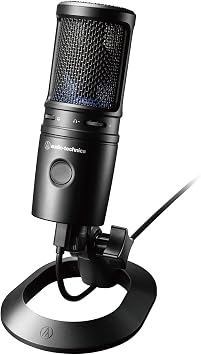
The AT2020USB-X feels like gear, not gadgetry. It has a solid, no-nonsense presence on the desk, and I never got the sense that I was dealing with something fragile or disposable.
The overall design is clean and practical, which I appreciate more than flashy RGB nonsense or overdesigned gamer styling. It looks like something you can leave set up all the time without it screaming for attention.
That said, it’s still a desk mic, so placement matters. If your workspace is cramped, you’ll want to think about where it sits so it doesn’t end up in the way of your keyboard, monitor, or notes.
03Setup and Everyday Ease
This is one of those mics that makes you feel like you’re done before you’ve really started. I like that it keeps the setup simple, because the less time I spend fighting drivers and extra hardware, the better.
For everyday use, that simplicity is a big part of the appeal. I can plug it in, get levels sorted, and move on with my day instead of turning a basic recording session into a tech project.
It’s especially nice if you want a mic that can live on a desk and be ready whenever you need it. That kind of convenience matters more than people admit, and this one leans into it well.
04Controls and Monitoring
The onboard controls make the AT2020USB-X feel much more usable than a bare-bones USB mic. I like being able to adjust things directly on the mic instead of digging through software every time I want a quick change.
Monitoring support is a big part of why this mic works well in real life. Being able to hear myself properly while recording helps me stay on top of my mic technique, which usually means fewer take-ruining surprises later.
It’s the kind of feature set that makes sense if you’re actually using the mic often. I don’t want a USB mic that only behaves well in a perfect demo; I want one that gives me control when I’m working fast, and this one does that.
I think the AT2020USB-X makes the most sense for people who want serious voice capture without building a whole audio chain around it. If you want a straightforward mic for podcasting, streaming, voice work, or content creation, it lands in a very practical sweet spot.
It’s also a good fit if you care more about clean results than about endless tweaking. I’d point someone here if they want a reliable USB mic that feels like a step up from entry-level gear without turning into a complicated hobby.
Where it makes less sense is for anyone expecting it to magically fix a bad room or make them sound like they’re in a treated studio. It rewards a decent setup, and that’s exactly why I’d trust it for people who are ready to take their voice recording a little more seriously.