01Sound and low-end performance
The Audioengine S8 is the kind of subwoofer I’d call “polite” in the best possible way. It doesn’t stomp all over the rest of the system, but it does fill in that bottom octave in a way that makes records feel fuller and more complete.
What I noticed most was how naturally it blended with small speakers. Kick drums got more weight, bass lines had more shape, and movie soundtracks stopped sounding thin, but it never turned into the kind of boomy mess that makes you reach for the volume knob.
I also liked that it stayed composed when I pushed it a little. It’s not trying to be a party sub that rattles the room; it’s more about giving a setup real foundation and making the whole presentation feel anchored.
02Build and size in a real room
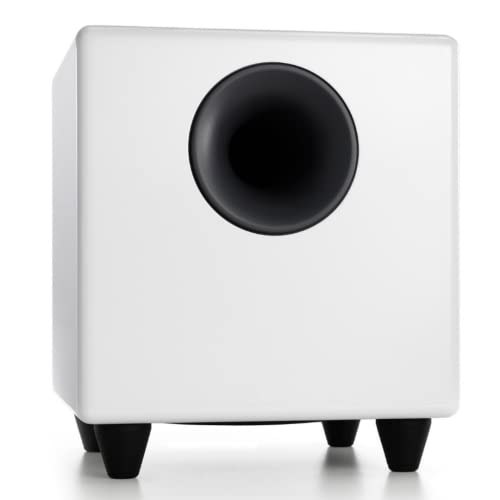
The S8 has that Audioengine look: clean, simple, and easy to live with. It doesn’t scream for attention, which I appreciate, because a subwoofer is usually the one box in the room you’d rather not have dominate the decor.
Its compact footprint makes placement a lot less annoying than with bigger subs. I could tuck it into spots where a larger cabinet would have been a nonstarter, and that matters a lot if you’re trying to keep a stereo setup neat.
The cabinet feels solid enough that it doesn’t give off the cheap, hollow vibe some smaller subs do. I wouldn’t call it flashy, but it feels like something built to sit in a listening room for years without becoming an eyesore.
03Setup and integration with speakers
This is the part that really decides whether a sub like this works for me, and the S8 makes the job pretty painless. Once I got the level and crossover sorted, it was easy to dial in a blend that felt seamless instead of obviously “subwoofer added.”
I like gear that doesn’t demand a bunch of fiddling every time I move it, and the S8 mostly behaves that way. It’s the kind of sub I’d recommend to someone who wants better bass without turning setup into a weekend project.
With the right placement, it disappears better than you’d expect. I could still point to where the low end was coming from if I listened for it, but in normal use it just made the system sound bigger and more confident.
04Connectivity and system matching
The S8 is flexible enough for the kind of setups most people actually have at home. I like that it doesn’t force you into some weird, overly complicated ecosystem just to get bass into the room.
It makes the most sense with compact speakers, desktop systems, and modest two-channel setups that need help below the midbass. I wouldn’t buy it expecting theater-level chest thump, but for music-first listening it fits a lot of real-world systems nicely.
That flexibility is a big part of the appeal. It’s the sort of sub that can slide into a vinyl rig, a small living-room system, or a desk setup without making the rest of the gear feel mismatched.
05Who it’s for and who should look elsewhere
I see the S8 as a smart choice for listeners who want bass that supports the music instead of hijacking it. If your main speakers are compact and you’ve been missing weight, scale, and a little more authority, this is the kind of upgrade that makes immediate sense.
If you’re chasing huge-room output or want a sub that hits like a sledgehammer, I’d keep looking. The S8 is more about control, balance, and integration than brute force, and that’s exactly why it works so well in the right setup.
For me, that makes it an easy recommendation for people building a serious but compact hi-fi system. It’s not the sub I’d pick for maximum drama, but it is the one I’d trust to make a good stereo sound more complete every day.