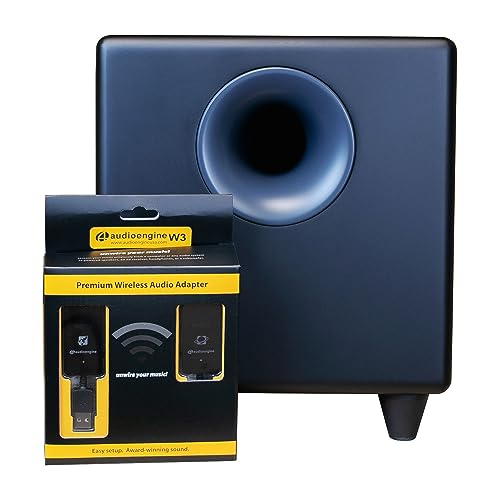
Specs and features that matter in practice
The key specs are simple: 8-inch driver, powered design, RCA connectivity, variable crossover, volume control, phase control, down-firing layout, and a compact cabinet.
In practice, that gives you the controls you need to blend the sub with small speakers instead of just piling on low end. For compact bookshelves, that matters more than chasing a giant frequency-response claim.
If your speakers sound great from about 80Hz up but fall off below that, the crossover and level controls help fill the gap. That’s what makes the upgrade sound natural instead of boomy.
Compared with something smaller like the Audioengine S6, the S8 should give you more reach and more authority. It still stays in the compact, music-first lane.
Quick specs snapshot:
- 8-inch driver
- Powered design
- RCA input / line-level integration
- Variable crossover
- Phase and volume controls
- Down-firing cabinet
- Best in small to mid-size rooms
How the Audioengine S8 fits into a turntable setup
You don’t necessarily need a receiver here, and that’s a big part of the appeal. It fits best with powered speakers, a turntable plus phono preamp, or a simple stereo chain with line-level output.
Here’s the clean setup path:
- Connect the turntable through a phono preamp if needed, then into your powered speakers or stereo gear.
- Connect the wireless transmitter and receiver, or use the required line-level sub connection in the kit.
- Set crossover, volume, and placement so the bass supports the mains instead of overpowering them.
A common setup is a turntable with no built-in phono stage feeding an external preamp, then powered bookshelf speakers, with the sub added at line level. That’s a normal beginner-to-midlevel chain, and this kit can slot in without forcing a receiver purchase.
If you need help sorting out the rest of the signal chain, start with our turntable setup guide and this explainer on what a phono preamp does.