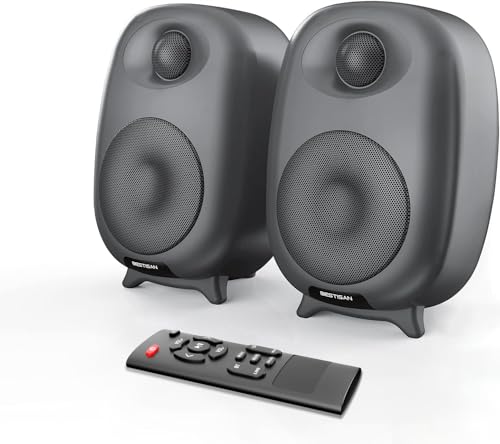
Inputs and connectivity
For vinyl, the RCA input matters most. That's the connection you want from a turntable with a built-in preamp, or from an external phono preamp if your deck needs one.
Bluetooth is a convenience feature, not the main reason to buy these for records. Optical is useful if you're sharing the speakers with a TV, and the remote helps if the setup sits across the room.
| Input |
What it's for |
| RCA |
Best option for turntable listening |
| Bluetooth |
Phone and casual wireless playback |
| Optical |
TV or digital audio source |
| Auxiliary |
Extra wired source, if included on your version |
Turntable compatibility, what extra gear you may need
Here's the simple rule: line level works, phono level doesn't. If your turntable has a built-in phono preamp, connect it to the RCA line input and you're done.
If it doesn't, the chain becomes: turntable → phono preamp → speakers. That's common with some Fluance models and other decks that leave the phono stage out by design.
If you're not sure which kind you own, check our how to choose a turntable guide or the turntable setup guide.
A realistic example: an Audio-Technica model with a built-in preamp is easy here. A turntable that outputs phono only will work too, but only after you add the missing stage.
How they compare to common beginner alternatives
Against built-in Victrola or Crosley suitcase speakers, this is an easy upgrade. You'll hear better left-right separation, cleaner vocals, and more headroom before things get harsh.
Against the Edifier R1280T, BESTISAN gives up some buyer confidence because Edifier has a longer track record in budget powered speakers. Against a Sony SSCS5 plus amp setup, the passive route wins on upgrade path, but it costs more and takes more space.
Powered and passive aren't interchangeable buying paths. One is about simplicity now. The other is about flexibility later. If you're still comparing categories, our best turntable speakers guide can help narrow it down.