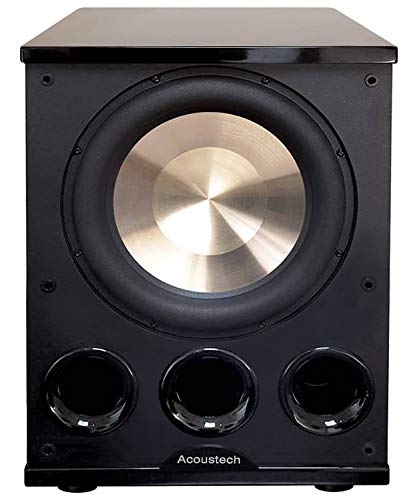
When it comes to output for the money, the BIC Acoustech PL-300 is a serious contender. This budget 12-inch subwoofer can genuinely pressurize a room, and that’s not something you often see in this price range. Whether I was spinning classic Stax records or cranking up some Parliament funk, the PL-300 filled in the missing foundation beautifully, giving those bass-heavy tracks the weight they deserve.
In my medium-sized listening room, I found that starting the crossover around 70 Hz and keeping the gain low resulted in a fuller sound without overwhelming the music. It’s a fine line to walk, but when you get it right, the sub adds a spine to the groove rather than just a hint of bass. For anyone with smaller bookshelf speakers that sound starved for low-end, this sub can be a game changer.
02Design and Build Quality
The PL-300 features a front-firing design with a hefty 12-inch woofer, and it’s clear that BIC put some thought into the cabinet. However, it’s large enough that you’ll need to consider your space before making a purchase. In a modest living room, the size can become a practical issue, and it might not fit as seamlessly into your setup as you’d like.
The MDF cabinet feels sturdy, but the overall footprint is something to keep in mind. If you’re dealing with tight corners or limited space, this sub could end up being more of a hassle than a help. It’s a great build, but those dimensions can definitely make it a bit of a challenge in smaller setups.
Setting up the PL-300 is pretty straightforward, which is a plus for anyone who isn’t a gearhead. You get the essential controls: crossover, phase, and gain, which allow for decent tuning to fit your system. I appreciated the flexibility these controls provided, especially when trying to integrate it with my existing setup.
However, the placement of the sub is crucial. If you shove it into a corner because that’s the only available spot, it can overpower your music and create more room noise than actual bass. It’s a common mistake, but one that’s easily avoidable with a little patience and proper tuning.
04Everyday Use and Versatility
One of the standout features of the PL-300 is how it earns its keep when your system pulls double duty. If you’re spinning records by day and watching movies at night, this subwoofer justifies its place in your living room. The added scale definitely enhances movie soundtracks, making explosions and musical scores feel more immersive.
That said, if you’re primarily a vinyl listener looking for nuanced detail, you might want to consider how this sub interacts with your setup. While it can move a lot of air, it’s not the tightest or most refined option available. For some, that slam might be just what they’re after, but if you’re focused on the texture of bass instruments, you may find cleaner options elsewhere.
05Room Size Considerations
Room size and setup are everything with the PL-300. In a larger space, its ability to deliver powerful output is a definite strength, but in a smaller room, it can lead to issues like bloom and bloat. I found that if I didn’t pay attention to placement and tuning, the sub could easily overshadow the music instead of supporting it.