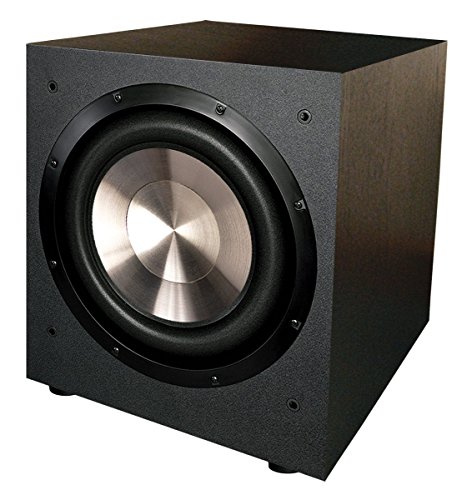
Specs and features that matter
| Spec |
BIC America F12 |
What this means in practice |
| Driver size |
12 inch |
More scale and output than many smaller budget subs |
| Amp power |
475W peak |
Enough punch for a small-to-medium room |
| Enclosure type |
Ported cabinet |
Bigger, livelier bass, but less tight than sealed designs |
| Inputs |
Line-level inputs, LFE compatibility |
Works well with many stereo receivers and AV setups |
| Controls |
Crossover, phase switch, volume gain |
Gives you the tools to blend it properly |
| Best use case |
Budget stereo and home theater |
Best for fuller sound, not ultimate finesse |
The useful part of the spec sheet is the adjustability. The built-in amp, crossover, and phase switch give you a fighting chance to make it sound like part of the system instead of a separate box.
That matters with records. A sensible crossover point keeps the handoff between mains and sub smooth, especially with compact speakers.
Vinyl setup fit, how it connects and how to tune it
The cleanest hookup is simple: turntable to phono preamp, phono preamp to stereo receiver, then the receiver's RCA subwoofer output to the sub.
If you need a refresher on the chain, start with our turntable setup guide and phono preamp explainer.
Powered speakers take more planning. Some have a subwoofer output, some don't, and some force awkward workarounds that make this kind of budget sub less appealing.
Driver size doesn't matter more than setup. Start with a low crossover, keep gain conservative, and test placement before blaming the box.
Here's the practical version: if your bookshelf speakers already reach decently into the upper bass, let them keep doing that.
Set the F12 low enough to fill the bottom, flip the phase switch if bass sounds thin at the seat, and trim the volume until the sub disappears. That's the goal. If you notice the sub as a separate box, you've probably gone too far.
Quick comparison, BIC America F12 vs Polk PSW10 vs Dayton Audio SUB-1200
The F12 is the pick if you want the biggest, most room-filling bass of the three.
It's the most fun for mixed music and movies, and the easiest one to recommend if your speakers sound undersized.
| Model |
Best for |
Bass character |
Room fit |
Main tradeoff |
| BIC America F12 |
Bigger, fuller sound on a budget |
High output, lively, room-filling |
Small-to-medium rooms |
Can get boomy if misdialed |
| Polk Audio PSW10 |
Smaller rooms and lighter-duty systems |
Softer, smaller-scale bass |
Small rooms |
Less impact and scale |
| Dayton Audio SUB-1200 |
Budget shoppers cross-shopping value picks |
Similar budget-friendly punch |
Small-to-medium rooms |
Less distinct identity than the F12 |
The Polk Audio PSW10 makes more sense in a smaller room or a lighter-duty system. It's less imposing, but it also sounds smaller.
The Dayton Audio SUB-1200 is the closest value alternative. If you want a similar budget home theater subwoofer that can also serve a vinyl setup, it's a fair cross-shop.
Choose the F12 if output and scale matter most. Choose the Polk if your room is tight. Choose the Dayton if you want another budget-friendly middle path.