Sound, features, and real-world fit
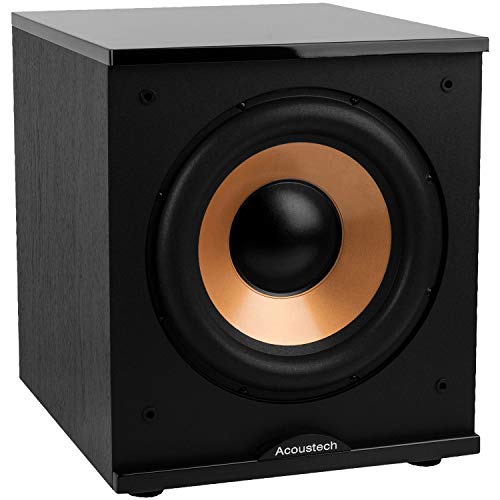
The sound is more about weight than finesse. The H-100II adds scale, punch, and a more grounded bottom end, but it won't fool anyone into thinking it's a premium model.
Feature-wise, it covers the basics that matter: RCA line input, LFE input, adjustable crossover, phase switch, and gain control. In practice, that's enough flexibility for most vinyl systems, as long as the rest of your chain supports it.
Here’s the quick comparison most buyers actually need:
| Model |
Driver size |
Sound character |
Best for |
Main drawback |
| BIC America H-100II |
12-inch |
Strong impact, fuller low end |
Mixed music and movies in medium rooms |
Less refined for serious music listening |
| Polk PSW10 |
10-inch |
Softer, cheaper compromise |
Lowest-cost acceptable upgrade |
Less output and authority |
| Dayton Audio SUB-1200 |
12-inch |
Better-balanced value |
Budget music-first systems |
Still not premium, usually less punchy than BIC |
A simple way to choose:
- Choose the BIC America H-100II if you want stronger impact and fuller bass for mixed music and movie use.
- Choose the Polk PSW10 if price matters more than output.
- Choose the Dayton Audio SUB-1200 if you want the closer music-first alternative at a similar budget.
If you have a stereo receiver with sub out, this is a straightforward fit. If your system is more basic, connection limits may matter more than the sound itself.
How to connect it in a vinyl system
The easiest path is a stereo receiver with sub out. Run the RCA subwoofer output to the LFE input or line input, start with low gain, and keep the crossover moderate.
If you're using a stereo amp without sub out, stop and check compatibility before you buy. A turntable and phono preamp alone don't create bass management, so the rest of the chain decides whether this is easy or annoying.
A common beginner setup is simple: turntable into external phono preamp, then into a stereo receiver, then sub out to the H-100II. That usually works fine in minutes.
The trouble starts with powered speakers and limited outputs. A bigger sub doesn't automatically fit every system, and that's where many budget upgrades go sideways.