01What this little sub is really for
The Dayton Audio 6-1/2″ Passive Mini Subwoofer is not the kind of subwoofer you buy because you want to rattle the windows. I see it more as a compact low-end helper for a small system that needs a little more body than tiny speakers can give on their own.
In the right setup, it fills in that missing weight under the music without turning everything into a boom-fest. I’d think of it as a support player, not the star of the show.
02Sound and low-end character
What stood out to me most is that this thing is about texture and fill, not brute force. It can make bass lines feel less skinny and give kick drums a bit more shape, but it stays in the “polite” lane unless you really push the system hard.
I like that it doesn’t immediately call attention to itself. When it’s working well, you notice the system sounds fuller and more relaxed, not that there’s a subwoofer sitting there trying to impress you.
That also means expectations matter a lot. If you want deep, room-shaking bass for movies or big electronic tracks, this is the wrong tool; if you want your compact setup to sound less anemic, it makes a lot more sense.
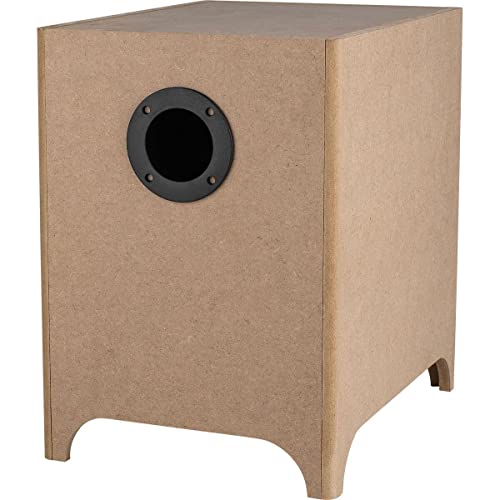
The compact size is the whole appeal here. It’s easy to tuck into a small room, an office, or a secondary listening space where a full-size sub would just be overkill.
I also appreciate that it looks like a straightforward piece of gear rather than a giant black box demanding attention. It’s the kind of thing that disappears visually, which is exactly what I want from a sub in a tight space.
That said, the small footprint is part of the tradeoff. You’re not getting the physical presence or authority of a larger enclosure, so the design makes sense only if your priorities are space and subtlety.
04How it fits into a real system
This is the part that matters most with a passive sub: it depends on the rest of your gear. You need a proper amplifier and a setup that can actually drive it the way it wants to be driven, so this is not a plug-and-play convenience piece.
I’d only recommend it to someone who already knows where it’s going in the chain. If you’re building a simple, self-contained system and don’t want to think about matching components, this can turn into more hassle than it’s worth.
But if you already have the right amp and you’re comfortable dialing things in, it can be a neat way to add low-end support without taking up much space. It rewards a little patience in setup more than it rewards brute-force power.
05Everyday listening and practical use
In day-to-day listening, I think its strength is making smaller speakers feel more complete. It can take some of the strain off the mains and make music sound less thin at normal listening levels.
I’d use it most in a bedroom, office, or compact stereo setup where I care more about balance than slam. It’s the kind of sub that makes you miss it when it’s gone, even if you don’t always notice it while it’s working.
What I wouldn’t do is buy it expecting it to transform a modest system into a full-range monster. It improves the edges of the experience more than it changes the whole personality of the rig.
06Who I think it makes sense for
I think this is best for someone building a small, sensible system and trying to get a little more low-end foundation without crowding the room. It’s especially appealing if you value compact gear and don’t need big, dramatic bass.
If your listening is mostly music and you want a subtle fill-in rather than a theatrical effect, this can fit nicely. If you’re chasing impact, scale, or the kind of bass that announces itself from the next room, I’d keep looking.
For me, the appeal is very specific: it’s a useful little piece of a larger system, not a standalone bass solution. Once I look at it that way, the whole product makes a lot more sense.