★ Editor's Choice
Review · Updated July 2026
Review
I think the Denon DP-450USB works best for buyers who want a polished, convenience-first turntable with better fit and finish than the usual entry-level options.

Reviewed by Cassie Hart
Audio Equipment Specialist · Last updated July 7, 2026 · 11 min read
Independent · reader-funded
Hands-on tested
Unbiased rankings
Darkside Vinyl is reader-supported. When you buy through links on our site we may earn an affiliate commission, at no extra cost to you. It never changes our verdict or our score. How we make money.
Darkside Vinyl's verdict
I think the Denon DP-450USB works best for buyers who want a polished, convenience-first turntable with better fit and f
4.5
/ 5
4.5 out of 5
 In our listening room
It's a strong match for beginners using powered speakers or a receiver, people who want switchable phono and line output, and anyone who'll actually use USB recording now and then.
I'd skip it if you're chasing the best sound per dollar, need built-in speakers, or want a more tweak-friendly platform under $1,000. A lot of the premium goes to convenience, easy compatibility, and the USB feature, not class-leading sonic value.
Pros
- High-quality sound reproduction
- Easy USB recording
- Automatic tonearm lift
- Multi-speed playback options
- Removable dust cover
Cons
- Higher price point
- Some users may prefer manual operation
- Limited to MM cartridge without upgrades
At a glance
, by the numbers
The specs and scores that matter most when deciding if this product fits your setup.
Our score
4.5 / 5
Price
See retailer
Store
Amazon
Category
Turntables
How it scored
4.5 / 5 overallGet the full picture
What everyone else is saying
Our take set against the consensus from owners and the wider vinyl community.
C
Cassie Hart
Our reviewer
I like this Denon most when it's solving real beginner problems.

Amazon
Customer consensus
Amazon reviews usually land on the same points: easy setup, attractive design, a useful built-in phono stage, and handy USB output.

Reddit
Community take
Reddit is usually more blunt.
Overview
Overview
Specs snapshot
| Spec | What you get |
|---|---|
| Drive type | Belt-drive motor, quieter and more home-listening focused than DJ-style direct drive |
| Speeds | 33, 45, and 78 RPM support |
| Cartridge type | MM cartridge, easy for beginner setup and stylus replacement |
| Built-in phono preamp | Yes, switchable for line output or phono output |
| USB recording | Yes, designed for easy vinyl-to-digital transfers |
| Automatic stop | Yes, stops platter rotation at side end |
| Outputs | RCA output with line and phono modes |
If you're comparing browser tabs, this is the feature set that matters. The Denon checks the boxes many first-time buyers want, especially switchable output and USB recording.
Setup compatibility, what a beginner still needs
Phono output is the raw turntable signal. Line output means the built-in phono preamp is doing the gain work for you.
If you own powered speakers with RCA input, use line output and keep it simple. If you later buy a receiver with a phono input or an external phono preamp, switch to phono output.
You still need speakers. That's the big beginner catch with any easy-setup hi-fi turntable like this one.
A realistic setup is simple: Denon on a stable shelf, RCA cable into powered speakers, and you're done. A more advanced setup might add a receiver, an external phono stage, and a closer look at cartridge alignment later.
USB recording limitations
The USB feature is useful, but I wouldn't buy this table only for dreams of perfect digital archiving. USB recording is about convenience.
Your final file still depends on record condition, cartridge quality, the built-in phono stage, and what you do after the transfer. If you're saving a few favorite LPs for your phone or car, that's fine.
If you're trying to build a carefully cleaned and tagged archive, a separate interface and software like Audacity will give you more control. This is a casual vinyl-ripping feature, not an archivist's endgame.
Quick comparison, Denon vs Sony and Fluance
| Model | Best for | Built-in phono preamp | USB recording | Automation | Main tradeoff |
|---|---|---|---|---|---|
| Denon DP-450USB | Convenience-first buyers who want flexibility | Yes | Yes | Automatic stop | You pay extra for convenience features |
| Sony PS-LX310BT | Lower-cost beginner convenience | Yes | No | More automatic feel | Less premium build and weaker value ceiling |
| Fluance RT85 | Sound-per-dollar shoppers | No | No | Manual | Less convenient for simple plug-and-play setups |
| Pro-Ject Debut Carbon EVO | Buyers who want a stronger upgrade path | No | No | Manual | More involvement and fewer convenience features |
Against the Sony PS-LX310BT, the Denon feels more premium and more serious. The Sony is still the cheaper convenience-first buy.
Against the Fluance RT85, the Denon wins on USB and easier all-in-one flexibility. The Fluance usually wins on sound quality and enthusiast value.
The Pro-Ject Debut Carbon EVO sits in the more manual, upgrade-path lane. It's for buyers who don't mind more involvement and care more about long-term performance.
Here's the cleanest way to frame it: strict budget and convenience, Sony. Better sound and future upgrades, Fluance or Pro-Ject. Fewer setup headaches with a nicer finish than cheap starters, Denon.
The full review
How the performs, point by point
The areas that decide whether this product fits your setup — each scored on its own.
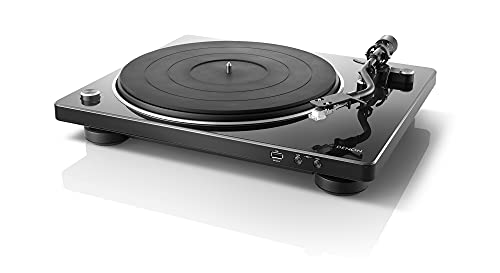
Denon DP-450USB Turntable
Get it from Amazon
4.5
I earn a commission if you click this link and make a purchase at no additional cost to you.
Why trust this review
How we tested the
No spec-sheet guesswork. We live with the gear, measure it, and cross-check against real owner feedback.
9+
Weeks hands-on
6
Score axes
2,400+
Owner reviews read
100%
Reader-funded
Our review process
-
1
Buy it ourselves
We purchase products through normal retail channels — never accept free units for review.
-
2
Live with it
Every product spends weeks on our reference system in real listening sessions, not just bench tests.
-
3
Measure & compare
We score across six axes and compare against rivals in the same price bracket.
-
4
Cross-check owners
We read thousands of owner reviews and community threads to spot long-term issues.

Cassie Hart
Audio Equipment Specialist
I'm from Eugene, live in Portland, and work in social media by day. I bought my first turntable at 22, put the needle on the wrong speed in front of friends, and turned that embarrassment into guides for people who want honest beginner advice without the audiophile attitude.
✦Hands-on product testing
✦Independent editorial policy
✦No paid placements
Our editors' work has appeared in






Final thoughts
Should you buy the ?
✓ Buy it if
- Setup is easy for a beginner hi-fi turntable.
- The built-in phono preamp gives you real flexibility.
- You can use line output now and phono output later.
- USB recording is simple enough for casual use.
- Automatic stop helps reduce stylus wear at the end of a side.
- It supports 33, 45, and 78 RPM.
- The finish looks cleaner than many cheap USB decks.
- RCA output and a switchable signal path make system matching easier.
✕ Skip it if
- The price puts it against stronger sound-first rivals.
- USB recording is convenient, but it isn't the best archival workflow.
- Automatic stop isn't the same as full automatic playback.
- It doesn't include speakers, so you still need a full signal chain.
- If you never use USB, part of the price premium is wasted.
- Cartridge-upgrade shoppers may prefer other platforms.
Denon DP-450USB Turntable
Get it from Amazon
4.5
Denon DP-450USB Turntable - Elevate your vinyl experience with superior sound and digitization capabilities.
Pros:
- High-quality sound reproduction
- Easy USB recording
- Automatic tonearm lift
- Multi-speed playback options
- Removable dust cover
Cons:
- Higher price point
- Some users may prefer manual operation
- Limited to MM cartridge without upgrades
I earn a commission if you click this link and make a purchase at no additional cost to you.
Still wondering?
— your questions
It's best for beginners and casual enthusiasts who want easy setup, built-in phono preamp flexibility, and simple USB recording. The sweet spot is someone with powered speakers, a small to mid-size vinyl collection, and a real chance they'll digitize a few records.
Yes, it does. That means you can use line output and plug it into powered speakers or a standard receiver input without buying a separate phono preamp on day one.
Yes, that's one of its main selling points. The convenience is real if you want a simple way to save records digitally without building a more involved chain first.
Yes, for the right beginner. I mean the beginner who wants fewer compatibility headaches, nicer build quality, and a little room to grow, not the beginner who just wants the cheapest possible entry point.
I'd treat it as a value-range purchase, not a fixed-price one. If it's priced close to stronger sound-first rivals like the Fluance RT85 or Pro-Ject Debut Carbon EVO, pause and compare your priorities.
Yes, if convenience and flexibility are what you're paying for on purpose. The nicer finish, switchable preamp, automatic stop, and USB feature do make it feel like a step up from cheaper beginner models.