★ Editor's Choice
Review · Updated July 2026
Review
Douk Audio NS-13G MAX Amplifier is a compact stereo amp for passive speakers. It does not include a built-in phono preamp, so phono-only turntables need an external preamp in the chain.

Reviewed by Calvin Reese
Vinyl & Gear Editor · Last updated July 7, 2026 · 11 min read
Independent · reader-funded
Hands-on tested
Unbiased rankings
Darkside Vinyl is reader-supported. When you buy through links on our site we may earn an affiliate commission, at no extra cost to you. It never changes our verdict or our score. How we make money.
Darkside Vinyl's verdict
Douk Audio NS-13G MAX Amplifier is a compact stereo amp for passive speakers.
4.5
/ 5
4.5 out of 5
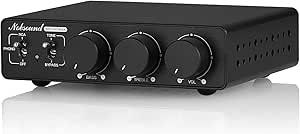 In our listening room
Best for: beginner and budget vinyl listeners using passive speakers in a desktop or small-room setup.
Not for: anyone with a phono-only turntable who wants to plug straight in without adding a preamp.
Pros
- Ultra-powerful 600W output
- Phono ready for turntables
- Compact design
- Customizable sound profiles
- Whisper-quiet operation
Cons
- Requires 48V power supply
- Limited to RCA inputs
- May not suit larger spaces
At a glance
, by the numbers
The specs and scores that matter most when deciding if this product fits your setup.
Our score
4.5 / 5
Price
See retailer
Store
Amazon
Category
Turntables
How it scored
4.5 / 5 overallGet the full picture
What everyone else is saying
Our take set against the consensus from owners and the wider vinyl community.
C
Calvin Reese
Our reviewer
I look at this the same way I look at a bad install call: check the chain before blaming the box.

Amazon
Customer consensus
Amazon feedback usually praises the same things: small size, easy setup, solid value, and enough power for modest passive speakers.

Reddit
Community take
Reddit is usually more blunt, which helps.
Overview
Overview
Turntable setup reality check
Here's the plain-English rule: if your turntable has a built-in phono preamp, or a switch for line output, you can run RCA straight into this amp.
If your turntable outputs phono level only, you need an external phono preamp first. The chain becomes: turntable, phono preamp, NS-13G MAX, passive speakers.
That means an Audio-Technica model with built-in preamp support will usually connect directly. A Fluance or Pro-Ject table without that feature needs one more box in the middle.
If you need help sorting that out, start with what a phono preamp does and then check our turntable setup guide.
Compatibility mini-table
| Source device | Works directly | Needs phono preamp | Best use case |
|---|---|---|---|
| Turntable with built-in preamp | Yes | No | Simple vinyl setup |
| Turntable without built-in preamp | No | Yes | Traditional vinyl chain |
| Phone via Bluetooth | Yes | No | Casual streaming |
| CD player or streamer with RCA out | Yes | No | Compact stereo system |
That table can save a beginner from an unnecessary return. It's often the difference between a smooth first setup and a frustrating one.
A stereo receiver handles more sources, while powered speakers can cut down the box count even further. If your setup matches the direct-connect rows, this amp gets much easier to recommend.
Douk Audio NS-13G MAX vs other setup paths
| Option | Built-in phono preamp | Speaker type | Best for | Main tradeoff |
|---|---|---|---|---|
| Douk Audio NS-13G MAX | No | Passive speakers | Small, simple vinyl or Bluetooth setups | Needs line-level source or external phono preamp |
| Sony STR-DH190 | Yes | Passive speakers | Buyers who want easier turntable hookup and more inputs | Larger footprint |
| Fosi Audio / Aiyima mini amps | Usually no | Passive speakers | Budget desktop systems comparing price and power | Varies by model and features |
| Powered speakers + phono preamp | Depends on speakers | Powered speakers | Fewer boxes and simpler beginner setups | Less upgrade flexibility |
Against an entry-level stereo receiver like the Sony STR-DH190, the Douk wins on size and simplicity. The Sony wins on vinyl friendliness, inputs, and long-term flexibility.
Against other compact Class D desktop amps from Fosi Audio or Aiyima, this is mostly a price-and-features call. Same lane, same basic job, different value depending on current pricing and the speakers you're pairing.
Against a separate phono preamp plus powered speakers, this mini stereo amp is less beginner-proof. If you don't want to deal with passive speaker wiring, powered speakers are often the cleaner first buy.
For a dorm-room listener with one turntable and one pair of passive speakers, I'd take the Douk route seriously. For a living-room buyer who also wants TV audio and multiple sources, I'd move toward a receiver.
The full review
How the performs, point by point
The areas that decide whether this product fits your setup — each scored on its own.

Douk Audio NS-13G MAX Amplifier
$119.99
$99.99
Get it from Amazon
4.5
I earn a commission if you click this link and make a purchase at no additional cost to you.
07/09/2026 08:17 am GMT
Why trust this review
How we tested the
No spec-sheet guesswork. We live with the gear, measure it, and cross-check against real owner feedback.
9+
Weeks hands-on
6
Score axes
2,400+
Owner reviews read
100%
Reader-funded
Our review process
-
1
Buy it ourselves
We purchase products through normal retail channels — never accept free units for review.
-
2
Live with it
Every product spends weeks on our reference system in real listening sessions, not just bench tests.
-
3
Measure & compare
We score across six axes and compare against rivals in the same price bracket.
-
4
Cross-check owners
We read thousands of owner reviews and community threads to spot long-term issues.

Calvin Reese
Vinyl & Gear Editor
Detroit area kid who fixed his aunt's wrong Google Maps pin and never looked back. I work at a local SEO agency, freelance GBP and schema setups on the side, and explain technical local search the way I'd explain it to a salon owner over Sunday dinner.
✦Hands-on product testing
✦Independent editorial policy
✦No paid placements
Our editors' work has appeared in






Final thoughts
Should you buy the ?
✓ Buy it if
- Compact footprint fits desks, shelves, and small vinyl stations.
- Bluetooth makes phone and casual streaming playback easy.
- RCA input keeps line-level hookup simple.
- Works with passive bookshelf speakers, not just powered speakers.
- Banana plug terminals are easier for many beginners than cheap spring clips.
- Good value if you want a mini amp for passive speakers without receiver bulk.
✕ Skip it if
- No built-in phono preamp, and that's the big one for vinyl beginners.
- Fewer inputs than a stereo receiver.
- Small amps can disappoint with harder-to-drive passive speakers.
- Bluetooth convenience doesn't tell you much about vinyl performance.
- Not a great fit if you want one box for TV, a streamer, and multiple analog sources.
Douk Audio NS-13G MAX Amplifier
$119.99
$99.99
Get it from Amazon
4.5
Douk Audio NS-13G MAX Amplifier - Experience studio-grade sound quality with Douk Audio's compact amplifier, perfect for audiophiles.
Pros:
- Ultra-powerful 600W output
- Phono ready for turntables
- Compact design
- Customizable sound profiles
- Whisper-quiet operation
Cons:
- Requires 48V power supply
- Limited to RCA inputs
- May not suit larger spaces
I earn a commission if you click this link and make a purchase at no additional cost to you.
07/09/2026 08:17 am GMT
Still wondering?
— your questions
It's a compact stereo amplifier for passive speakers with Bluetooth and an RCA line input. It isn't a turntable, it isn't a set of powered speakers, and it doesn't replace a phono preamp or full stereo receiver.
Yes, but only if the turntable outputs line level or you add a phono preamp first. A built-in-preamp Audio-Technica model can usually connect directly, while many Fluance and Pro-Ject tables need an external phono stage in the chain.
No. If your turntable is phono-only, you'll need a separate preamp before the amp. If you aren't sure which type you have, check our phono preamp guide.
It's best for beginners and budget buyers building a small passive-speaker system. Think desk setups, bedrooms, dorms, and apartments where a full stereo receiver feels oversized.
Yes, if your turntable already has a built-in preamp and you want passive speakers. No, if you're hoping for an all-in-one vinyl hub with fewer setup decisions.
If your turntable has line output, you need the amp, passive speakers, speaker wire, and RCA cables. If your turntable is phono-only, add an external phono preamp to that list.
Yes, but only with a turntable that already has a built-in phono preamp or switchable line output. That's common on some Audio-Technica decks, but not on every Fluance or Sony model.
Efficient passive bookshelf speakers are the safest match. In real use, this kind of compact amp makes the most sense with small-room speakers, not big floorstanders or harder-to-drive models.