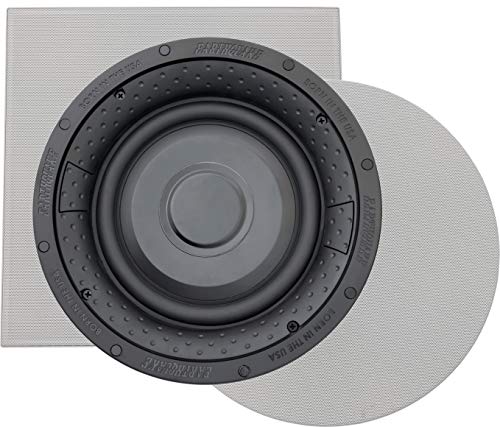
Specs and setup requirements
Here's the practical version of the spec sheet: 8-inch driver, passive design, in-wall format, and performance that depends heavily on proper integration.
That means the woofer doesn't power itself. You need amplifier support, the right impedance match, and crossover integration so the sub handles bass while your main speakers handle the rest.
A home theater receiver with bass management makes this much easier. A simple turntable-plus-powered-speakers setup usually doesn't.
If the published frequency response looks good on paper, remember that in-wall bass still depends on wall construction, room size, and placement limits. You can't slide this thing around the room after the cut like you can with a normal sub.
| Feature |
SUB8 in-wall passive subwoofer |
Traditional powered subwoofer |
| Setup difficulty |
Moderate to high |
Low |
| Extra gear |
Amp or receiver support needed |
Usually minimal |
| Room aesthetics |
Excellent |
Fair to good |
| Output per dollar |
Lower |
Higher |
| Best use case |
Hidden bass in tidy rooms |
Easy bass upgrade |
Best fit, and when to skip it
I'd put this in the good-fit column for buyers who care a lot about aesthetics and already know they want an architectural audio subwoofer.
It makes the most sense in small to medium rooms, especially a vinyl listening room where you want fuller bass under compact speakers without turning the room into a gear showroom.
Skip it if you're renting, if your room is large and open, or if you want maximum bass per dollar. In those cases, a powered subwoofer, stronger bookshelf speakers, or even better speaker placement will usually get you farther with less hassle.
Here's the cleanest example: if your goal is fuller bass under a pair of turntable speakers in a tidy living room, this can work well. If you just want more slam fast, a compact powered sub will usually get you there cheaper and with less drama.