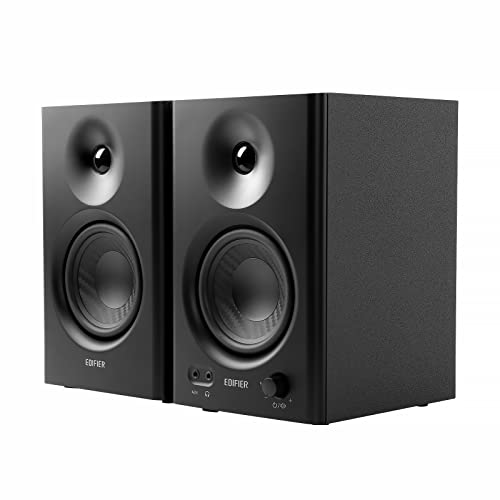
The Edifier MR4 really shines when you’re sitting close to them, which is perfect for a desktop or small room setup. The sound is cleaner and more focused than a lot of budget multimedia speakers, making it a solid choice for vinyl enthusiasts who appreciate detail. I’ve found that records with character—like soul or jazz—come through beautifully, with excellent imaging that gives you a sense of space without the usual blur you might expect at this price point.
However, if you’re someone who craves big, room-filling bass, you might want to look elsewhere. The low end is decent when you’re up close, but it lacks the weight needed to fill a larger space. So, if you’re thinking of using these for a mini party or to blast some funk across a living room, you’ll likely be disappointed.
In terms of build quality, the MR4 feels sturdy and well-constructed, which is a pleasant surprise for a budget speaker. They have a practical design with a clean finish that fits nicely into my home office setup. The front volume knob is a standout feature; it’s so much easier to adjust the volume without having to reach behind the speaker every time, which can get annoying fast.
These speakers are compact, making them an ideal fit for a desk. I’ve paired them with an Audio-Technica turntable on one side and a laptop on the other, and it all stays tidy and organized. The nearfield tuning means you don’t have to worry too much about placement as long as you keep them within a reasonable distance.
Getting the MR4 set up is a breeze, which is a huge plus for beginners. You’ve got RCA, TRS, and AUX inputs, allowing you to connect both a turntable and a computer without needing a receiver. This flexibility means you can have a tidy system without adding unnecessary complexity, which is often a game-changer for someone just starting out.
One thing to keep in mind is that if your turntable doesn’t have a built-in phono preamp, you’ll need to invest in an external one. Plugging a turntable directly into the MR4 without this will lead to weak and thin sound, which can be a common pitfall for new users. Once that’s sorted, you’re ready to enjoy a practical setup that just works.
04Connectivity & Features
The MR4 offers a good range of connectivity options that make it beginner-friendly. Having multiple inputs means I can easily switch between listening to vinyl and streaming from my laptop without fussing with cables. The headphone output is another thoughtful touch, especially for those late-night listening sessions when you don’t want to disturb anyone else in the house.
For everyday listening, the MR4 excels in smaller spaces. In my home office, they provide focused and satisfying sound when I’m sitting just a few feet away. The neutral tuning works well for a range of music, especially if you have records that are already rich in character.