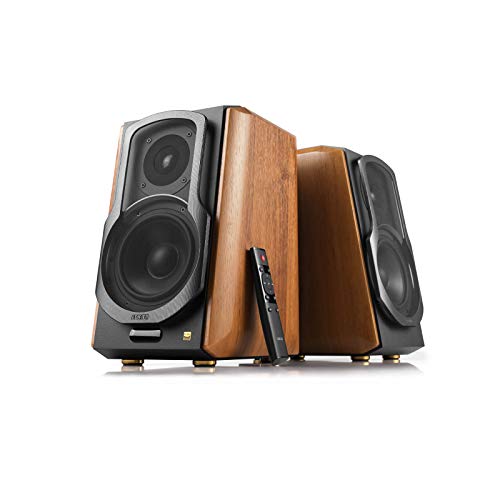
The first thing I noticed with the S1000DB was that they sound bigger than they look. I didn’t get that thin, boxed-in bookshelf-speaker thing you sometimes hear at this size; instead, they throw a pretty full, confident sound that makes records feel a little less like they’re coming from two little cabinets on a shelf.
What stood out most to me was how easy they are to listen to for long sessions. They have enough detail to keep vocals, guitars, and cymbals lively, but they don’t come off as overly sharp or fussy when a record is a little hot or a digital source is a little rough.
The low end is where these really try to punch above their weight, and in a normal room they do a respectable job of sounding weighty without immediately needing a sub. I wouldn’t call them bass monsters, but they have enough presence to keep modern records, synth lines, and kick drums from feeling lightweight.
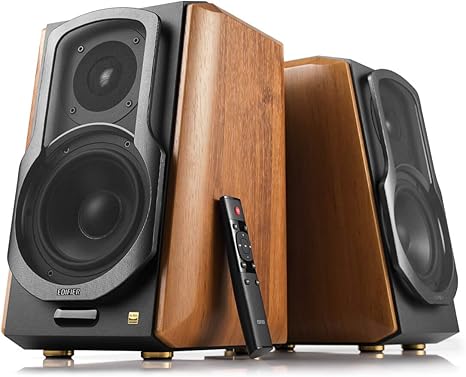
These look like speakers that were designed to sit in a real room without screaming for attention. The finish is clean, the cabinets feel solid enough, and they have that polished, slightly upscale look that works well on a desk, a credenza, or beside a turntable setup.
I also appreciate that they don’t feel flimsy or toy-like when you move them around. They have enough heft and visual presence to feel like proper hi-fi gear, not just computer speakers with a fancy badge on them.
That said, they’re still very much active speakers with a practical, modern vibe, so they’re not trying to be vintage furniture. If you want something that disappears visually, these won’t do that, but if you want something that looks intentional in a listening room, they fit the bill.
Living with the S1000DB is pretty straightforward, which I always count as a win. Once they’re placed and connected, they don’t ask for much, and I like gear that lets me get to the music instead of turning setup into a weekend project.
The remote and onboard controls make them easy to live with day to day. I didn’t feel like I had to keep getting up and futzing with the speakers every time I wanted to change the volume or switch sources, which matters more than people think once the honeymoon phase is over.
They’re the kind of speakers that work well in a mixed-use room where you might be listening to records one minute and streaming something the next. That flexibility makes them less of a one-trick hi-fi box and more of a practical all-around system for real life.
04Connectivity And Source Flexibility
One of the big strengths here is that the S1000DB don’t box you into one way of using them. I like that they can handle a few different source types without making me feel like I need to build a whole matching ecosystem around them.
That makes them especially appealing if your setup is a little hybrid, which a lot of modern vinyl rigs are. Maybe you’ve got a turntable with a phono stage, a streamer, and a TV or computer in the mix; these are comfortable in that kind of setup.
They’re not the kind of speakers that make you think about future upgrades in a stressful way, either. You can plug them into a simple system now and still have enough flexibility later if your setup grows beyond just a turntable and a phone.
I think the S1000DB make the most sense for someone who wants an easy, self-contained speaker setup that still sounds like hi-fi. They’re a good fit if you want to play records without assembling a pile of separate boxes and cables just to get decent sound.
They also suit listeners who want a little more polish and scale than typical desktop speakers, but don’t want to jump into a full separates rig. If your room is modest and your expectations are grounded, they hit a very practical sweet spot.
I wouldn’t buy them expecting a hyper-audiophile, microscope-on-the-mix kind of presentation. I’d buy them if I wanted something enjoyable, capable, and unfussy that makes music sound good across a lot of different sources without turning the whole setup into a hobby project.