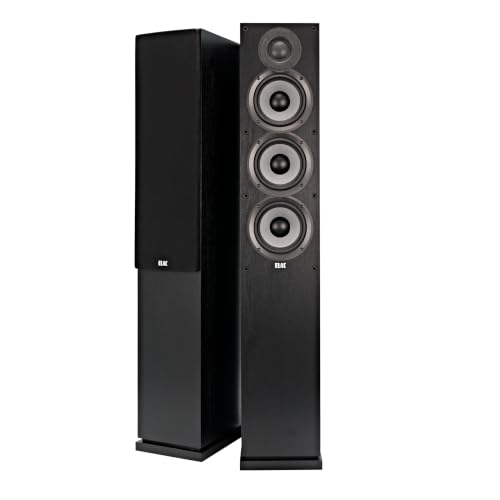
Design and specs, what they mean in practice
The F5.2 is a passive three-way floorstander with aramid fiber woofers, a soft dome tweeter, a front-firing port, and standard binding posts. In practice, that means it can move more air and sound more effortless than a compact speaker.
Don't get too hung up on the frequency response or sensitivity rating alone. Specs matter, but room fit and amp pairing matter more.
Amplifier matching for beginners
A turntable doesn't power passive speakers. Your chain is simple: turntable, phono preamp if needed, then a stereo receiver or integrated amplifier, then the speakers.
If you need help with that chain, start with the turntable setup guide and what a phono preamp does.
You don't need silly wattage numbers. You do need honest power, because a lightweight receiver in a larger room can make this ELAC sound flat, weak in the bass, and strained when the music gets busy.
Floorstanding vs bookshelf speakers for vinyl
This is the real fork in the road. If you've got a medium room and want more scale without buying stands, towers make sense.
If your room is small or your total budget is tight, bookshelf speakers are often the smarter buy. The natural same-family comparison is the ELAC Debut 2.0 B6.2.
The B6.2 is easier to place and cheaper to build around. The F5.2 usually sounds bigger and more relaxed when the room gives it space.
Room size and placement reality
Medium rooms are the sweet spot here. Front ports help, but don't treat that like a free pass to shove them flat against the wall.
Give them breathing room, spread them properly, and use a little toe-in for stereo imaging. I've heard good speakers sound average just because they were parked too close together beside a crowded media console.
If your room and amp line up, the F5.2 makes a lot more sense than it does on specs alone.