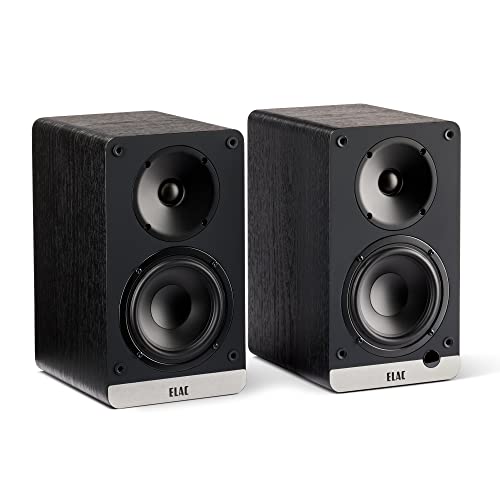
Inputs and connectivity
The Debut ConneX DCB41 covers the inputs most people actually use:
- Phono input: for direct connection to a compatible turntable
- Line input: for sources that already output line-level audio
- USB input: for computer audio
- HDMI ARC: for TV sound through one cable
- Optical input: for digital TV or streamer connections
- Bluetooth connectivity: for quick wireless playback
In practice, that means less rewiring and fewer adapters. A turntable can stay connected for records, the TV can run through HDMI ARC, and a laptop can use USB without turning the setup into a mini rack.
If you need help sorting out phono versus line, start with our phono preamp guide or the full turntable setup guide.
Sound and use-case fit
These are compact stereo speakers for a record player setup, not a stand-in for a larger hi-fi system. In a small room, they do the important things well: stable imaging, clean mids, and a more polished presentation than a lot of cheaper all-in-one options.
For vinyl, the direct phono path is the headline feature. For TV use, HDMI ARC is the real quality-of-life win.
For desktop listening, USB and the compact footprint make the most sense. That’s why this speaker works best in apartments, bedrooms, and media-console systems.
A realistic setup is a turntable on one side of a console and a TV above it. You can run records through the phono path and TV audio through HDMI ARC without adding a receiver, which keeps the whole system cleaner.
| Model |
Best for |
Key strength |
Main tradeoff |
| ELAC Debut ConneX DCB41 |
Mixed vinyl, TV, and desktop use |
Best connectivity balance |
Not the biggest sound |
| Kanto YU6 |
Value-minded turntable buyers |
Lower-cost flexibility |
Less TV-focused appeal |
| Klipsch The Fives |
Bigger, more energetic sound |
Higher output and punch |
Larger presence, higher expectations |
If you want a compact pair that covers all three jobs well, it’s worth checking the current price before stock shifts.