★ Editor's Choice
Review · Updated July 2026
Review
I like the ELAC Uni-Fi 2. 0 UB52, but I only recommend it when the rest of the system makes sense.

Reviewed by Marcus Webb
Speakers & Receivers Editor · Last updated July 7, 2026 · 11 min read
Independent · reader-funded
Hands-on tested
Unbiased rankings
Darkside Vinyl is reader-supported. When you buy through links on our site we may earn an affiliate commission, at no extra cost to you. It never changes our verdict or our score. How we make money.
Darkside Vinyl's verdict
I like the ELAC Uni-Fi 2.
4.5
/ 5
4.5 out of 5
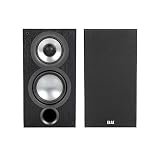 In our listening room
I like the ELAC Uni-Fi 2.0 UB52, but I only recommend it when the rest of the system makes sense.
I wouldn’t buy it for a weak stereo receiver, a cramped media shelf, or a convenience-first turntable setup.
Pros
- True 3-way design
- High-quality aluminum drivers
- Flexible room placement
- 6-Ohm compatibility
Cons
- Premium price point
- Requires adequate space for optimal sound
At a glance
, by the numbers
The specs and scores that matter most when deciding if this product fits your setup.
Our score
4.5 / 5
Price
See retailer
Store
Amazon
Category
Turntables
How it scored
4.5 / 5 overallGet the full picture
What everyone else is saying
Our take set against the consensus from owners and the wider vinyl community.
M
Marcus Webb
Our reviewer
I like this speaker, but I recommend it selectively.

Amazon
Customer consensus
Amazon reviews usually split along setup lines.

Reddit
Community take
Reddit is usually more blunt about the catch: hard to drive, great imaging, worth it with the right amp, not ideal near walls.
Overview
Overview
Specs that matter for real-world setup
| Spec | ELAC UB52 | What this means in practice |
|---|---|---|
| Nominal impedance | 6 ohms | Needs an amp with decent current delivery, not just a big watt number on the box |
| Sensitivity | Low, around 85 dB | Won’t sound as lively on entry receivers as easier speakers will |
| Cabinet size | Larger than many compact bookshelves | Needs real stand space and breathing room |
| Rear port | Yes | Near-wall placement is less forgiving, bass can thicken up fast |
| Binding posts | Standard 5-way | Easy to wire, but solid connections matter when troubleshooting |
Specs don’t tell you everything, but they do warn you where setup gets picky. Low sensitivity plus a rear-ported cabinet means you can’t treat this like a tiny, forgiving bookshelf speaker and expect the same results.
Here’s the short comparison:
| Speaker | Imaging | Amp friendliness | Room tolerance | Tonal lean |
|---|---|---|---|---|
| UB52 | Excellent | Fair | Fair | Neutral to slightly serious |
| KEF Q150 | Very good | Better | Better | Open, easiergoing |
| DBR62 | Very good | Better | Good | Warmer, fuller |
The practical question isn’t just what the numbers are. It’s whether your system fits them.
Works best with, turntable system matching
Here’s the kind of chain I’d want before buying: a decent turntable, a clean phono preamp, and an integrated amp like the Yamaha A-S301 instead of a bare-bones stereo receiver.
A Pro-Ject or Audio-Technica deck into a proper phono stage and then into the Yamaha is a safer match than running straight into something lightweight like the Sony STR-DH190 and hoping the watt rating tells the whole story.
It’s the same reason some speakers feel easy and some feel stubborn. The UB52 is more like a manual transmission than an automatic. Great when the rest of the car is sorted, annoying when it isn’t.
| Turntable | Phono preamp | Amp | UB52 fit |
|---|---|---|---|
| Fluance RT82 | External phono stage | Yamaha A-S301 | Good |
| Pro-Ject Debut Carbon EVO | External phono stage | Mid-tier integrated amp | Very good |
| Basic all-in-one record player | Built-in only | None or weak receiver | Poor |
Small to medium rooms can work well if you use speaker stands and leave some rear-wall space. If your system already looks like that, the UB52 becomes a much easier recommendation.
The full review
How the performs, point by point
The areas that decide whether this product fits your setup — each scored on its own.

ELAC Uni-Fi 2.0 UB52 Bookshelf Speakers
$799.00
$599.00
Get it from Amazon
4.5
I earn a commission if you click this link and make a purchase at no additional cost to you.
07/08/2026 08:06 pm GMT
Why trust this review
How we tested the
No spec-sheet guesswork. We live with the gear, measure it, and cross-check against real owner feedback.
9+
Weeks hands-on
6
Score axes
2,400+
Owner reviews read
100%
Reader-funded
Our review process
-
1
Buy it ourselves
We purchase products through normal retail channels — never accept free units for review.
-
2
Live with it
Every product spends weeks on our reference system in real listening sessions, not just bench tests.
-
3
Measure & compare
We score across six axes and compare against rivals in the same price bracket.
-
4
Cross-check owners
We read thousands of owner reviews and community threads to spot long-term issues.

Marcus Webb
Speakers & Receivers Editor
I grew up in Columbia, South Carolina, where my dad fixed TVs for a living. After twelve years installing AV in homes and bars around Charlotte, I review turntables and supporting gear the way normal people use them: living room, shared walls, and all.
✦Hands-on product testing
✦Independent editorial policy
✦No paid placements
Our editors' work has appeared in






Final thoughts
Should you buy the ?
Yes, if you care about imaging and you’re willing to earn it with setup.
No, if you want the easiest path to good sound.
If you’ve already got a decent turntable and you’re planning speakers as part of the whole chain, this ELAC can be a smart long-term buy. If your room is compromised or your amp is light, easier bookshelf speakers for turntables may give you more satisfaction per dollar.
✓ Buy it if
- <h3>Why the UB52 stands out in a vinyl system</h3>
- <p>What jumps out first is imaging. The concentric driver helps lock vocals and lead instruments into place, especially when you build a proper listening triangle and get the tweeters near ear height.</p>
- <p>In a medium living room on stands, with a little toe-in, I got the kind of center image that makes a jazz vocal feel pinned between the speakers instead of drifting around. That’s the trick this speaker does better than a lot of 2-way boxes in its class.</p>
- <p>The 3-way layout also helps when records get dense. Bass, mids, and highs stay more organized than I expected, and the aramid-fiber woofer doesn’t muddy up the middle.</p>
- <p>Against the Wharfedale Diamond 12.2, the ELAC sounds more precise through the mids. Against the KEF Q150, it gives you stronger separation, though the KEF is easier to wake up with modest power.</p>
- <h3>What vinyl listeners may appreciate most</h3>
- <p>If you’re moving up from entry-level passive speakers, this model can feel like your system grew up.</p>
- <p>It doesn’t just make records louder. It shows more of the cartridge, phono preamp, and amplifier feeding it.</p>
- <p>That matters if you’ve already stepped beyond a starter deck. A decent Audio-Technica or Pro-Ject turntable with a clean phono stage is easier to hear here than on softer, more forgiving speakers.</p>
- <p>I also like it for people who upgrade in stages. Swap in a better phono preamp or integrated amp later, and the speaker has room to show the difference.</p>
✕ Skip it if
- <h3>Why the UB52 can disappoint in the wrong setup</h3>
- <p>This speaker isn’t very forgiving. Its low sensitivity and nominal 6-ohm load mean it asks more from an amp than many buyers expect.</p>
- <p>With a weak receiver, the sound can flatten out. Bass gets looser, and the whole presentation loses some snap.</p>
- <p>Put the UB52 on a crowded console, six inches from the wall, and power it with something modest like a Sony STR-DH190, and you may get thick bass with less openness than the reviews promised. Move that same pair onto stands with a Yamaha A-S301, and it’s a different speaker.</p>
- <p>The rear bass reflex port also limits placement. This isn’t my first pick for desktop duty, tiny apartments, or rooms where the speakers have to live tight against the wall.</p>
- <h3>Who should probably skip it</h3>
- <p>If this is your first serious vinyl setup and you want simple, I’d pass.</p>
- <p>There are easier bookshelf speaker options, and in some rooms, powered speakers will get you better real-world results with less fuss.</p>
- <p>I’d also skip it if you already know you won’t buy stands or upgrade amplification. The UB52 doesn’t reward corner-cutting the way a more forgiving passive speaker can.</p>
- <p>That’s not a knock on the ELAC. It’s just system matching, and this speaker is picky about it.</p>
ELAC Uni-Fi 2.0 UB52 Bookshelf Speakers
$799.00
$599.00
Get it from Amazon
4.5
ELAC Uni-Fi 2.0 UB52 Bookshelf Speakers - Experience high-fidelity sound with versatile placement for audiophiles.
Pros:
- True 3-way design
- High-quality aluminum drivers
- Flexible room placement
- 6-Ohm compatibility
Cons:
- Premium price point
- Requires adequate space for optimal sound
I earn a commission if you click this link and make a purchase at no additional cost to you.
07/08/2026 08:06 pm GMT
Still wondering?
— your questions
They’re passive 3-way bookshelf speakers from ELAC, designed by Andrew Jones for stereo hi-fi systems. The layout uses a concentric midrange/tweeter array plus a separate woofer, so you get strong imaging potential, but you also need an external amplifier to run them.
Yes, they can be very good for vinyl if you want better separation, stable imaging, and a more refined stereo picture. The catch is that they respond a lot to the quality of your turntable chain, phono preamp, and amplifier.
They need a capable amplifier more than many entry bookshelf speakers do. It’s not just about loudness. Low sensitivity also affects how lively, controlled, and open they sound at normal listening levels.
They can sound excellent in a small or medium room if you put them on stands and give the rear port some breathing room. In cramped shelf placement or tight near-wall setups, you lose a lot of the imaging and bass control that make them appealing.
I’d focus less on headline watts and more on amp quality and current delivery. A solid integrated amplifier is a safer bet than a lightweight receiver with a big number on the spec sheet, because this speaker exposes weak amplification pretty quickly.
You don’t need a huge room, but you do need some space behind them and room for stands. If they’re jammed close to the rear wall or stuffed onto a shelf, bass gets thicker and the soundstage usually collapses.