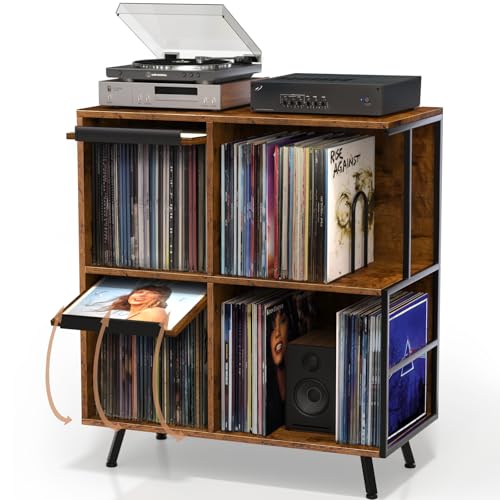
Design and footprint
This is a vertical, storage-first piece. That’s good news if you’re working with a bedroom corner or a tight apartment wall.
But a small footprint doesn’t always mean easy living. I’ve seen stands fit the floor plan and still fail because the dust cover can’t open fully or the RCA cables get crushed against the wall.
Measure the top shelf against your actual turntable, not the product photos. Check width, depth, lid clearance, and a little breathing room for cables.
Storage capacity and daily use
Think modest LP storage, not collection storage. If you’ve got 20 to 40 records, this kind of stand can feel tidy and efficient.
If you’re already at 80 to 100 LPs, it becomes partial storage. At that point, a cube shelf or larger record cabinet makes more sense.
Open storage is handy day to day. You can grab records faster, and there’s usually room for a brush, sleeves, or maybe a small phono preamp if shelf spacing works in your favor.
Sturdiness, materials, and speaker placement
MDF shelves and a metal frame are acceptable for budget furniture. They aren’t junk by default, but they also aren’t the same as a heavier audio rack or solid-wood console.
Loaded stability matters more than the empty-room feel. A compact turntable and a few rows of records can help the stand feel more planted, but that won’t fix speaker vibration if everything shares the same surface.
Assembly and setup tradeoffs
Expect normal flat-pack furniture assembly. Most buyers should be able to handle it, but the usual trouble spots are instruction clarity, frame alignment, and hardware consistency.
I’ve seen people blame a stand for wobble when the real problem was rushed assembly. Tighten the frame in sequence, don’t overtighten the MDF panels, and check floor level before you call it done.
Before final placement, make sure the dust cover opens, leave cable slack, and confirm the stand sits flat. That five-minute check saves a lot of frustration later.