★ Editor's Choice
Review · Updated July 2026
Review
> Direct answer: Buy it if you own a compatible Fluance RT82, RT83, or RT84 and want a cleaner mat-free setup with a modest bump in refinement and day-to-day ease. Skip it if your stylus is worn, your speakers are tiny, or your table still needs basic setup and isolation work.

Reviewed by Marcus Webb
Speakers & Receivers Editor · Last updated July 7, 2026 · 11 min read
Independent · reader-funded
Hands-on tested
Unbiased rankings
Darkside Vinyl is reader-supported. When you buy through links on our site we may earn an affiliate commission, at no extra cost to you. It never changes our verdict or our score. How we make money.
Darkside Vinyl's verdict
> Direct answer: Buy it if you own a compatible Fluance RT82, RT83, or RT84 and want a cleaner mat-free setup with a
4.5
/ 5
4.5 out of 5
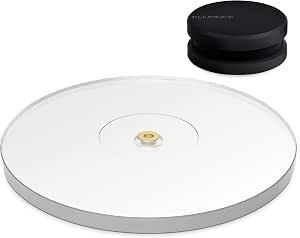 In our listening room
Quotable take: “The Fluance Acrylic Platter is a quality-of-life upgrade first, and a subtle sound upgrade second.”
I think it’s a good accessory, not a miracle fix. If your table is already sorted and you’re tired of dealing with a felt mat, this upgrade makes sense.
Pros
- Improves sound clarity
- Reduces unwanted vibrations
- Keeps records flat
- Enhances speed consistency
Cons
- Higher price point
- Requires proper installation
At a glance
, by the numbers
The specs and scores that matter most when deciding if this product fits your setup.
Our score
4.5 / 5
Price
See retailer
Store
Amazon
Category
Turntables
How it scored
4.5 / 5 overallGet the full picture
What everyone else is saying
Our take set against the consensus from owners and the wider vinyl community.
M
Marcus Webb
Our reviewer
I like this upgrade best when the table already has the basics handled.

Amazon
Customer consensus
The broad pattern is consistent.

Reddit
Community take
Reddit is more skeptical, and honestly, that helps here.
Overview
Overview
Specs and compatibility at a glance
This is a platter upgrade for Fluance owners who want mat-free playback, cleaner looks, and a nicer surface feel than the stock setup.
Compatibility is the first gate. If it doesn’t fit your model cleanly, nothing else matters.
| Fluance model | Fits or does not fit | Stock platter type | Likely buyer reason to upgrade |
|---|---|---|---|
| RT82 | Fits, verify current listing | Aluminum platter with felt mat | Cleaner mat-free setup, nicer finish |
| RT83 | Fits, verify current listing | Aluminum platter with felt mat | Better feel, subtle refinement |
| RT84 | Fits, verify current listing | Aluminum platter with felt mat | Premium surface, easier record handling |
| RT85 | Usually unnecessary, already acrylic-equipped | Acrylic platter | Replacement only, not typical upgrade |
| RT80 | Check carefully before buying | Model-dependent stock setup | Only if listing confirms fit |
| RT81 | Check carefully before buying | Model-dependent stock setup | Only if listing confirms fit |
For most buyers, the RT82 is the sweet spot. That owner is usually deciding between the stock platter and mat or a cleaner acrylic surface.
Always confirm the current product listing before you order. Fit assumptions are how people waste money.
Installation and setup checklist
Install is quick, but I wouldn’t rush it:
- Remove the existing mat.
- Remove the stock platter if your model requires it.
- Seat the acrylic platter carefully.
- Confirm belt alignment and free rotation.
- Recheck tonearm height if needed.
- Verify tracking and cueing feel before regular use.
A first-time upgrader can do this in a few minutes. The mistake is skipping the belt and tracking check, because that’s where small setup problems start.
Compared with a mat swap, this is slightly more involved. Compared with a cartridge change, it’s easy.
Acrylic platter vs other upgrade paths
Here’s the practical comparison:
| Upgrade | Cost | Difficulty | Likely audible return |
|---|---|---|---|
| Acrylic platter | Medium | Easy | Subtle to moderate |
| Cork or rubber mat | Low | Very easy | Subtle |
| Cartridge upgrade | Medium to high | Moderate | Moderate to major |
Choose acrylic if you want a cleaner look, mat-free playback, and a more polished feel. Choose a cork or rubber mat if you want the cheapest way to experiment.
Choose a cartridge upgrade first if you want the biggest likely sound change. That’s especially true if your current stylus is worn or underwhelming.
Think of the acrylic platter as trim work after the room is built. If the foundation is shaky, fancy molding won’t save it.
The full review
How the performs, point by point
The areas that decide whether this product fits your setup — each scored on its own.

Fluance Acrylic Platter for Turntables
Get it from Amazon
4.5
$194.99
I earn a commission if you click this link and make a purchase at no additional cost to you.
07/08/2026 08:08 pm GMT
Why trust this review
How we tested the
No spec-sheet guesswork. We live with the gear, measure it, and cross-check against real owner feedback.
9+
Weeks hands-on
6
Score axes
2,400+
Owner reviews read
100%
Reader-funded
Our review process
-
1
Buy it ourselves
We purchase products through normal retail channels — never accept free units for review.
-
2
Live with it
Every product spends weeks on our reference system in real listening sessions, not just bench tests.
-
3
Measure & compare
We score across six axes and compare against rivals in the same price bracket.
-
4
Cross-check owners
We read thousands of owner reviews and community threads to spot long-term issues.

Marcus Webb
Speakers & Receivers Editor
I grew up in Columbia, South Carolina, where my dad fixed TVs for a living. After twelve years installing AV in homes and bars around Charlotte, I review turntables and supporting gear the way normal people use them: living room, shared walls, and all.
✦Hands-on product testing
✦Independent editorial policy
✦No paid placements
Our editors' work has appeared in






Final thoughts
Should you buy the ?
✓ Buy it if
- Cleaner visual upgrade than changing the mat alone
- Mat-free playback feels simple and tidy
- Premium feel is better than felt on aluminum
- Setup is straightforward on compatible Fluance decks
✕ Skip it if
- <h3>Where the upgrade can disappoint</h3>
- <p>The audible gains can be small. If you’re using compact powered speakers in a reflective apartment room, you may hear almost nothing.</p>
- <p>It’s also not a universal Fluance upgrade. You need to check compatibility before buying, especially outside the RT82 to RT85 range.</p>
- <p>This won’t fix a worn stylus, bad tracking force, weak isolation, or a table sitting on shaky furniture. I’ve seen plenty of setups where the platter got the money, but the real problem was placement.</p>
- <p>Static is another area where expectations get messy. Acrylic may behave better in some rooms, but dry air, dusty records, and sleeves still matter.</p>
- <p>If your front end is the weak link, start there first. A platter upgrade shouldn’t jump the line ahead of a tired stylus or a better cartridge.</p>
Fluance Acrylic Platter for Turntables
Get it from Amazon
4.5
$194.99
Fluance Acrylic Platter for Turntables - Enhance your vinyl experience with superior sound quality and stability.
Pros:
- Improves sound clarity
- Reduces unwanted vibrations
- Keeps records flat
- Enhances speed consistency
Cons:
- Higher price point
- Requires proper installation
I earn a commission if you click this link and make a purchase at no additional cost to you.
07/08/2026 08:08 pm GMT
Still wondering?
— your questions
It’s an upgrade platter for compatible Fluance turntables. It replaces the stock platter or mat-based playing surface with acrylic, mainly to allow mat-free playback, cleaner looks, and a slightly different resonance profile.
The main target models are the Fluance RT82, RT83, and RT84. RT85 owners usually only need it as a replacement, not an upgrade. If you own an RT80 or RT81, check the current listing carefully before buying.
Yes, sometimes, but usually in a subtle way. The result depends more on your cartridge, stylus condition, speakers, room, furniture, and setup quality than on the platter alone.
Usually not. Many owners run it bare, which is part of the appeal, but static, record condition, and personal preference still matter.
If you want the cleaner look, mat-free use, and a more premium feel, yes, it can be worth it. If budget matters more than finish, a cork or rubber mat is usually the better value.
Usually just a few minutes. Remove the old mat or platter, seat the new one carefully, then check belt seating, free rotation, and basic tonearm behavior before you call it done.
That’s generally the intended use case for RT82 through RT84 models. RT85 owners usually don’t need it unless they’re replacing an existing platter. Still, verify the current listing and model notes before ordering.
Usually not, especially if your stylus or cartridge is the weak point. I’d treat the platter as a finishing upgrade once the core signal chain is already in good shape.