★ Editor's Choice
Review · Updated July 2026
Review
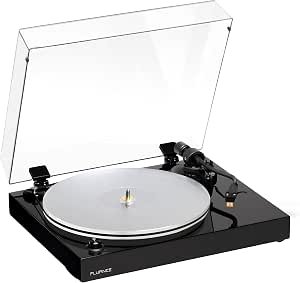
The Fluance RT85N turntable is a manual belt-drive deck with a Nagaoka MP-110 cartridge, acrylic platter, and no built-in phono preamp. Its main appeal is a warmer, smoother sound than the standard RT85, especially in bright rooms or with sharper-sounding speakers.

Reviewed by Amber Mitchell
Senior Turntable Reviewer · Last updated July 7, 2026 · 11 min read
Independent · reader-funded
Hands-on tested
Unbiased rankings
Darkside Vinyl is reader-supported. When you buy through links on our site we may earn an affiliate commission, at no extra cost to you. It never changes our verdict or our score. How we make money.
Darkside Vinyl's verdict
The Fluance RT85N turntable is a manual belt-drive deck with a Nagaoka MP-110 cartridge, acrylic platter, and no built
4.7
/ 5
4.7 out of 5
 In our listening room
**
Yes, I think the RT85N is worth it for the right buyer. If you want a fuller, smoother sound than the standard RT85, this version earns its keep through the cartridge.
Pros
- Exceptional sound quality
- Elegant design
- Accurate speed control
- High-density acrylic platter
- Well-built for the price
Cons
- Phono preamp not included
- Higher price point
- Requires careful setup
At a glance
, by the numbers
The specs and scores that matter most when deciding if this product fits your setup.
Our score
4.7 / 5
Price
See retailer
Store
Amazon
Category
Turntables
How it scored
4.7 / 5 overallGet the full picture
What everyone else is saying
Our take set against the consensus from owners and the wider vinyl community.
A
Amber Mitchell
Our reviewer
I think this is one of the smarter choices under $1,000 if you care more about musicality than features.

Amazon
Customer consensus
Amazon buyers usually praise the finish, easy assembly, and satisfying sound right away.

Reddit
Community take
Reddit is more blunt, and the pattern is consistent.
Overview
Overview
The RT85N makes the most sense as a package, not a spec sheet. You’re getting the Fluance RT85 platform, an aluminum tonearm, an acrylic platter, RCA output, a ground wire, and a cartridge that pushes the sound warmer from day one.
What else you need:
- an external phono preamp if your receiver or speakers don't already have one
- powered speakers, or an amplifier plus passive speakers
- a little setup time for balancing the tonearm and setting anti-skate
A simple real-world setup looks like this: turntable to phono preamp, preamp to powered speakers. That's it.
If your speakers lack a phono input, that extra box is the difference between frustration and a system that actually works.
What you're actually paying for
You’re mostly paying for two things: the solid RT85 platform and the Nagaoka MP-110. That's why this model makes more sense in a system that can reveal cartridge differences.
No built-in phono preamp isn't automatically a flaw. I’d rather see the money go into playback parts than a throw-in stage you'll want to bypass later.
RT85N vs RT85
This is the cleanest comparison. The regular Fluance RT85 uses the Ortofon 2M Blue, which usually sounds brighter and more analytical.
The RT85N sounds fuller and more forgiving. If your room is lively or your speakers lean bright, I’d pay for the Nagaoka version.
If you want more sparkle and edge detail, I’d stick with the standard RT85.
RT85N vs Pro-Ject Debut Carbon EVO
The Pro-Ject Debut Carbon EVO has more brand prestige and a more stripped-back audiophile feel. The Fluance usually wins on value, included parts, and beginner-friendliness.
If you want warm value and easier ownership, I’d lean Fluance. If you like the Pro-Ject upgrade path and minimalist identity, the EVO still has a case.
Who should buy it, and who shouldn't
Buy it if you want a good first serious turntable, manual control, upgrade potential, and a warmer presentation right out of the box. It fits especially well with bookshelf speakers in a normal apartment or living room.
Skip it if you need Bluetooth, USB, or built-in phono support. For convenience-first shoppers, an Audio-Technica AT-LP70XBT or AT-LP120X is usually the less annoying choice.
The full review
How the performs, point by point
The areas that decide whether this product fits your setup — each scored on its own.

Fluance RT85N Turntable
Get it from Amazon
4.7
$549.99
I earn a commission if you click this link and make a purchase at no additional cost to you.
07/09/2026 12:02 am GMT
Why trust this review
How we tested the
No spec-sheet guesswork. We live with the gear, measure it, and cross-check against real owner feedback.
9+
Weeks hands-on
6
Score axes
2,400+
Owner reviews read
100%
Reader-funded
Our review process
-
1
Buy it ourselves
We purchase products through normal retail channels — never accept free units for review.
-
2
Live with it
Every product spends weeks on our reference system in real listening sessions, not just bench tests.
-
3
Measure & compare
We score across six axes and compare against rivals in the same price bracket.
-
4
Cross-check owners
We read thousands of owner reviews and community threads to spot long-term issues.

Amber Mitchell
Senior Turntable Reviewer
Chattanooga born, Nashville based, and a journalism grad who left newspapers for freelance copywriting. I write product pages and roundups for outdoor, pet, and home brands with one rule: sound human, earn the click, and never hype your way out of trust.
✦Hands-on product testing
✦Independent editorial policy
✦No paid placements
Our editors' work has appeared in






Final thoughts
Should you buy the ?
I’d buy the RT85N if I wanted the RT85 platform but didn't want the sharper sound that can come with the Ortofon version. That cartridge swap changes the buying decision enough to matter.
I’d buy the regular RT85 if I wanted more sparkle. I’d look at the Pro-Ject Debut Carbon EVO or Rega Planar 1 if I cared more about brand feel or a different long-term upgrade path.
One last practical note: setup and system matching matter as much as the deck itself. A good turntable in the wrong chain is like good tires on a car with bad alignment: the part is fine, but the result still feels off.
✓ Buy it if
- Fuller mids, less edge: The Nagaoka MP-110 gives vocals, guitars, and older records a smoother shape than brighter cartridges like the Ortofon 2M Blue. - Better out-of-box balance: In a reflective living room with compact bookshelf speakers, the warmer voicing helps keep cymbals and upper vocals from getting brittle. - Acrylic platter included: You don't need to start with a felt mat swap, which saves one upgrade and one small headache. - Auto stop is useful: It adds convenience without turning this into a flimsy automatic deck. - Less upgrade pressure: The included moving magnet cartridge is good enough that many buyers won't feel the need to swap it right away.
- Manual operation is approachable: Setup takes a little care, but day-to-day use is simple once the counterweight and anti-skate are set.
✕ Skip it if
- No built-in phono preamp: If your speakers or receiver don't have a phono input, you'll need an external stage.
- Not for convenience-first buyers: If you want USB, Bluetooth, or DJ-style flexibility, an Audio-Technica AT-LP120X or AT-LP70XBT makes more sense.
- Warm sound isn't for everyone: Some listeners will want more bite, sparkle, and top-end detail than the MP-110 usually gives.
- System matching matters: If the rest of your setup is modest, you may not hear enough difference to justify the extra cost.
- Manual cueing still needs care: Auto stop helps at the end of a side, but you still need a steady hand at the start.
Fluance RT85N Turntable
Get it from Amazon
4.7
$549.99
Fluance RT85N Turntable - Experience superior sound quality with this expertly crafted turntable.
Pros:
- Exceptional sound quality
- Elegant design
- Accurate speed control
- High-density acrylic platter
- Well-built for the price
Cons:
- Phono preamp not included
- Higher price point
- Requires careful setup
I earn a commission if you click this link and make a purchase at no additional cost to you.
07/09/2026 12:02 am GMT
Still wondering?
— your questions
The Fluance RT85N is a manual belt-drive turntable with a preinstalled Nagaoka MP-110 moving magnet cartridge. It also includes an acrylic platter and auto stop, but it doesn't have a built-in phono preamp.
The main difference is the cartridge. The standard RT85 uses the Ortofon 2M Blue, while the RT85N uses the Nagaoka MP-110.
No, it doesn't. You'll need a phono preamp unless your receiver or powered speakers already include a phono input.
It's best for buyers who want warm hi-fi sound, don't mind manual operation, and are ready to build a proper setup with speakers and a phono stage. I like it most for people moving up from an all-in-one player into their first real stereo chain.
Yes, if you already know you prefer a fuller, smoother presentation. No, if you're chasing extra sparkle or your system is too modest to reveal much cartridge difference.
At minimum, you need a phono preamp unless your amp or speakers already have one built in. You also need powered speakers, or an amplifier and passive speakers.
Yes, I think it is. It's a strong first serious turntable for someone ready to move past suitcase players and basic starter decks.
Buy the RT85N if you want strong value, a warmer cartridge, and a setup that feels sorted quickly. Spend more on Pro-Ject if you prefer that brand's upgrade path, or look at Rega if you like its stripped-down philosophy.