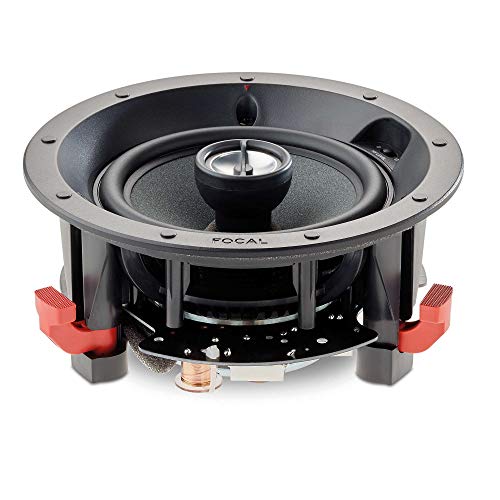
Specs table, what they mean in practice
| Spec |
Details |
| Driver size |
5 inch woofer |
| Impedance |
8 ohms |
| Sensitivity |
88 dB |
| Mounting type |
In-wall, flush mount with drywall mounting clamps |
| Best use |
Mixed music and TV in smaller rooms |
What this means in practice: An 8 ohm load is easy for most decent stereo receivers to handle. Sensitivity around 88 dB means you don't need exotic power for normal listening. Still, this isn't a giant-room bruiser. The 5 inch woofer can sound clean and controlled, but don't expect deep bass in a large open room. In-wall placement also changes the listening experience because you can't fine-tune toe-in and distance like you can with bookshelf speakers.
Turntable, phono preamp, receiver, and speaker compatibility
The signal chain is simple once you break it apart: turntable, phono preamp if your deck doesn't have one, stereo receiver, speaker wire, then the passive in-wall speaker.
If you need help sorting that out, start with this turntable setup guide.
A buyer with an Audio-Technica turntable and a Yamaha or Sony receiver can use this setup just fine.
A buyer with only a basic turntable and no amp needs to budget for more gear before these speakers make any sound.
Install checklist for retrofit drywall setups
Before you buy, check five things: stud spacing, wire path, listening height, nearby plumbing or electrical runs, and receiver power.
Test your wiring plan before you cut.
For vinyl rooms with limited floor space, in-wall speakers beat clutter better than bookshelf models.
For focused listening, though, a traditional stereo pair still wins on flexibility.
If the wiring and wall work don't scare you off, the final call comes down to how you actually use the room.