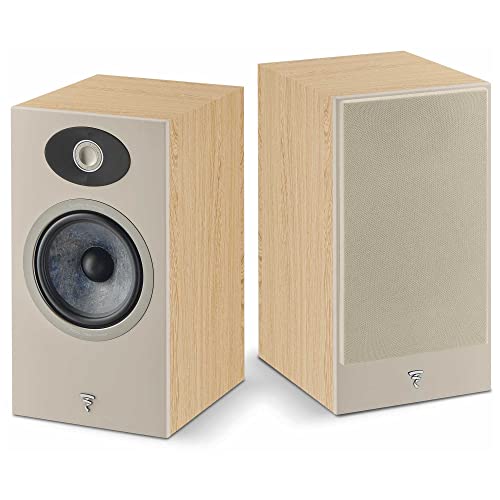
What stood out to me first with the Focal Theva N°1 was how clean and composed they sound when the rest of the system is doing its job. They don’t try to flatter everything you throw at them, but they do a nice job of pulling detail out of a mix without turning it sharp or fatiguing.
I liked them most with records that have a bit of space and texture in the recording. Voices sit forward enough to feel present, and instruments stay separated in a way that makes it easy to follow a bass line, a guitar part, or the little room cues that some speakers just blur together.
They’re not the kind of bookshelf speaker that tries to fake big-speaker muscle. What I heard instead was a balanced, articulate presentation that rewards good pressings and a decent amplifier, which is exactly what I want from a speaker in this class.
02Tonal Balance and Listening Fatigue
Theva N°1 has a lively top end, but in my room it stayed on the right side of energetic. That matters, because a speaker like this can easily cross into “impressive for ten minutes, annoying after an hour” territory if the voicing is off.
Here, I found the treble detailed without getting glassy, and that made longer listening sessions easier. Cymbals had shimmer, not spray, and acoustic instruments kept enough natural edge to sound real without turning brittle.
The midrange is where I think the speaker earns its keep. It gives vocals and guitars a convincing sense of body, so the presentation doesn’t feel thin or overly polished, which is a common trap with smaller modern speakers.
03Bass Performance and Room Fit
For a bookshelf speaker, the bass is sensible and controlled rather than oversized. I wouldn’t buy these expecting them to rattle the room on their own, but they do enough low-end work to keep music feeling grounded and complete.
What I appreciated most was the bass character, not just the amount. It stays relatively tidy, so kick drums and bass guitar lines don’t smear into each other, and that makes them easier to live with in smaller listening spaces.
If you’re hoping to run them full-range in a bigger room, you’ll probably want a sub or a different speaker category altogether. In a normal living room or nearfield setup, though, they make a lot of sense and don’t overreach.
04Build, Design, and Placement
Focal knows how to make a speaker look like it belongs in a real home, and the Theva N°1 has that same polished, understated feel. They look clean and modern without disappearing into generic black-box territory, which I always appreciate.
The cabinet feels solid enough that I never got the sense it was adding its own noise to the party. That matters more than people think, because a well-built enclosure can do a lot for clarity and confidence at normal listening levels.
Placement is pretty straightforward as long as you give them a little breathing room and don’t shove them too close to the wall. I found that a bit of care with stands and toe-in paid off, especially for imaging and keeping the bass from getting too thick.
I think these make the most sense for someone who wants a refined, revealing bookshelf speaker and already has, or plans to get, a decent amp. They’re not the sort of speaker that hides a weak front end, and honestly, that’s part of the appeal.
They also feel aimed at listeners who care about detail and tonal cleanliness more than sheer output. If your priority is hearing deeper into a record collection and getting a more polished, grown-up presentation, these fit that brief well.
For vinyl listeners especially, they’re a good match if you want your system to sound clear and organized without turning clinical. I’d put them in the category of speakers that can make you want to keep pulling records off the shelf, which is usually the best sign.