★ Editor's Choice
Review · Updated July 2026
Review
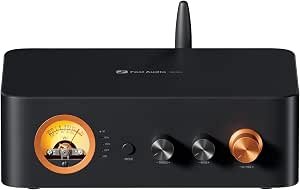
I like the MC351 most as a first-system hub, not a forever amp. If your setup looks like an Audio-Technica or Fluance turntable, compact passive speakers, and maybe a small subwoofer, it makes a lot of sense.

Reviewed by Sofia Ruiz
Contributing Vinyl Editor · Last updated July 7, 2026 · 11 min read
Independent · reader-funded
Hands-on tested
Unbiased rankings
Darkside Vinyl is reader-supported. When you buy through links on our site we may earn an affiliate commission, at no extra cost to you. It never changes our verdict or our score. How we make money.
Darkside Vinyl's verdict
I like the MC351 most as a first-system hub, not a forever amp.
4.5
/ 5
4.5 out of 5
 In our listening room
The biggest hinge is phono compatibility. If your turntable has a built-in phono preamp and can output line level, you're in the easy lane.
If your deck outputs phono only, or you're using a moving coil cartridge, confirm the input support first. Many compact amps expect line-level sources or moving magnet cartridges only.
Pros
- High power output
- Multiple input options
- User-friendly controls
- Vintage design
- Excellent sound quality
Cons
- May require additional speaker setup
- Limited Bluetooth range
At a glance
, by the numbers
The specs and scores that matter most when deciding if this product fits your setup.
Our score
4.5 / 5
Price
See retailer
Store
Amazon
Category
Turntables
How it scored
4.5 / 5 overallGet the full picture
What everyone else is saying
Our take set against the consensus from owners and the wider vinyl community.
S
Sofia Ruiz
Our reviewer
I wouldn't buy the MC351 for a room I planned to grow into.

Amazon
Customer consensus
Amazon reviews usually praise the same things: compact size, easy setup, decent value, and the fact that it doesn't dominate a shelf.

Reddit
Community take
Reddit is useful here because people post actual pairings.
Overview
Overview
Specs and connections that matter for vinyl buyers
For this kind of amp, I care less about flashy marketing and more about whether the connections match the gear you already own.
Here's the short list that matters:
- RCA input: needed for a turntable with line-level output or an external phono preamp.
- Phono support: confirm whether it's true phono input support, and whether it's MM only.
- Bluetooth: useful for casual streaming, not a reason by itself to buy or skip it.
- Subwoofer output: helpful if you're using small bookshelf speakers and want fuller low end later.
- Speaker terminals: binding posts are easier to live with, especially if you use banana plugs.
- Headphone output: nice to have, but secondary for most vinyl-first systems.
- Power rating: only meaningful when you pair it with the right speakers and room.
| Feature | Fosi Audio MC351 | Sony STR-DH190 | Generic mini Class D amp |
|---|---|---|---|
| Phono support | Needs confirmation by version, often the key buying hinge | Built-in phono input | Often none |
| Footprint | Very small | Full receiver size | Small |
| Bluetooth | Yes | Yes | Sometimes |
| Sub out | Often a real advantage | Usually less desktop-focused | Not always |
| Speaker power expectations | Best with efficient bookshelves | More forgiving | Varies widely |
| Best for | Compact vinyl and desktop systems | Vinyl-first buyers wanting headroom | Ultra-budget space saving |
Turntable and speaker compatibility, what this means in practice
The easiest match is a turntable from Audio-Technica or Fluance with a built-in preamp, switched to line output, feeding the amp by RCA. Add efficient bookshelf speakers and an optional compact sub, and the whole thing stays simple.
If you aren't sure whether your turntable outputs phono or line level, check for a phono/line switch on the back or in the manual. No switch usually means you need to verify whether the deck has a built-in preamp at all.
For speakers, I'd stay in the efficient bookshelf lane if possible. That's where a compact amplifier like this feels tidy and capable instead of stretched thin.
If you're still comparing source gear, Darkside Vinyl's turntable guides can help you match the amp to the deck you actually own.
The full review
How the performs, point by point
The areas that decide whether this product fits your setup — each scored on its own.

Fosi Audio MC351 Integrated Amplifier
Get it from Amazon
4.5
$189.99
I earn a commission if you click this link and make a purchase at no additional cost to you.
07/09/2026 05:04 am GMT
Why trust this review
How we tested the
No spec-sheet guesswork. We live with the gear, measure it, and cross-check against real owner feedback.
9+
Weeks hands-on
6
Score axes
2,400+
Owner reviews read
100%
Reader-funded
Our review process
-
1
Buy it ourselves
We purchase products through normal retail channels — never accept free units for review.
-
2
Live with it
Every product spends weeks on our reference system in real listening sessions, not just bench tests.
-
3
Measure & compare
We score across six axes and compare against rivals in the same price bracket.
-
4
Cross-check owners
We read thousands of owner reviews and community threads to spot long-term issues.

Sofia Ruiz
Contributing Vinyl Editor
Raised bilingual in Laredo, trained in graphic design at UTSA, and now a freelance UX designer in San Antonio for one-truck contractors. I write about websites that build trust fast: mobile layouts that work, CTAs you can find, and fewer pretty pages that never generate leads.
✦Hands-on product testing
✦Independent editorial policy
✦No paid placements
Our editors' work has appeared in






Final thoughts
Should you buy the ?
✓ Buy it if
- <h3>Why the compact form factor works</h3>
- <p>This is the kind of amp that fits where a full stereo receiver just doesn't. On a narrow media cabinet or beside a monitor, the smaller chassis gives you more placement options and fewer cable gymnastics.</p>
- <p>That matters more than people admit. A full-width Sony STR-DH190 can be a great value, but it asks for furniture space the MC351 doesn't.</p>
- <p>In a desk setup, this kind of amp can sit cleanly under a screen or off to the side. It won't bully the whole surface like a full receiver.</p>
- <p>Short signal chains help too. Less distance between turntable, amp, and speakers usually means tidier wiring and fewer chances to create a messy first setup.</p>
- <p>If you're still learning the basics, Darkside Vinyl's turntable setup guide is worth keeping open.</p>
- <h3>Why it can simplify a first vinyl system</h3>
- <p>The appeal is simple: one box handles source switching, speaker power, and Bluetooth for casual listening. That's a real win if you don't want a receiver, a separate streamer, and a pile of adapters.</p>
- <p>If the subwoofer output is part of your plan, that's another practical plus. Small bookshelf speakers often sound better with a compact sub filling in the low end, especially in apartments where you want fullness at lower volume.</p>
- <p>A clean first system might look like this: a Fluance turntable with a built-in preamp, RCA into the amp, phone over Bluetooth, and speaker wire to a pair of passive bookshelves. That's much cleaner than piecing together a bare-bones mini amp with no phono path and no sub out.</p>
✕ Skip it if
- <h3>Where power and headroom can become a problem</h3>
- <p>Compact amps don't fail because they're small. They fail when people expect them to act like full-size receivers in bigger rooms with harder-to-drive speakers.</p>
- <p>Wattage numbers alone won't save you here. Room size, listening distance, and speaker sensitivity matter more than the headline number.</p>
- <p>A common mismatch is pairing the MC351 with low-sensitivity bookshelf speakers in an open living room, then pushing for party volume. The result usually isn't dramatic failure, just strain and less control than expected.</p>
- <h3>The compatibility and upgrade limits to watch</h3>
- <p>This is where buyers get tripped up. If an amp has a phono input, that doesn't mean it works with every cartridge or every turntable output mode.</p>
- <p>If your turntable has a built-in preamp, you can often switch it to line level and plug into a standard RCA input. If it doesn't, you need to know whether the amp's phono input supports the cartridge you're using, usually moving magnet rather than moving coil.</p>
- <p>If you're fuzzy on that difference, start with Darkside Vinyl's what a phono preamp does.</p>
- <p>A very normal mistake is ordering the amp first, then realizing the turntable only outputs phono and the support doesn't line up. Now you're buying an external phono preamp, speaker wire, and maybe banana plugs you didn't budget for.</p>
- <p>Compared with the Sony STR-DH190 or a separate preamp-plus-amp setup, the upgrade ceiling is lower. You get fewer inputs and less room to grow piece by piece.</p>
Fosi Audio MC351 Integrated Amplifier
Get it from Amazon
4.5
$189.99
Fosi Audio MC351 Integrated Amplifier - Elevate your audio experience with this powerful and versatile amplifier.
Pros:
- High power output
- Multiple input options
- User-friendly controls
- Vintage design
- Excellent sound quality
Cons:
- May require additional speaker setup
- Limited Bluetooth range
I earn a commission if you click this link and make a purchase at no additional cost to you.
07/09/2026 05:04 am GMT
Still wondering?
— your questions
It's a compact integrated amplifier built to power passive speakers and handle source switching in a small audio system. In a vinyl setup, it fills the role a stereo receiver might fill, just in a much smaller box.
Sometimes, yes, but only if the turntable output and the amp input line up. If your turntable has a built-in phono preamp and can output line level, setup is usually straightforward through RCA.
I think it's strongest where compact size matters most. That means desktop listening, bedroom systems, and small-room vinyl setups with passive speakers.
Efficient bookshelf speakers are the safe bet. You want models that are easy to drive and don't need huge power to sound open and controlled.
You might. If your turntable already has a built-in preamp and outputs line level, probably not.
Yes, if your main problem is space and you want a simpler, smaller system. No, if your main problem is power headroom or future expansion.
It's pretty easy if you check the signal chain first. Confirm whether the turntable is set to phono or line, connect RCA, run speaker wire to the binding posts, add a subwoofer if you're using one, and pair Bluetooth if you want phone audio too.
The main risk isn't that it's bad. The main risk is mismatch.