★ Editor's Choice
Review · Updated July 2026
Review
Jamo S 803 Bookshelf Speakers are passive bookshelf speakers that make sense for a first turntable system if you want affordable stereo sound, better styling than most budget options, and room to upgrade later.

Reviewed by Mara Chen
Accessories Review Editor · Last updated July 7, 2026 · 11 min read
Independent · reader-funded
Hands-on tested
Unbiased rankings
Darkside Vinyl is reader-supported. When you buy through links on our site we may earn an affiliate commission, at no extra cost to you. It never changes our verdict or our score. How we make money.
Darkside Vinyl's verdict
Jamo S 803 Bookshelf Speakers are passive bookshelf speakers that make sense for a first turntable system if you wan
4.5
/ 5
4.5 out of 5
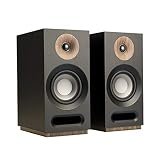 In our listening room
I'd buy the Jamo S 803 for a starter vinyl setup if you understand two things up front: you need an amp, and you shouldn't expect huge-room bass.
Best for:
Pros
- Stylish design
- Dolby Atmos ready
- Advanced acoustic technology
- Seamless fastening system
Cons
- Requires additional equipment for optimal performance
- Limited bass response without a subwoofer
At a glance
, by the numbers
The specs and scores that matter most when deciding if this product fits your setup.
Our score
4.5 / 5
Price
See retailer
Store
Amazon
Category
Turntables
How it scored
4.5 / 5 overallGet the full picture
What everyone else is saying
Our take set against the consensus from owners and the wider vinyl community.
M
Mara Chen
Our reviewer
I like the S 803 because it solves a common starter-system problem.

Amazon
Customer consensus
The pattern is pretty clear.

Reddit
Community take
Reddit is usually more useful for amp pairing and room fit.
Overview
Overview
Turntable setup fit
The signal chain matters: turntable → phono preamp → stereo receiver or integrated amplifier → speakers.
Some Audio-Technica turntables have a built-in phono preamp, which makes setup easier. In that case, you can run into a Sony or Yamaha receiver, then out to the Jamo pair.
A more traditional Fluance deck may need an external phono stage first. If you're fuzzy on that part, read the turntable setup guide and what a phono preamp does before you buy speakers.
Powered speakers simplify this chain. Passive speakers ask for one more box, but they give you more control later.
Amplifier matching and room size
You don't need exotic power here. A decent Sony, Yamaha, or Denon stereo receiver is usually enough for normal listening in a bedroom, office, or apartment living room.
What matters in practice is clean power and control. A respectable entry-level receiver usually beats a super-cheap mini amp, even when the watt numbers look similar on paper.
In a modest room, the S 803 can sound satisfying at normal listening distance. In a large open space, it may still sound clean, but it probably won't sound big.
If you want more low-end weight, add a subwoofer or move up to a larger speaker. Don't buy a compact bookshelf model and expect floorstanding scale. That's like asking a hatchback to haul like a pickup.
| Spec | Jamo S 803 |
|---|---|
| Driver size | 1-inch soft dome tweeter, 5-inch polyfiber woofer |
| Sensitivity | 87 dB |
| Impedance | 8 ohms |
| Frequency response | 57 Hz to 26 kHz |
| Cabinet dimensions | 13.4 x 7.5 x 9.9 in. |
| Port | Rear bass reflex port |
| Speaker terminals | 5-way binding posts |
| Extra feature | Atmos-ready top connection for S 8 ATM |
The full review
How the performs, point by point
The areas that decide whether this product fits your setup — each scored on its own.

Jamo S 803 Bookshelf Speakers
Get it from Amazon
4.5
$111.52
I earn a commission if you click this link and make a purchase at no additional cost to you.
07/06/2026 01:08 pm GMT
Why trust this review
How we tested the
No spec-sheet guesswork. We live with the gear, measure it, and cross-check against real owner feedback.
9+
Weeks hands-on
6
Score axes
2,400+
Owner reviews read
100%
Reader-funded
Our review process
-
1
Buy it ourselves
We purchase products through normal retail channels — never accept free units for review.
-
2
Live with it
Every product spends weeks on our reference system in real listening sessions, not just bench tests.
-
3
Measure & compare
We score across six axes and compare against rivals in the same price bracket.
-
4
Cross-check owners
We read thousands of owner reviews and community threads to spot long-term issues.

Mara Chen
Accessories Review Editor
I grew up in Fargo watching my parents' restaurant rise or fall with the map pack. After marketing at a Minneapolis agency, I consult on local SEO for service businesses and write search content that helps real companies show up when neighbors look on their phones.
✦Hands-on product testing
✦Independent editorial policy
✦No paid placements
Our editors' work has appeared in






Final thoughts
Should you buy the ?
✓ Buy it if
- <h3>Why the Jamo S 803 works well in a starter vinyl system</h3>
- <p>The first win is obvious when you unbox them: they look better than most speakers at this price. If your turntable sits in a shared living room, that matters.</p>
- <p>The bigger reason I like them is flexibility. You can pair them with an entry-level Yamaha, Sony, or Denon receiver now, then upgrade the amp or source later without replacing the speakers right away.</p>
- <p>That's the real appeal of passive speakers. They don't lock you into a dead-end setup.</p>
- <h3>What the specs mean in practice</h3>
- <p>These aren't hard to drive, but they do sound better with a decent stereo receiver or integrated amp than with a bargain mini amp.</p>
- <p>In plain English, most respectable Yamaha, Denon, or Sony stereo units will run them just fine in a normal room. A weak no-name amp can make them sound flatter than they should.</p>
- <p>The rear port matters more than the Atmos-ready top terminals for most vinyl buyers. If you shove them tight against a wall, bass can get thick and messy.</p>
✕ Skip it if
- <h3>Where the Jamo S 803 can disappoint</h3>
- <p>Bass is the limit here. In a bedroom or apartment living room, it's usually enough, but in a big open room it can feel light without a subwoofer.</p>
- <p>Placement can also trip you up. That rear port doesn't like being jammed against a wall or buried inside a shelf.</p>
- <p>The other downside is system complexity. If you want to unbox speakers, plug them straight into a turntable, and be done in ten minutes, these aren't the right pick.</p>
- <h3>Common buyer mistakes with this speaker</h3>
- <p>The biggest mistake is forgetting that these are passive speakers. They need a stereo receiver or integrated amplifier, and your turntable may also need a phono preamp.</p>
- <p>The second mistake is blaming the speaker for a bad chain. If you use the wrong input, a weak amp, and bad placement, the sound will be flat and muddy no matter what logo is on the grille.</p>
Jamo S 803 Bookshelf Speakers
Get it from Amazon
4.5
$111.52
Jamo S 803 Bookshelf Speakers - Elevate your audio experience with stylish, high-performance bookshelf speakers.
Pros:
- Stylish design
- Dolby Atmos ready
- Advanced acoustic technology
- Seamless fastening system
Cons:
- Requires additional equipment for optimal performance
- Limited bass response without a subwoofer
I earn a commission if you click this link and make a purchase at no additional cost to you.
07/06/2026 01:08 pm GMT
Still wondering?
— your questions
They're best for small to medium rooms, starter hi-fi systems, and vinyl listeners who want passive speakers with room to upgrade later. They also make sense for buyers who care about styling and may reuse them in a future surround setup.
They're passive speakers. That means they need a stereo receiver or integrated amplifier, and they can't run directly from a turntable on their own.
Yes, they work well in a turntable system if the rest of the chain is right. You need a phono preamp somewhere in the setup, either built into the turntable or added separately, plus an amp or receiver to power the speakers.
You don't need a huge amp. A decent entry-level Yamaha, Sony, or Denon receiver is usually enough for normal listening in a small or medium room, and it will sound better than a weak bargain amp.
Yes, if you want passive flexibility, solid looks, and a cleaner upgrade path than powered speakers offer. No, if your top priority is all-in-one simplicity.
You'll need a turntable, a phono preamp if your deck doesn't have one built in, a stereo receiver or integrated amplifier, speaker wire, and ideally stands. Common pairings include Audio-Technica and Fluance turntables with Sony, Yamaha, or Denon amplification.
A passive speaker pair can last many years if you don't overdrive it or physically damage it. In many systems, the speakers outlast the turntable, cartridge, or receiver.
If simplicity is the goal, buy powered speakers. If you want better upgrade flexibility and don't mind adding an amp, the Jamo pair is the better long-term play.