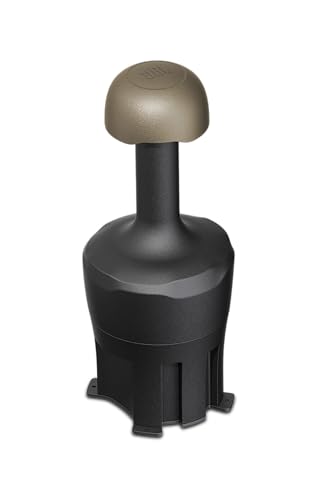
Key specs and what they mean in practice
Here’s the short version of what matters most:
| Spec |
What to look for |
| Enclosure type |
Sealed or enclosed powered cabinet |
| Driver size |
12-inch subwoofer |
| Waterproof claim |
Verify exact JBL wording on the listing |
| Inputs |
RCA input, speaker-level input if included |
| Power type |
Built-in powered amplification |
| Ideal environment |
Boats, utility vehicles, exposed installs |
The headline numbers can mislead people. RMS power tells you more about usable, sustained output, while peak power is the short-burst marketing number.
In practice, don’t buy off peak wattage alone. Enclosure design, crossover behavior, and placement matter more than one oversized number on the box.
A buyer might see a huge peak rating and assume it will beat a smaller home unit. In a room, that often isn’t true, because frequency response, cabinet tuning, and placement decide whether bass sounds tight or sloppy.
And no, it doesn’t need an external car audio amplifier if it’s truly a powered model. The amp is built in, which is part of the appeal.
Can you use it with a turntable?
Yes, sometimes, but only if the rest of your chain supports it. A turntable usually can’t connect directly to a subwoofer by itself.
You need the right path: turntable, then phono preamp if required, then a receiver or speaker system with the right output options. If your setup lacks a sub out, you may need to rely on speaker-level input, if the JBL supports it.
Here’s the common trap: someone has an Audio-Technica turntable and powered speakers, wants more low end, and assumes any powered sub will slot in. In practice, the wiring can get awkward fast.
If you’re still planning your system, check your turntable setup guide and make sure the signal chain supports a sub before you buy one.
For most vinyl listeners, a home subwoofer is still the easier and better-sounding choice.
Marine or car subwoofer vs home hi-fi subwoofer
This comparison is simpler than it looks:
| Criteria |
Marine or car style sub |
Home hi-fi subwoofer |
| Durability |
Better for moisture, dust, exposed installs |
Built for indoor use |
| Indoor sound tuning |
Usually secondary |
Usually better |
| Install simplicity |
Good for all-in-one vehicle or boat use |
Better for receivers and stereo systems |
| Placement flexibility |
Depends on mounting needs |
Better for room placement |
| Turntable compatibility |
Possible, but less direct |
Usually easier |
If you’ve got a dock setup or side-by-side, the JBL’s rugged build is a real advantage. If you’ve got a couch, a pair of speakers, and a record shelf, that advantage may not matter at all.
It’s a little like using mud tires for a grocery run. Great when the terrain is rough, not the best default when the road is smooth.