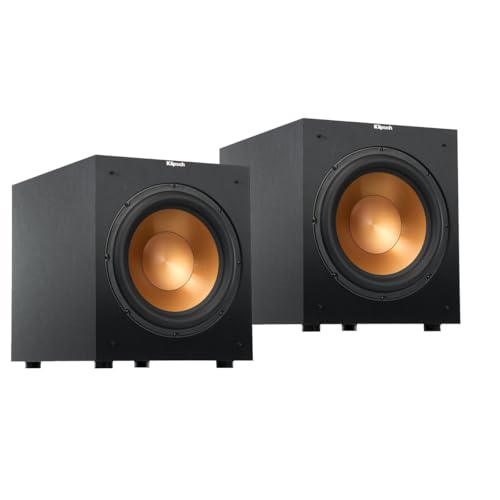
The Klipsch R-12SW really shines when it comes to sound quality, especially in a vinyl setup. It adds a depth and richness to recordings that smaller bookshelf speakers often struggle to deliver on their own. Whether I’m spinning jazz or rock, the extra low-end support makes everything feel more grounded and immersive, allowing the music to breathe without losing clarity.
However, I did notice that it leans more toward fullness and punch than ultra-precise finesse. If you’re after that last bit of bass texture, you might find it a bit lacking compared to some smaller sealed subs. But for most vinyl listeners, that added weight is more than enough to elevate the listening experience.
The build quality of the Klipsch R-12SW is pretty solid. The front-firing design makes it easier to integrate into various room layouts without too much fuss. I appreciate that it doesn’t feel too bulky for a 12-inch sub; it has a sleek, modern look that fits well with most decor.
Still, the size can be a consideration if you’re working with a small room. In tight spaces, it might feel oversized if not placed correctly. But in a typical living room setup, it strikes a good balance between aesthetics and performance.
Setting up the R-12SW was straightforward, especially with the RCA line and LFE inputs. I connected it from my receiver’s sub out, and it was ready to go—no complicated wiring or confusing settings. The gain, low-pass crossover, and phase controls give you the flexibility to fine-tune the integration with your main speakers, which I found essential for achieving that seamless sound.
However, I did encounter some challenges when I pushed the gain too high or set the crossover too liberally. In those cases, the bass could feel a bit detached from the music, so it’s crucial to dial it in properly. Once I found the right settings, it really transformed my listening experience.
04Connectivity & Features
The connectivity options on the Klipsch R-12SW are pretty decent, but it’s important to ensure your entire signal chain supports it. If you’re using a turntable, you’ll typically need a phono preamp and a receiver with a sub out. It’s a straightforward path, but I’ve seen many vinyl enthusiasts overlook this and end up disappointed.
For those with powered speaker systems, this sub may not be the magic bullet they’re hoping for. You might need to upgrade your electronics first to get the most out of this sub, so make sure to check your setup before diving in.
In everyday use, the R-12SW delivers a reliable performance that enhances both music and movie watching. It has enough output for a typical living room, which is great for those who enjoy a full-range experience. I found that it really excelled with records that have a lot of lower frequencies, making everything feel more dynamic and alive.
That said, I’d advise keeping the gain reasonable in smaller spaces to avoid overwhelming the room. If you’re in an apartment or a compact bedroom, be mindful of how much bass you’re pushing; it can easily become too much. But overall, it’s a solid performer that adds a lot of value to a vinyl setup.
06Upgrade Path / Who It’s For
The Klipsch R-12SW is a fantastic option for anyone looking to enhance their vinyl listening experience without breaking the bank. It’s perfect for those who already have decent bookshelf speakers and want to fill in the low-end gap. If you find your mains struggling with bass-heavy tracks, this sub can really help bring everything together.
However, if you’re a die-hard audiophile chasing the utmost precision, you might want to look at smaller, sealed subs that focus more on texture. But for most vinyl lovers, the R-12SW strikes a great balance between quality and affordability, making it a worthwhile addition to your setup.