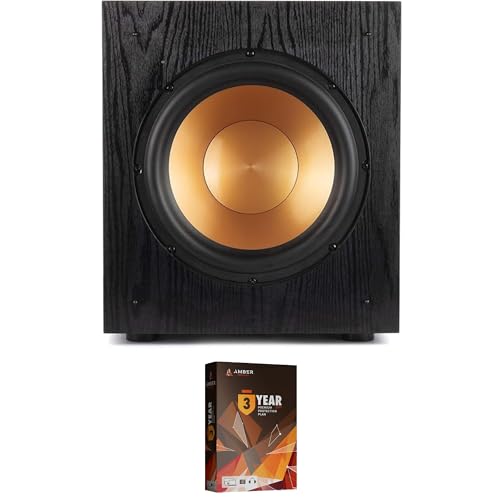
Key specs and what they mean in practice
Here’s the quick version of the hardware side:
| Spec |
What you get |
| Driver size |
10-inch driver |
| Amp type |
Powered subwoofer design |
| Inputs |
RCA/LFE input |
| Controls |
Gain, crossover control, phase switch |
| Cabinet style |
MDF cabinet, front-firing layout |
| Ideal room size |
Small to medium rooms |
A 10-inch driver is a sensible middle ground. In a small or medium room, it usually adds weight without becoming a placement headache.
The powered design keeps things simpler for beginners. The RCA/LFE input is standard, but it only helps if your system can actually send the sub a signal.
How to connect it to a turntable or TV system
For a vinyl setup, the clean signal chain is: turntable to phono preamp to stereo receiver to subwoofer output to the Klipsch. If your turntable has a built-in preamp, that removes one box, but not the need for the receiver or a compatible output path.
Some powered speakers with a dedicated sub out can work too. What this sub doesn’t do is replace a phono preamp or fix a bare-bones turntable setup by itself.
A common mistake is checking the sub first instead of checking the receiver connections. If you need help with the chain, start with what a phono preamp is and then use the full turntable setup guide.
Music vs movies, where it fits best
For music, this works well when you want fuller bass from small speakers and you’re willing to set the crossover carefully. For movies, it adds more impact than no sub at all, but it’s not the last word in slam.
That makes it best for mixed-use systems or music-first casual setups. If your room is tiny, you don’t have a sub out, or you mostly listen on headphones, I’d pass.