01Sound and low-end character
The Klipsch SUB-100 Synergy is the kind of subwoofer that makes itself known pretty quickly. I found it happiest when it was asked to add weight and punch to a small or modestly sized room, where it could give kick drums, bass guitars, and movie effects a little extra muscle without turning everything into a rumble-fest.
What I liked most was the way it brought a sense of scale to systems that otherwise felt a little thin. It’s not the kind of sub that tries to sound fancy or ultra-refined; it’s more about giving music and movies a solid foundation and making the whole setup feel more complete.
That said, I wouldn’t call it the last word in finesse. If you’re chasing the tightest, most layered bass for critical listening, there are more controlled subs out there, but for everyday use it does the job in a very straightforward, satisfying way.
02How it integrates with music
For vinyl listening, integration matters more than raw output, and that’s where the SUB-100 is decent rather than magical. Once I got the crossover and level set sensibly, it blended well enough that I stopped thinking about the sub and just heard a fuller system.
I especially liked it with records that benefit from a little extra low-end body: rock, soul, dub, electronic stuff, and anything with a strong kick drum. It adds weight without making every record sound artificially huge, which is usually the line I want a sub to walk.
On more delicate acoustic material, I found I had to keep my hand off the gain knob. If you push it too hard, it can start to call attention to itself, so the sweet spot is definitely “supportive” rather than “showy.”
03Home theater and everyday impact
This is the sort of subwoofer that makes casual movie nights more fun almost immediately. Explosions, low effects, and soundtrack swells get a real sense of impact, and even at moderate volume it adds a feeling of depth that smaller speakers just can’t fake.
I also like that it doesn’t need to be cranked to make a difference. In normal living-room use, it gives TV and streaming audio more body, which is one of those upgrades you notice right away even if you’re not sitting down to “listen critically.”
It’s not a giant-room bruiser, though, and I wouldn’t buy it expecting it to pressurize a big open space. In a more typical room, it feels much more at home, where it can deliver punch without sounding strained.
04Build, design, and placement
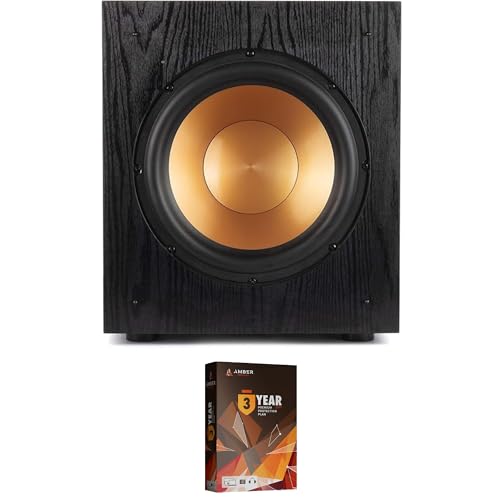
The SUB-100 has that classic no-nonsense Klipsch look: simple, black, and easy to tuck into a room without making a scene. I appreciate that it doesn’t try to be decorative; it’s clearly meant to disappear into the setup and get on with the job.
Physically, it’s the kind of sub that’s easy to live with. I had no trouble moving it around the room to find a better spot, which matters a lot more than people think when you’re trying to get bass to behave in a real house instead of a test bench.
Placement still matters, as it always does with subs, and I found it responded pretty predictably to being nudged closer to a wall or pulled back a bit. That makes it a friendly option for someone who’s willing to experiment a little but doesn’t want a finicky setup process.
I like gear like this when the controls are simple enough that I can dial it in without reading a manual three times. The SUB-100 keeps things refreshingly basic, which makes it approachable if this is your first subwoofer or if you just want something that doesn’t turn setup into a weekend project.
In practice, I spent most of my time adjusting the crossover and volume, then leaving it alone. That’s how I want a sub to behave in a real system: set it, listen for a while, make a small tweak, and move on with your life.
There’s nothing here that feels especially advanced, but that’s not really the point. The appeal is that it gets out of the way and lets you focus on getting the balance right by ear, which is still the best way to do it in my room.
I’d point this sub toward someone building a first serious stereo or home theater setup, especially if they want a straightforward way to add bass without overcomplicating the rack. It’s also a sensible match for smaller spaces where you want more fullness, not earthquake levels of output.
If your system is already pretty high-end and you’re obsessed with ultra-tight, deeply textured bass, you may outgrow it. But for the kind of buyer who wants a dependable, easy-to-live-with sub that improves music and movies in an obvious way, it makes a lot of sense.
In that context, the SUB-100 feels less like a statement piece and more like a practical upgrade. I think that’s exactly where it belongs: in systems that need real low-end help without turning the whole setup into a science project.