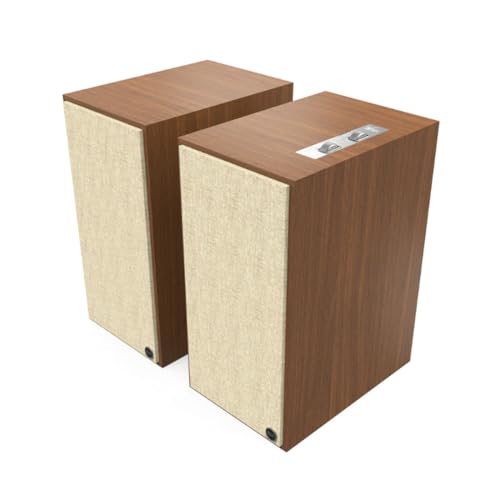
Specs and inputs that matter in practice
Here’s what matters most in daily use:
| Input |
Included |
What it’s for |
Why it matters |
| Phono |
Yes |
Direct turntable connection |
Lets many turntables plug in without an external phono stage |
| HDMI ARC |
Yes |
TV audio |
Makes these a real soundbar alternative |
| USB-B |
Yes |
Computer audio |
Good for laptop or desktop lossless playback |
| Optical |
Yes |
TV or streamer |
Easy digital hookup for modern sources |
| Bluetooth |
Yes |
Wireless music |
Convenient, but not the best source for judging sound |
| RCA line input |
Yes |
Analog sources |
Useful for decks with built-in preamps or other gear |
| Subwoofer output |
Yes |
Add more low end |
Gives you room to expand later |
The built-in 192kHz/24-bit DAC keeps digital sources simple. Instead of adding another box, you plug in and go.
If you’re not sure when to use phono versus line, read our phono preamp guide.
A realistic setup is easy: turntable into phono, TV into HDMI ARC, and laptop into USB-B. That’s why these stand out from a soundbar and from passive speakers that need an amp or receiver.
Who The Nines are best for, and who should skip them
Buy these if you want one premium system for records, streaming, and nightly TV use. They fit vinyl-first living rooms, TV-plus-music setups, and medium to larger rooms.
Skip them if you’re building a desk setup, shopping on a tight budget, or already own a good integrated amp. I’d also pass if you enjoy swapping components over time.
The Nines vs passive speakers plus receiver:
- The Nines: Better for simplicity, cleaner setup, fewer cables, and HDMI ARC
- Passive + amp: Better for upgrade flexibility and system tuning over time
Against a soundbar, The Nines win easily for stereo imaging and music. Against smaller powered speakers, they win on scale, but not always on value.