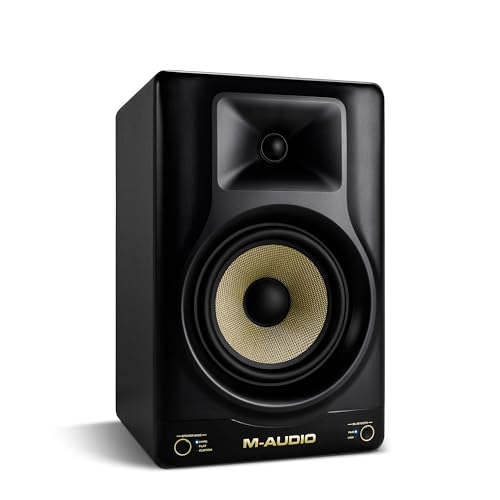
One of the first things that struck me about the M-Audio Forty Sixty is how monitor-like the sound is. It’s not just about volume; it’s about clarity and detail. When I played a well-produced record, I felt like I could hear the nuances in the mixing that I hadn’t noticed before. Bad pressings, on the other hand, quickly revealed themselves, which is something to keep in mind if you’re used to a warmer, more forgiving sound from consumer speakers.
If you’re a vinyl enthusiast who loves to dissect the quality of your records, the Forty Sixty will serve you well. The 6.5-inch woofers provide a solid body and headroom that smaller desktop monitors just can’t match. I found that good records sounded open and sorted out, making it a joy to listen critically without losing the fun of the music.
02Connectivity and Flexibility
The connectivity options on the Forty Sixty are impressive, making it a versatile choice for various setups. You’ve got RCA, TRS, XLR, AUX, USB-C, and even Bluetooth 5.3. This means you can easily hook up a turntable via RCA, a laptop through USB-C, and stream from your phone, all to the same pair of speakers. For someone like me who juggles multiple audio sources, this flexibility is a game changer.
However, it’s essential to remember that the RCA input expects line-level signals, not phono-level. I’ve seen too many folks plug their turntables directly into these speakers without a phono preamp and end up with weak volume and thin sound. Just make sure you know your setup before diving in, or you might end up frustrated.
The Forty Sixty has a solid build quality that feels more substantial than many compact powered speakers. The design is straightforward and unobtrusive, which is great if you’re looking to integrate them into your living space without turning it into a full-blown studio. The finish is clean, and the size strikes a nice balance—not too bulky, but not so small that they feel like toys.
One thing to keep in mind is that placement matters a lot with these monitor-style speakers. They need some room to breathe, so if you’re planning to shove them against a wall on a cluttered console, you might not get the best sound. I found that adjusting their position made a noticeable difference in the bass and treble balance.
In day-to-day use, the Forty Sixty shines in mixed setups. I often switch between listening to records, watching TV, and playing computer audio, and these speakers handled it all like a champ. The ability to connect via Bluetooth is a nice touch for casual streaming, though I wouldn’t rely on it for serious listening sessions.
05Upgrade Path and Who It’s For
If you’re moving up from smaller powered speakers or looking for an all-in-one solution for your vinyl, TV, and computer audio, the Forty Sixty presents a solid upgrade path. It’s particularly well-suited for those who want to invest in a versatile audio system without needing to buy multiple sets of speakers for different uses. Plus, if you’re already familiar with the idea of using a phono preamp, you’re set to enjoy what these speakers offer.