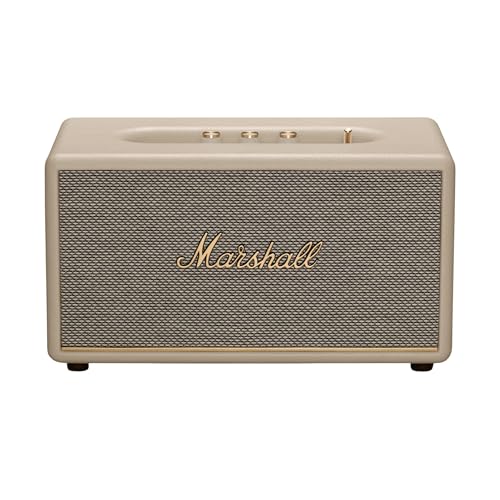
Compatibility table, what works and what needs extra gear
Here’s the fast answer on source compatibility.
| Source device |
Connects directly? |
Extra gear needed? |
Best input to use |
| Turntable with built-in preamp (Audio-Technica LP60X, some Victrola, some Crosley) |
Yes |
No |
RCA input |
| Turntable without preamp (Fluance RT82, many step-up decks) |
No |
Separate phono preamp |
RCA input after preamp |
| Bluetooth turntable |
Yes |
No, if using wireless output |
Bluetooth 5.2 |
| TV |
Usually yes |
Depends on TV output |
3.5 mm or RCA |
| Phone |
Yes |
No |
Bluetooth 5.2 |
An Audio-Technica LP60X can plug straight into the RCA input and work fine.
A Fluance RT82 can't do that by itself, so you'll need an external phono stage first.
The simple rule is this: RCA input doesn't mean phono input. This speaker wants a line-level signal, not raw phono-level output.
What the specs mean in practice
On paper, the useful stuff is straightforward: a larger cabinet than a small portable speaker, analog inputs, Bluetooth 5.2, app control through the Marshall Bluetooth app, bass and treble adjustment, and Dynamic Loudness.
What this means in practice is simple. It sounds fuller and more relaxed than a tiny Bluetooth speaker in a living room.
That still doesn't give you the width of separate speakers. It also doesn't erase vibration issues if you park it right next to your turntable.
In a normal room, this speaker can feel satisfying at moderate volume. If your couch spans a wide wall and you want instruments to stretch left and right, a stereo pair still wins.
Mini comparison, where it fits in the market
Against powered bookshelf speakers from Edifier, Kanto, or Audioengine, the Stanmore III wins on simplicity and looks.
It loses on stereo imaging and upgrade flexibility.
Against smaller Bluetooth speakers, it usually sounds bigger and more convincing for living-room listening. It also gives you better analog hookup options for a turntable.
That puts it in the middle. It’s more serious than a casual portable speaker, but less flexible than an entry-level hi-fi speaker pair.
If you're cross-shopping this against Kanto or Edifier, you're really choosing between cleaner aesthetics and better stereo performance.
| Option |
Best for |
Stereo separation |
Turntable compatibility |
Upgrade path |
Room look |
| Marshall Stanmore III |
Simple mixed-use living-room setup |
Limited |
Easy with line-level turntables; needs preamp for phono-only decks |
Limited |
Strong |
| Powered bookshelf speakers |
Dedicated vinyl listening |
Strong |
Often easier to build around with separate components |
Better |
Varies |
| Smaller Bluetooth speakers |
Casual streaming first |
Limited |
Usually weaker analog support |
Minimal |
Compact |