★ Editor's Choice
Review · Updated July 2026
Review
You’ve got a turntable, a pair of powered speakers, and one of those little glowing Douk boxes sitting in your cart. The problem is simple: you don’t need a pretty tube gadget, you need the right job done in the signal chain.

Reviewed by Sofia Ruiz
Contributing Vinyl Editor · Last updated July 7, 2026 · 11 min read
Independent · reader-funded
Hands-on tested
Unbiased rankings
Darkside Vinyl is reader-supported. When you buy through links on our site we may earn an affiliate commission, at no extra cost to you. It never changes our verdict or our score. How we make money.
Darkside Vinyl's verdict
You’ve got a turntable, a pair of powered speakers, and one of those little glowing Douk boxes sitting in your cart.
4.5
/ 5
4.5 out of 5
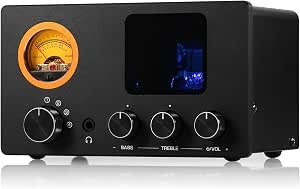 In our listening room
I’m keeping this focused on the buying decision. If you’re running an entry-level Audio-Technica or Fluance deck into powered speakers or a receiver AUX input, this is about avoiding the wrong box.
The catch is model confusion. Some Nobsound and Douk Audio units are true MM phono preamps with RIAA equalization, while others are line preamps or tube buffers that won't replace a phono stage for a turntable.
Pros
- High-fidelity sound
- Customizable op-amp & tube
- Vintage design with VU meter
- Low noise signal purity
- Drives a wide range of headphones
Cons
- Limited power for very low impedance headphones
- Requires space for setup
At a glance
, by the numbers
The specs and scores that matter most when deciding if this product fits your setup.
Our score
4.5 / 5
Price
See retailer
Store
Amazon
Category
Turntables
How it scored
4.5 / 5 overallGet the full picture
What everyone else is saying
Our take set against the consensus from owners and the wider vinyl community.
S
Sofia Ruiz
Our reviewer
I like gear that makes the next step obvious, and this one only works if the job is clear first.

Amazon
Customer consensus
Amazon feedback usually lands in the same places: easy setup, attractive look, budget-friendly price, and a sense of added warmth.

Reddit
Community take
Reddit is more skeptical, and that’s useful here.
Overview
Overview
This unit belongs in one specific lane. It’s for buyers who need an entry-level phono stage and want some tube character, not anyone who just wants a random glowing box between components.
Compatibility checklist
- Best with a turntable that doesn’t have a built-in preamp, or one with the internal stage switched off.
- Best suited to an MM cartridge.
- Connect it to powered speakers or a receiver through AUX or line input, not a phono input.
- Grounding and cable routing still matter.
Here’s the easy test: turntable output is tiny and needs RIAA equalization. A true phono preamp handles that. A tube buffer doesn’t.
If you’ve got a Fluance RT81-style setup feeding powered speakers with no phono input, you need the real phono version. Buy the wrong one and the record will sound weak, thin, and off-balance.
How it compares to common alternatives
| Model | Type | Sound profile | Best for | Main tradeoff |
|---|---|---|---|---|
| Nobsound / Douk Audio tube unit | MM phono preamp or tube buffer, depends on model | Warmer, softer, more colored | Beginners who want character on a budget | Model confusion, higher noise risk |
| ART DJPRE II | Solid-state phono preamp | Cleaner, more neutral | Buyers who want predictable performance | Less personality |
| Fosi Audio Box X2 | Budget tube-style phono preamp | Warm, punchy, slightly fuller | Buyers comparing affordable tube-flavored options | Still not the cleanest in its class |
| Pyle phono preamp | Basic solid-state budget option | Thin, simple, functional | Lowest-cost setups | Bare-bones sound and build |
If your priority is clean gain and lower hum risk, I’d take the ART. If you want a little character and accept the compromise, the Douk unit makes more sense than a bare-minimum Pyle.
Verdict box
Best for: beginner vinyl systems that need a budget MM phono stage and want a touch of tube character.
Not for: MC cartridge users, buyers chasing the cleanest signal, or anyone who isn’t sure whether their turntable already has a built-in preamp.
Setup fit: turntable without a built-in preamp, or with it switched off, into the Douk unit, then line-level output to powered speakers or a receiver AUX input.
Buy if, skip if
Buy if:
- You want a low-cost first preamp for an MM cartridge setup.
- You like a slightly warmer presentation and can accept some extra noise.
- You’ve checked the listing and confirmed it includes phono input and RIAA equalization.
Skip if:
- Your receiver already has a phono input.
- Your turntable already has a decent built-in preamp and you’re not chasing a specific sound.
- You want lower hiss and hum risk, or you just want the easiest answer.
If you’ve got an Audio-Technica deck with no built-in preamp and powered bookshelf speakers on a TV stand, this can fit. If you accidentally buy the buffer version, it won't do the actual phono job.
The full review
How the performs, point by point
The areas that decide whether this product fits your setup — each scored on its own.

Nobsound Douk Audio Tube Preamp
Get it from Amazon
4.5
$109.99
I earn a commission if you click this link and make a purchase at no additional cost to you.
07/09/2026 10:04 am GMT
Why trust this review
How we tested the
No spec-sheet guesswork. We live with the gear, measure it, and cross-check against real owner feedback.
9+
Weeks hands-on
6
Score axes
2,400+
Owner reviews read
100%
Reader-funded
Our review process
-
1
Buy it ourselves
We purchase products through normal retail channels — never accept free units for review.
-
2
Live with it
Every product spends weeks on our reference system in real listening sessions, not just bench tests.
-
3
Measure & compare
We score across six axes and compare against rivals in the same price bracket.
-
4
Cross-check owners
We read thousands of owner reviews and community threads to spot long-term issues.

Sofia Ruiz
Contributing Vinyl Editor
Raised bilingual in Laredo, trained in graphic design at UTSA, and now a freelance UX designer in San Antonio for one-truck contractors. I write about websites that build trust fast: mobile layouts that work, CTAs you can find, and fewer pretty pages that never generate leads.
✦Hands-on product testing
✦Independent editorial policy
✦No paid placements
Our editors' work has appeared in






Final thoughts
Should you buy the ?
The decision is simpler than the product naming makes it seem. First, confirm it’s a true MM phono preamp. Then decide whether you want warmth badly enough to accept a little more noise risk.
✓ Buy it if
- The tubes can add a slightly warmer, softer edge on bright beginner systems.
- It gives you a low-cost entry into tube-flavored vinyl playback.
- It often sounds more interesting than the cheapest plain black budget boxes.
- The compact aluminum chassis fits easily in apartment and desktop setups.
- RCA input and output keep wiring simple for beginners.
- It can sit neatly between a turntable and powered speakers or a receiver line input.
✕ Skip it if
- Noise control is usually weaker than a good solid-state option like the ART DJPRE II.
- You may hear more hiss, hum, or softer detail than you expected.
- Tube character at this price can also mean less control and less refinement.
- Naming confusion between phono preamp and tube buffer versions is the biggest risk.
- It’s usually an MM-only option, so cartridge compatibility matters.
- It’s not the smartest first upgrade if your speakers, stylus, or setup still need attention.
Nobsound Douk Audio Tube Preamp
Get it from Amazon
4.5
$109.99
Nobsound Douk Audio Tube Preamp - Perfect for audiophiles seeking rich sound and customizable audio experiences.
Pros:
- High-fidelity sound
- Customizable op-amp & tube
- Vintage design with VU meter
- Low noise signal purity
- Drives a wide range of headphones
Cons:
- Limited power for very low impedance headphones
- Requires space for setup
I earn a commission if you click this link and make a purchase at no additional cost to you.
07/09/2026 10:04 am GMT
Still wondering?
— your questions
In a vinyl chain, it sits between the turntable and powered speakers or a receiver line input. If it’s the true phono version, it boosts the cartridge-level signal and applies RIAA equalization so records play at the right level and tonal balance.
It depends on the exact model. Some Nobsound and Douk Audio units are real MM phono preamps, while others are line preamps or tube buffers, so you need to verify phono input support before buying.
It’s best for budget vinyl listeners with an MM cartridge, no downstream phono input, and a taste for a slightly warmer sound. It’s a better fit for someone who understands the setup than for someone who wants zero-risk plug-and-play.
Sometimes, but usually in a modest way. You may get a little warmth or a smoother edge, but speakers, cartridge quality, stylus condition, and setup often matter more.
It usually sits in the budget range, above the cheapest Pyle-style options and around other affordable entry-level phono stage choices. If the price gets too close to the ART DJPRE II, the cleaner solid-state option often becomes the better value.
Yes, if you understand the signal chain first. Run RCA from the turntable into the unit, connect the output to powered speakers or a receiver AUX input, and secure the ground if the model includes a ground terminal.
Yes, but only if it’s the true MM phono preamp version. Your speakers need a line input, and the turntable needs an external phono stage because the cartridge signal is too low on its own.
It can be, if you want tube character and don’t mind tradeoffs in hiss, hum control, and predictability. If you want cleaner, lower-noise performance, the ART DJPRE II is usually the better buy.