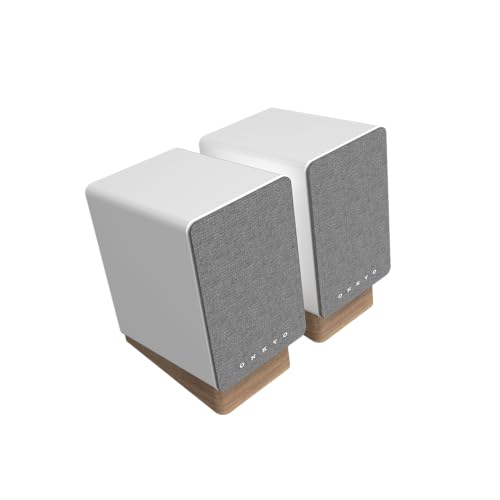
Inputs and connectivity, what vinyl buyers need to know
Here’s the practical input picture:
| Input |
What it does |
Best use |
| Bluetooth |
Wireless audio from phone or tablet |
Casual streaming |
| RCA |
Analog wired input |
Turntable with built-in preamp |
| USB audio |
Direct digital connection to computer |
Desk and laptop audio |
| Optical |
Digital TV connection |
TV or media setup |
For vinyl buyers, RCA is the key input. But RCA isn't a substitute for a phono stage.
If you need help sorting that out, start with this guide on what a phono preamp is and then use the full turntable setup guide.
A good real-world setup is an Audio-Technica table with the built-in preamp switched to line out, feeding the Onkyo pair through RCA.
A less smooth setup is a phono-only deck that now needs one more box and one more cable run. That’s where “simple” starts getting expensive in both money and desk space.
Turntable compatibility, built-in preamp vs no preamp
This is the checkpoint that decides the whole purchase.
Works directly: turntable with built-in phono preamp
Needs extra gear: turntable without built-in preamp
Plain English: if your turntable can output line level, these speakers can take it. If your deck only outputs phono level, you need an external phono preamp first.
That’s why an Audio-Technica AT-LP60X-style deck is an easy match. A Fluance or Sony model without a built-in stage can still work, but the setup won't be as simple.
How the GX-10DB compares to common alternatives
Against Edifier, the Onkyo pair makes more sense if you want a desk-first speaker with broader digital connectivity. Edifier often feels more directly aimed at beginner turntable buyers.
Against PreSonus or Mackie entry monitors, the Onkyo setup feels more lifestyle-friendly. A lot of studio-style options are fine for casual vinyl, but less flexible if you also want TV and computer use.
Against passive speakers plus a stereo receiver, Onkyo wins on simplicity and footprint. The passive route wins if you want a system that can grow with you.
If you mostly stream at a desk and play records on weekends, I’d lean Onkyo. If you’re building a living-room stereo you plan to improve over time, I’d go passive.