★ Editor's Choice
Review · Updated July 2026
Review
I like the Onkyo TX-NR5100 for mixed-use systems. That’s the right lens for it.

Reviewed by Marcus Webb
Speakers & Receivers Editor · Last updated July 7, 2026 · 11 min read
Independent · reader-funded
Hands-on tested
Unbiased rankings
Darkside Vinyl is reader-supported. When you buy through links on our site we may earn an affiliate commission, at no extra cost to you. It never changes our verdict or our score. How we make money.
Darkside Vinyl's verdict
I like the Onkyo TX-NR5100 for mixed-use systems.
4.5
/ 5
4.5 out of 5
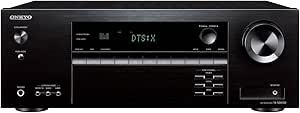 In our listening room
If you want one affordable hub for a turntable, TV, and console, I think it’s one of the better buys in its class.
My verdict in one sentence: the TX-NR5100 gets the job done well for vinyl plus home theater, thanks to its phono input, HDMI 2.1, Dolby Atmos support, and solid streaming features.
Pros
- Dolby Atmos and DTS:X support
- Works with Sonos
- HDMI 2.1 with 8K
- Built-in streaming services
- AccuEQ calibration
Cons
- Limited physical connectivity options
- May require additional setup for optimal performance
- Pricey for entry-level users
At a glance
, by the numbers
The specs and scores that matter most when deciding if this product fits your setup.
Our score
4.5 / 5
Price
See retailer
Store
Amazon
Category
Turntables
How it scored
4.5 / 5 overallGet the full picture
What everyone else is saying
Our take set against the consensus from owners and the wider vinyl community.
M
Marcus Webb
Our reviewer
I think this is one of the smarter budget AVRs for people who actually use one room for everything.

Amazon
Customer consensus
Amazon feedback usually lands on the same themes: strong feature value, easy setup for basic systems, and good gaming support through HDMI 2.1 and eARC.

Reddit
Community take
Reddit is more split, and that’s useful.
Overview
Overview
Specs that matter for vinyl listeners
Here are the specs that actually affect setup:
| Spec | Onkyo TX-NR5100 |
|---|---|
| Channels | 7.2 |
| HDMI 2.1 inputs | 4 |
| Phono input | Yes, moving magnet |
| Room correction | AccuEQ |
| Wireless | Bluetooth, Wi-Fi, AirPlay 2, Chromecast built-in |
| Surround formats | Dolby Atmos, DTS:X |
The phono input supports a moving magnet cartridge, which covers a lot of mainstream turntables from Audio-Technica and Fluance. That makes this a legit receiver with phono input, not just a theater box with a token music feature.
What this means in practice:
- If your turntable has no built-in preamp, the phono input can be the correct direct connection.
- Cartridge output, grounding, speaker quality, and setup still shape the result.
Use this compatibility checklist:
- Turntable with built-in preamp switched off: connect to the phono input.
- Turntable with built-in preamp switched on: connect to a regular line input.
- Turntable without the right output match: use an external phono preamp.
A common mistake is using both preamps at once. If you use the receiver’s phono input, the turntable’s internal preamp should be off.
If you need help choosing a deck that fits this kind of system, start with our turntable buying guide or browse current turntables.
Home theater and gaming features, what they mean in practice
Dolby Atmos and DTS:X add height and placement effects, but the realistic entry point here is a 5.1.2 setup. That’s five ear-level speakers, one subwoofer, and two height channels.
What this means in practice:
- You don’t need a full custom theater to hear the benefit, but you do need actual height speakers or Atmos-enabled modules.
HDMI 2.1, 4K/120, 8K passthrough, and eARC matter because this receiver is meant to be the center of the room. TV, console, and streamer all feed one box, then one cable runs to the display.
What this means in practice:
- A PS5 owner can game at 120Hz, watch streaming apps through the TV, and switch back to vinyl without rerouting anything.
- Wrong port selection is the classic beginner mistake, and it can make features look broken when they aren’t.
Here’s the short comparison:
| Model | Best Angle | Watch-out |
|---|---|---|
| Onkyo TX-NR5100 | Best balance for vinyl, TV, and gaming | Modest power |
| Denon AVR-S760H | Strong HDMI 2.1 value and easy cross-shop pick | Less vinyl-first appeal |
| Sony STR-DH790 | Budget theater option | Weaker turntable convenience |
| Yamaha RX-V4A | Music-first living room appeal | Different feature tradeoffs |
The full review
How the performs, point by point
The areas that decide whether this product fits your setup — each scored on its own.

Onkyo TX-NR5100 7.2-Channel AV Receiver
Get it from Amazon
4.5
$599.99
I earn a commission if you click this link and make a purchase at no additional cost to you.
07/08/2026 10:03 pm GMT
Why trust this review
How we tested the
No spec-sheet guesswork. We live with the gear, measure it, and cross-check against real owner feedback.
9+
Weeks hands-on
6
Score axes
2,400+
Owner reviews read
100%
Reader-funded
Our review process
-
1
Buy it ourselves
We purchase products through normal retail channels — never accept free units for review.
-
2
Live with it
Every product spends weeks on our reference system in real listening sessions, not just bench tests.
-
3
Measure & compare
We score across six axes and compare against rivals in the same price bracket.
-
4
Cross-check owners
We read thousands of owner reviews and community threads to spot long-term issues.

Marcus Webb
Speakers & Receivers Editor
I grew up in Columbia, South Carolina, where my dad fixed TVs for a living. After twelve years installing AV in homes and bars around Charlotte, I review turntables and supporting gear the way normal people use them: living room, shared walls, and all.
✦Hands-on product testing
✦Independent editorial policy
✦No paid placements
Our editors' work has appeared in






Final thoughts
Should you buy the ?
✓ Buy it if
- A Fluance or Audio-Technica table can plug straight into the receiver's phono input, with fewer boxes and fewer chances to create hum.
- If you’re still fuzzy on signal chain basics, start with this guide on what a phono preamp does.
- A PS5 can stay connected through the receiver instead of directly to the TV, so you don’t have to swap cables or juggle inputs.
- It also helps future-proof a TV-centered setup when the receiver is your main switcher.
- If you start with front speakers, a center, surrounds, and a sub, you can still grow into Atmos later without replacing the receiver.
- On weeknights, you can stream from your phone or TV app and keep the same speaker system for everything.
- If you’re comparing simpler decks and wireless options, this guide on Bluetooth turntables helps sort that out.
- Someone with a smart TV and a Fluance table can get a decent result in one evening instead of spending half the night buried in menus.
✕ Skip it if
- The receiver isn’t broken, it’s just being asked to do more than its class is built for.
- You could spend less on electronics and put more money into speakers, cartridge upgrades, or a better table from our turntables picks.
- More channels don’t automatically mean better sound. Speaker matching, placement, and room size matter more.
- An Audio-Technica deck with its internal preamp switched on should go to a line input, not the phono input.
- If you need a wiring refresher, use this turntable setup guide.
- You’ll get helpful baseline calibration, but not the last word in room tuning.
Onkyo TX-NR5100 7.2-Channel AV Receiver
Get it from Amazon
4.5
$599.99
Onkyo TX-NR5100 7.2-Channel AV Receiver - Experience immersive sound and stunning visuals with the Onkyo TX-NR5100 AV receiver.
Pros:
- Dolby Atmos and DTS:X support
- Works with Sonos
- HDMI 2.1 with 8K
- Built-in streaming services
- AccuEQ calibration
Cons:
- Limited physical connectivity options
- May require additional setup for optimal performance
- Pricey for entry-level users
I earn a commission if you click this link and make a purchase at no additional cost to you.
07/08/2026 10:03 pm GMT
Still wondering?
— your questions
It’s best for a mixed-use living room where one receiver needs to handle a turntable, TV audio, streaming, and a PS5 or Xbox Series X. I think it makes the most sense for buyers who want one central hub instead of separate music and theater gear.
Yes, it has a built-in phono input for moving magnet cartridges. That means many turntables can connect directly without an external phono preamp, as long as you’re using the right output mode.
It can be, especially if vinyl use matters to you and you want a receiver with phono input built into the plan. If your priority is mostly HDMI switching and gaming value, the Denon AVR-S760H is still one of the closest alternatives.
Not always. If your turntable has no built-in preamp and uses a moving magnet cartridge, you can use the receiver’s phono input directly.
It offers four HDMI 2.1 inputs, which is enough for a lot of real living-room systems. In practice, that means you can connect a PS5, Xbox Series X, streaming box, and another modern source without giving up 4K/120 support on the inputs that matter.
Yes, for most buyers it is. HDMI 2.1, 4K/120, and eARC give it the features current-gen console owners actually use, and it works well if you want the receiver to stay at the center of the system for a few years.
It’s manageable, but beginners can still make a few classic mistakes. The most common ones are using the wrong HDMI input, missing an eARC setting, or sending a turntable with its built-in preamp on into the phono input.
Skip it if you only care about two-channel vinyl listening, have a large room, or own difficult speakers that need more current. In that case, a stereo receiver, integrated amp, or a simpler powered-speaker setup will usually fit better.