★ Editor's Choice
Review · Updated July 2026
Review
If you shoot small vinyl-related items often, I think this is a smart buy. If you only list a few items a month, or need to photograph full turntables, speakers, or room setups, I’d skip it.

Reviewed by Marcus Webb
Speakers & Receivers Editor · Last updated July 7, 2026 · 11 min read
Independent · reader-funded
Hands-on tested
Unbiased rankings
Darkside Vinyl is reader-supported. When you buy through links on our site we may earn an affiliate commission, at no extra cost to you. It never changes our verdict or our score. How we make money.
Darkside Vinyl's verdict
If you shoot small vinyl-related items often, I think this is a smart buy.
4.5
/ 5
4.5 out of 5
 In our listening room
The big win is consistency. You get better glare control, cleaner backgrounds, and more repeatable lighting than with a quick tabletop setup.
The Foldio360 rotation feature is useful for short product clips, but that’s not the main reason I’d buy it. For most vinyl sellers, the real value is cleaner static photos.
Pros
- Built-in LED light
- Customizable color temperature
- Fast setup
- Detachable covers
- Ideal for small products
Cons
- Higher price point
- Limited to small items
- Requires flat surface for best results
At a glance
, by the numbers
The specs and scores that matter most when deciding if this product fits your setup.
Our score
4.5 / 5
Price
See retailer
Store
Amazon
Category
Turntables
How it scored
4.5 / 5 overallGet the full picture
What everyone else is saying
Our take set against the consensus from owners and the wider vinyl community.
M
Marcus Webb
Our reviewer
I like this product more for workflow than for wow factor.

Amazon
Customer consensus
Amazon feedback usually praises convenience, cleaner product photos, compact home use, and the rotating platform.

Reddit
Community take
Reddit usually cuts through the marketing faster.
Overview
Overview
Specs and core features
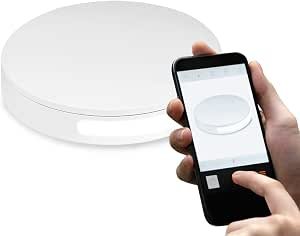
The core pieces are straightforward: a dome enclosure, integrated LED lighting, a motorized rotating platform, Bluetooth app control, a background sweep, and top-down shooting options. ORANGEMONKIE also ties it into the broader Foldio line, so some buyers will compare it with the Foldio3 and accessories like the Halo Bar.
Here’s the short compatibility matrix:
| Device | Best Use | Tradeoff |
|---|---|---|
| Smartphone | Fastest setup, easiest for casual sellers | Less manual control |
| DSLR | Better exposure and white balance control | Slower workflow |
| Tablet | Handy for preview or control | Less common as main camera |
A phone user can go from setup to usable listing photos quickly. A DSLR user gets more control, but that only pays off if you know how to use it.
What this means in practice for vinyl photos
For vinyl work, this dome fits best with LP jackets, 7-inch singles, cartridges, stylus packaging, headshells, adapters, and record weights. It’s much less convincing as a photo booth for oversized sets or full turntables.
Here’s the quick use-case table:
| Best for | Not ideal for |
|---|---|
| Records, cartridges, small accessories | Full turntables, large speakers |
| Stylus boxes, headshells, adapters | Room photos |
| Short rotating clips of accessories | Oversized boxed sets |
If you’re listing a cartridge, stylus cleaner, and headshell on the same afternoon, this setup makes a lot of sense. If you’re trying to show an entire deck in context, it becomes the wrong tool fast.
For glossy sleeves, glare control matters more than 360 rotation. The spin feature is nice, but cleaner static photos are the bigger win for most vinyl sellers.
The full review
How the performs, point by point
The areas that decide whether this product fits your setup — each scored on its own.

ORANGEMONKIE Foldio360 Smart Dome
Get it from Amazon
4.5
$399.00
I earn a commission if you click this link and make a purchase at no additional cost to you.
07/08/2026 09:23 pm GMT
Why trust this review
How we tested the
No spec-sheet guesswork. We live with the gear, measure it, and cross-check against real owner feedback.
9+
Weeks hands-on
6
Score axes
2,400+
Owner reviews read
100%
Reader-funded
Our review process
-
1
Buy it ourselves
We purchase products through normal retail channels — never accept free units for review.
-
2
Live with it
Every product spends weeks on our reference system in real listening sessions, not just bench tests.
-
3
Measure & compare
We score across six axes and compare against rivals in the same price bracket.
-
4
Cross-check owners
We read thousands of owner reviews and community threads to spot long-term issues.

Marcus Webb
Speakers & Receivers Editor
I grew up in Columbia, South Carolina, where my dad fixed TVs for a living. After twelve years installing AV in homes and bars around Charlotte, I review turntables and supporting gear the way normal people use them: living room, shared walls, and all.
✦Hands-on product testing
✦Independent editorial policy
✦No paid placements
Our editors' work has appeared in






Final thoughts
Should you buy the ?
✓ Buy it if
- <h3>Better light control for glossy vinyl items</h3>
- <p>This is the main reason to buy it. Controlled light matters more than jumping from one phone camera to another for small product shots.</p>
- <p>Glossy sleeves, shrink wrap, cartridge packaging, and polished headshells all punish sloppy lighting. Inside the dome, reflections are easier to manage and shadows fall more evenly.</p>
- <p>A better camera won’t fix bad lighting. If your room light is harsh and mixed, even a nice DSLR will still give you ugly glare and off color.</p>
- <p>If you’re documenting sleeve condition for an online sale, that matters. A bright ceiling streak can hide ring wear, corner dings, and finish issues fast.</p>
- <p>Compared with a DIY window-light setup, the dome usually wins on repeatability. Window light can look great, but it changes by the hour and falls apart at night.</p>
- <h3>Faster repeatable workflow for listings and content</h3>
- <p>If you shoot often, the time savings are real. You’re not rebuilding the same tabletop setup every weekend.</p>
- <p>The motorized platform helps with consistent angles, short rotating clips, and cleaner 360-degree product shots for Amazon, eBay, or Discogs-style listings. Bluetooth control adds convenience, but you still need to position the item well.</p>
- <p>Picture a small seller shooting ten cartridges and stylus kits in one evening. With this setup, framing, background, and lighting stay close enough from item to item that editing gets faster.</p>
- <p>That matters more than people think. Clean, consistent photos make a small store look organized, and organized stores usually earn more trust.</p>
✕ Skip it if
- <h3>Too limited for full-size turntables and larger audio gear</h3>
- <p>This is where buyers get themselves in trouble. The Smart Dome is for smaller products, not full turntables, larger speakers, or room photos.</p>
- <p>If you’re hoping to photograph a complete record player with dust cover, platter, and tonearm inside one enclosure, you’ll hit the size limit fast. For that job, a larger shooting table or a simple LED panel setup makes more sense.</p>
- <p>The same caution applies to boxed sets and bulky accessories. Check dimensions before you buy, especially if your idea of vinyl gear goes beyond LP jackets and small parts.</p>
- <h3>Harder to justify for occasional sellers</h3>
- <p>If you list one spare headshell every few months, this is probably overkill. A basic LED light box or a DIY setup with a window, white foam board, and a phone tripod can get you close enough for less money.</p>
- <p>The other thing people miss is that app help doesn’t remove the work. You still need to clean the item, square it up, and pay attention to framing.</p>
- <p>A casual seller might use it twice and then shove it in a closet. Someone with a steady flow of listings will feel the value much faster.</p>
ORANGEMONKIE Foldio360 Smart Dome
Get it from Amazon
4.5
$399.00
ORANGEMONKIE Foldio360 Smart Dome - Capture stunning 360-degree images effortlessly for jewelry and small products.
Pros:
- Built-in LED light
- Customizable color temperature
- Fast setup
- Detachable covers
- Ideal for small products
Cons:
- Higher price point
- Limited to small items
- Requires flat surface for best results
I earn a commission if you click this link and make a purchase at no additional cost to you.
07/08/2026 09:23 pm GMT
Still wondering?
— your questions
It’s a portable product photo dome with built-in lights and a motorized rotating platform. It’s made for small-item photography, including records, cartridges, headshells, and other compact accessories.
You place the item inside the enclosure, use the built-in LED lighting to control glare and shadows, and shoot with a smartphone or DSLR. The rotating base helps create consistent angles and short 360-style clips.
Yes, for records and small accessories, it’s a strong fit. No, for full-size turntables, larger speakers, or room photos, it’s the wrong tool.
No, you don’t. A smartphone is the easiest way to use it, and it’ll be enough for many sellers. A DSLR only makes sense if you want more manual control over exposure and white balance.
Usually not. If you only shoot occasionally, a basic light box or careful DIY setup is often the better value.
First-time setup takes longer because you’re learning placement, lighting, and app control. After that, repeat sessions get much faster, which is where the product starts to justify itself.
For some buyers, yes. If you want integrated rotation, a cleaner workflow, and more controlled small-item shooting, it can replace a basic box. Budget users may not need the upgrade.
For most people, it’s better for smartphone users because setup is faster and simpler. DSLR users can get more refined output, but only if they’re willing to trade speed for control.