Key specs and what they mean in practice
Here’s the short version of the hardware side:
| Spec |
What it means |
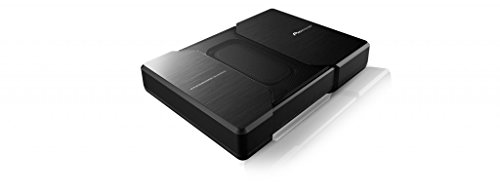
| Compact dimensions |
Easier placement in tight rooms and small stereo setups |
| Class D amplifier |
Efficient powered design, less hassle than a passive bass add-on |
| RCA input |
Useful for line-level connections from compatible gear |
| High level input |
Helpful when your system doesn’t offer a dedicated sub out |
| Wired remote bass control |
Quick day-to-day level adjustment |
| Best use |
Small room bass reinforcement for bookshelf speakers |
The Class D amplifier keeps the setup simple. You’re not shopping for extra power; you’re adding a self-powered low-end layer.
The input options matter just as much as the size. RCA and high-level input give you more ways to fit it into an existing stereo.
How it fits into a turntable or stereo setup
A turntable usually doesn’t connect straight to a sub by itself. The full chain has to make sense, which usually means turntable to phono preamp to stereo receiver or powered speakers.
If your receiver has a sub out, great, that’s the cleanest path. If it has RCA pre-out, that may work too. If not, speaker-level connection may be the better route.
A Fluance or Audio-Technica deck feeding a phono preamp, then a stereo receiver, then Klipsch or Polk Audio bookshelf speakers is a normal example. In that setup, this sub can be a nice fit if the receiver gives you the right output options.
Here’s the plain comparison:
| Type |
Best at |
Tradeoff |
| Compact powered subwoofer |
Tight spaces, small systems, easier placement |
Less deep bass and lower output ceiling |
| Traditional home subwoofer |
Bigger bass, deeper extension, more room fill |
Larger cabinet, harder placement |
If you need help sorting out the signal chain, start with our turntable setup guide and phono preamp guide.