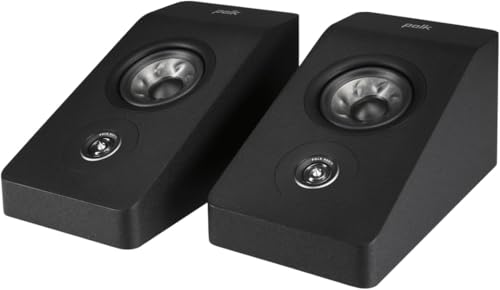
Specs and design
The R900 uses an up-firing driver layout built for Atmos duty. It also carries Polk's Reserve-family styling, so it blends in well with the line.
A lot of buyers focus on driver size and miss the practical part. If you're comparing this against a generic Atmos module, ask whether it fits well, looks right, and keeps the system cohesive.
| Spec |
Details |
| Type |
Dolby Atmos height speaker module |
| Placement |
Up-firing on speaker top, or wall-mounted as height speaker |
| Design notes |
Reserve-series cabinet finish, binding posts, matched styling |
| Key tech |
Pinnacle Ring Radiator Tweeter, Reserve-family design continuity |
| Best pairings |
Polk Reserve R200, R500, R600, R700 |
Compatibility and setup requirements
Before you buy, verify these basics:
- Works best with select Polk Reserve speakers.
- Needs an Atmos-capable AV receiver for Dolby Atmos or DTS:X height playback.
- Performs best with flat, reflective ceilings and proper seating distance.
- Can be used as an up-firing module or wall-mounted height speaker.
If you've got Reserve R200 bookshelves and a 7-channel receiver that supports 5.1.2, you're in good shape. If you're using non-Atmos amplification, stop there first.
Setup is straightforward through standard binding posts, but the receiver menu matters. You need to assign the height channels correctly, or you'll never hear what you paid for.
What this means in practice
Here's the decision filter I use:
| Use case |
Fit |
| Dedicated movie room with flat ceiling |
Good fit |
| Apartment or rental, no ceiling cuts allowed |
Very good fit |
| Mixed music and movie setup |
Decent, but movie benefits matter more |
| First system with weak mains or center |
Not yet, upgrade base speakers first |
For a renter with a solid 5.1 Reserve system, this Polk Reserve Atmos add-on is a sensible move. For a first-time builder with thin front speakers, I'd rather spend the same money on stronger mains or a better center.
Direct comparison matters here. Up-firing modules win on clean looks and easy install. Wall-mounted elevation speakers and in-ceiling Atmos speakers usually win on consistency and effect strength.