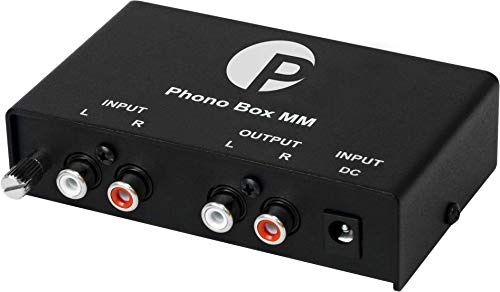
The first thing I noticed with the Phono Box DC is that it gets out of the way pretty quickly. I didn’t hear it trying to “improve” the record so much as just clean up the signal and let the cartridge do its thing, which is exactly what I want from a phono stage at this level.
It has a tidy, controlled presentation that keeps bass from getting sloppy and helps vocals sit in a more stable spot in the mix. I wouldn’t call it lush or overly romantic, but I also never felt like it was thin or sterile.
What I liked most was how unforced it sounded during longer listening sessions. It doesn’t draw attention to itself, and that usually means I’m paying more attention to the record instead of the gear.
02Noise Floor and Background Quiet
This is the kind of box you notice most when it’s not doing something wrong, and that’s a compliment. In my setup, it stayed quiet in the background and didn’t add any obvious hum or hiss that made me second-guess the rest of the chain.
That matters a lot with vinyl, because a phono stage can ruin the whole mood if it’s noisy or fussy. The Phono Box DC feels calm and well-behaved, which makes it easy to live with on a daily basis.
I also found it forgiving of normal real-world use, like swapping records, powering things on and off, and just generally having it sit there in a rack doing its job. It’s not the kind of component that constantly reminds you it’s there.
The design is simple in the best possible way. It’s small, understated, and easy to tuck into a system without turning your rack into a mess of boxes and cables.
I like that it doesn’t try to look like a mini spaceship. It has that practical Pro-Ject vibe where the priority seems to be “make it fit and make it work,” which I appreciate more than flashy styling on a phono preamp.
The controls and connections are straightforward enough that I never had to stop and think about what goes where. For a piece of gear that’s usually hidden behind the rest of the system, that’s exactly how it should be.
Setup is refreshingly painless. I didn’t have to wrestle with a bunch of extra settings or spend an afternoon second-guessing compatibility, which makes it a good fit for people who want to plug in a turntable and get listening.
Once it was in place, it behaved like a proper set-and-forget component. That’s a bigger deal than it sounds, because a phono stage should make your life easier, not become another hobby inside the hobby.
I also think it works well for systems where the turntable is not the only source of attention. If you want something that quietly does its job without demanding constant fiddling, this is very much that kind of box.
I’d point this toward anyone building a sensible entry-level or mid-level vinyl setup who wants a reliable phono stage without a lot of drama. It feels especially right for listeners who care more about steady, honest performance than about chasing a big sonic personality.
It’s also a good match for people who are upgrading from a built-in phono input and want a cleaner, more composed result without overcomplicating the system. That jump in refinement is usually where a box like this earns its keep.
If your taste runs toward gear that is easy to live with, easy to place, and easy to forget about once the record starts spinning, the Phono Box DC makes a strong case for itself. It’s not flashy, but it gets the fundamentals right, and that’s often what matters most.