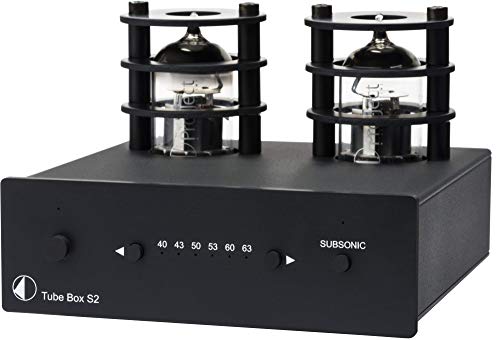
The first thing I noticed with the Tube Box S2 is that it doesn’t try to shout “tube sound” at you in a cartoonish way. It gives my records a little more body and a softer edge up top, but it still keeps enough detail and speed to feel like a proper phono stage, not a gimmick.
What I like most is how it handles vocals and midrange instruments. Voices come through with a bit more flesh and presence, and guitars and piano have that slightly rounder, more relaxed presentation that makes long listening sessions easier on my ears.
It’s not a magic fix for a bad cartridge or a noisy pressing, though. If anything, it’s honest enough to show what’s in the groove while taking just enough glare off the top to make records feel more musical and less clinical.
02Tube Character and Flexibility
This is really the whole point of the Tube Box S2 for me: it lets me tune the flavor a little instead of locking me into one sound. Swapping tubes changes the personality enough to matter, so I can lean more open, more smooth, or a little more lively depending on the rest of my system.
I also appreciate that it doesn’t force a heavy-handed tube haze over everything. Some tube gear sounds like it’s smearing the music for the sake of romance, but this one gives just enough warmth and texture without turning bass loose or blurring the image.
That makes it a lot more interesting than a one-note phono preamp. If you like experimenting and actually hearing the effect of system changes, this box gives you room to play without making the whole setup feel finicky.
03Setup and Adjustability
For a phono stage, this is one of the more useful little boxes I’ve lived with because it gives me real control over matching a cartridge. Being able to dial things in properly matters a lot, and this unit makes that part of the process feel straightforward instead of annoying.
I like that it feels like a serious tool rather than a plug-and-forget accessory. Once I had it matched to my cartridge, it disappeared into the background in the best way, which is exactly what I want from a phono preamp after the setup phase is done.
It does reward a little patience, though. If you’re the type who wants zero fuss and never plans to touch settings, you may not use all of what it offers, but for anyone who likes getting the most out of a cartridge, that flexibility is the point.
The Tube Box S2 feels compact and tidy on a rack, which I appreciate because phono gear often ends up living in awkward spaces. It has that Pro-Ject style of being small but purposeful, and it doesn’t look like an afterthought sitting next to a turntable.
In daily use, it’s the kind of component that quietly does its job without demanding attention. I like gear like that: no drama, no weird behavior, just a consistent signal path that lets me focus on records instead of hardware.
Because it’s a tube unit, I do think it benefits from a little care and placement awareness. I wouldn’t treat it like a disposable black box, but that’s part of the appeal for me—it feels like a real piece of hi-fi, not just another anonymous widget.
I’d point this toward vinyl listeners who already know they want a little more personality from their phono stage. If your system is sounding too lean, too sharp, or just a bit sterile, this is the kind of component that can make a meaningful difference without turning everything syrupy.
It also makes sense for someone who wants to grow into better cartridge matching and maybe experiment with tube rolling later. That kind of flexibility gives it a longer useful life than a lot of basic phono preamps, especially if your setup tends to change over time.
I wouldn’t call it the answer for someone who wants the most stripped-down, set-it-and-forget-it solid-state neutrality possible. But if you want a phono preamp that adds some texture, some adjustability, and a little bit of soul, this one lands in a very good place.