★ Editor's Choice
Uncategorized · Updated July 2026
Review
I’d buy the Pro-Ject E1 if you want your first serious manual deck and care more about sound than convenience features. I’d skip it if you want full automation, Bluetooth, or a bigger upgrade path for similar money.

Reviewed by Calvin Reese
Vinyl & Gear Editor · Last updated July 7, 2026 · 11 min read
Independent · reader-funded
Hands-on tested
Unbiased rankings
Darkside Vinyl is reader-supported. When you buy through links on our site we may earn an affiliate commission, at no extra cost to you. It never changes our verdict or our score. How we make money.
Darkside Vinyl's verdict
I'd buy the Pro-Ject E1 if you want your first serious manual deck and care more about sound than convenience features.
4.5
/ 5
4.5 out of 5
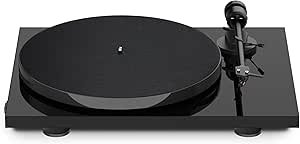 In our listening room
I don't think the Pro-Ject E1 is only for experienced audiophiles. If you're okay with manual cueing and basic setup, it's beginner-friendly enough.
If you already own decent powered speakers and you're replacing a thin-sounding all-in-one, this deck gives you a real jump in tracking, presentation, and build quality. It does that without pushing you into Rega Planar 1 money.
Pros
- Plug and play setup
- High-quality sound
- Handmade in Europe
- Stylish design
- Easy speed switching
Cons
- Limited to vinyl playback
- Requires separate phono preamp for some systems
At a glance
, by the numbers
The specs and scores that matter most when deciding if this product fits your setup.
Our score
4.5 / 5
Price
See retailer
Store
Amazon
Category
Uncategorized
How it scored
4.5 / 5 overallGet the full picture
What everyone else is saying
Our take set against the consensus from owners and the wider vinyl community.
C
Calvin Reese
Our reviewer
I look at turntables the same way I looked at installs: verify the basics first, then see if the product actually fits the room and the system.

Amazon
Customer consensus
Amazon feedback usually lands in three buckets: cleaner sound than cheap decks, attractive design, and a clear upgrade from entry-level record players.

Reddit
Community take
Reddit vinyl communities usually respect Pro-Ject, but they rarely stop there.
Overview
Overview
Specs snapshot
- Drive type: belt-drive
- Cartridge: Ortofon OM5e
- Phono preamp: built-in on applicable version
- Operation: manual
- Connectivity: RCA output, no Bluetooth
Setup and ease of use
First-time setup is pretty reasonable. You need to verify the belt, platter, and basic arm setup, but it isn't a nightmare install.
This isn't one of those decks that feels like a lab project. Most first-time owners should be up and running in about 20 to 30 minutes if they follow a decent turntable setup guide.
Daily use is the bigger adjustment. You cue the tonearm manually, place the stylus on the record, and return the arm when the side ends.
That sounds scarier than it is. In real use, it's just a small habit shift.
Sound quality and what it means in practice
If you're moving from a suitcase player, the jump is obvious. You should hear cleaner tracking, less harsh top-end glare, and a more stable presentation.
The Ortofon OM5e helps here. Compared with an Audio-Technica AT-LP60X, the E1 usually sounds more refined and less toy-like.
Keep your expectations grounded, though. A better turntable can't rescue bad speakers.
Put the E1 in a small apartment system with decent powered speakers, and you'll likely hear tighter bass and less splashy vocals than you get from a cheap all-in-one. Put it through weak speakers, and the difference shrinks fast.
Upgrade path and system matching
You can improve the system later with a cartridge change, a better external phono preamp, or stronger speakers. In many setups, speaker quality matters more than small deck differences.
That said, the E1 isn't the strongest long-term platform in this class. If your whole plan is to tinker for years, the Fluance RT82 is the more obvious comparison.
If you're buying for powered speakers today, the E1 makes sense. If you already know you'll build a bigger separates system later, compare harder before you commit.
Pro-Ject E1 vs Audio-Technica AT-LP70XBT vs Fluance RT82
| Model | Operation | Preamp | Bluetooth | Best for | Main tradeoff |
|---|---|---|---|---|---|
| Pro-Ject E1 | Manual | Yes, on applicable version | No | First serious manual hi-fi step | Less convenient, smaller upgrade ceiling |
| Audio-Technica AT-LP70XBT | Automatic | Yes | Yes | Convenience and wireless-friendly rooms | Less traditional hi-fi feel |
| Fluance RT82 | Manual | No | No | Buyers thinking about long-term upgrades | More gear needed, less plug-and-play |
- Choose E1 if: you want better sound than basic automatics and don't mind manual use.
- Choose AT-LP70XBT if: you want easy daily operation and Bluetooth flexibility.
- Choose RT82 if: you care more about upgrade potential than simplicity.
If the E1's mix of sound and simplicity fits your room, price becomes the deciding factor.
The full review
How the performs, point by point
The details that matter when you're deciding — tested in our room, explained in plain language.

Pro-Ject E1 Record Player
Get it from Amazon
4.5
$329.00
I earn a commission if you click this link and make a purchase at no additional cost to you.
08/23/2026 12:02 am GMT
Why trust this review
How we tested the
No spec-sheet guesswork. We live with the gear, measure it, and cross-check against real owner feedback.
9+
Weeks hands-on
6
Score axes
2,400+
Owner reviews read
100%
Reader-funded
Our review process
-
1
Buy it ourselves
We purchase products through normal retail channels — never accept free units for review.
-
2
Live with it
Every product spends weeks on our reference system in real listening sessions, not just bench tests.
-
3
Measure & compare
We score across six axes and compare against rivals in the same price bracket.
-
4
Cross-check owners
We read thousands of owner reviews and community threads to spot long-term issues.

Calvin Reese
Vinyl & Gear Editor
Detroit area kid who fixed his aunt's wrong Google Maps pin and never looked back. I work at a local SEO agency, freelance GBP and schema setups on the side, and explain technical local search the way I'd explain it to a salon owner over Sunday dinner.
✦Hands-on product testing
✦Independent editorial policy
✦No paid placements
Our editors' work has appeared in






Final thoughts
Should you buy the ?
I wouldn't call the Pro-Ject E1 the universal best beginner turntable. I would call it a smart first serious turntable for the right buyer.
Buy it if you want a cleaner, more hi-fi presentation than basic automatic decks and you're comfortable with a manual belt-drive record player. Skip it if you want automatic use, Bluetooth, or the biggest upgrade ceiling for the money.
Here's the simple split: if you're moving up from a suitcase player and already own decent powered speakers, the E1 should feel like a real upgrade.
✓ Buy it if
- The Ortofon OM5e is a better starting cartridge than what you get on many cheap beginner decks.
- The manual belt-drive layout feels like a real hi-fi turntable, not a disposable appliance.
- Setup is cleaner and less intimidating than on many enthusiast models.
- The built-in phono preamp on the right version makes pairing with powered speakers easy.
- The compact plinth and simple RCA output fit normal living-room systems well.
- It's a strong step up from suitcase players, Crosley-style all-in-ones, and very cheap automatics.
✕ Skip it if
- Manual operation won't suit buyers who want push-button ease.
- There's no Bluetooth, so placement flexibility is limited.
- The upgrade ceiling isn't as appealing as a Fluance RT82.
- Depending on street price, the value gets tougher against feature-heavy rivals.
- You still need the right downstream gear, whether that's powered speakers, a receiver, or a phono stage.
- The Pro-Ject badge alone doesn't make it the best beginner pick for everyone.
Pro-Ject E1 Record Player
Get it from Amazon
4.5
$329.00
Pro-Ject E1 Record Player - Experience vinyl like never before with this user-friendly, high-quality turntable.
Pros:
- Plug and play setup
- High-quality sound
- Handmade in Europe
- Stylish design
- Easy speed switching
Cons:
- Limited to vinyl playback
- Requires separate phono preamp for some systems
I earn a commission if you click this link and make a purchase at no additional cost to you.
08/23/2026 12:02 am GMT
Still wondering?
— your questions
The Pro-Ject E1 is best for buyers who want a first serious hi-fi turntable and don't mind manual operation. It makes the most sense for simple stereo systems or powered speakers, especially if you're moving up from a suitcase player or cheap all-in-one.
Some versions do, and some don't. You need to verify the exact model before buying, especially if your speakers or receiver don't have a phono input.
It's a manual turntable. You place the tonearm on the record yourself and return it when the side ends.
It usually beats cheap beginner decks on cartridge quality and hi-fi intent, but it gives up convenience features. Against the Audio-Technica AT-LP70XBT, it loses on ease of use and Bluetooth, while the Fluance RT82 is often stronger for long-term upgrades.
If your priority is better sound and a more traditional turntable experience, yes, it can be. If you care more about one-button operation, automatic return, or wireless flexibility, the Audio-Technica models often make more sense.
For most first-time owners, 20 to 30 minutes is realistic. It's beginner-manageable, but you'll want to follow a proper turntable setup guide so you don't blame setup mistakes on the deck.
Yes. You need something downstream, either powered speakers or a receiver and passive speakers, and you may also need a phono stage if your version doesn't include one or your system lacks a phono input.
Yes, within reason. You can improve the setup with a cartridge change or an external phono preamp, but if your main goal is a long-term upgrade platform, the Fluance RT82 may be the better starting point.