★ Editor's Choice
Review · Updated July 2026
Review
I’d say yes, the PSB Alpha P5 is a smart vinyl upgrade if you’re building your first proper passive setup in a bedroom, office, or small living room.

Reviewed by Cassie Hart
Audio Equipment Specialist · Last updated July 7, 2026 · 11 min read
Independent · reader-funded
Hands-on tested
Unbiased rankings
Darkside Vinyl is reader-supported. When you buy through links on our site we may earn an affiliate commission, at no extra cost to you. It never changes our verdict or our score. How we make money.
Darkside Vinyl's verdict
I’d say yes, the PSB Alpha P5 is a smart vinyl upgrade if you’re building your first proper passive setup in a bedroom,
4.5
/ 5
4.5 out of 5
 In our listening room
Skip it if you want plug-and-play simplicity, don’t own an amp or stereo receiver, or need the cheapest path to better sound.
The PSB Alpha P5 isn’t the easiest beginner speaker. It’s the beginner speaker for people who already know they want a system they can grow.
Pros
- Timeless design
- Pristine sound quality
- Enhanced high-frequency response
- Easy to integrate with subwoofers
- Engineered by Paul Barton
Cons
- Price may be high for some
- Requires proper placement for optimal sound
- Subwoofer sold separately
At a glance
, by the numbers
The specs and scores that matter most when deciding if this product fits your setup.
Our score
4.5 / 5
Price
See retailer
Store
Amazon
Category
Turntables
How it scored
4.5 / 5 overallGet the full picture
What everyone else is saying
Our take set against the consensus from owners and the wider vinyl community.
C
Cassie Hart
Our reviewer
I like the Alpha P5 because it feels like a sane step into real hi-fi without acting like you need a treated room and a thousand-dollar amp.

Amazon
Customer consensus
Amazon reviews usually land on the same points: clarity, balanced tuning, and a bigger sound than the cabinet size suggests.

Reddit
Community take
On Reddit, these get recommended a lot as a good-value pick for balanced listening in small rooms.
Overview
Overview
Design, features, and what they mean in practice
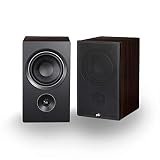
The PSB Alpha P5 is a passive bookshelf speaker with a woofer, a tweeter, a rear bass reflex port, and standard binding posts for speaker wire. In plain English, the woofer handles the lower and middle range, the tweeter handles the highs, and the rear port helps the speaker sound fuller than its size suggests.
The catch is power. Because these are passive speakers, they need an integrated amplifier or stereo receiver between the turntable and the speakers.
If your turntable already has a built-in phono preamp, setup is straightforward: turntable to amp, then amp to speakers. If your turntable doesn’t have a phono stage, you’ll need that in the chain too, which is why our phono preamp guide helps.
Specs like sensitivity and impedance matter because they affect amp matching. You don’t need to obsess over the numbers, but don’t pair these with the weakest bargain mini amp you can find.
Here’s the practical version: a decent amp helps them sound open and controlled. A bad one makes the whole upgrade feel underwhelming.
| Speaker | Type | Best for | Main tradeoff |
|---|---|---|---|
| PSB Alpha P5 | Passive | First serious vinyl stereo in a small room | Needs amp and setup effort |
| Sony SSCS5 | Passive | Budget-minded buyers | Less refined overall |
| ELAC Debut 2.0 B5.2 | Passive | Small-room listeners wanting a step up | Bigger cost and size |
| Powered bookshelf speakers | Active/powered | Simple turntable setups | Less upgrade flexibility |
Against the Sony SSCS5, the PSB pair usually makes more sense if you care about balance and long-term satisfaction. Against the ELAC B5.2, it holds up well in smaller spaces where you don’t need a bigger, heavier speaker.
Against powered speakers, it’s the classic tradeoff: more boxes now, more freedom later. It’s like moving from a basic all-in-one toolbox to separate tools that actually fit the job.
| Room / use case | Fit | Notes |
|---|---|---|
| Small bedroom | Great | Easy match for moderate listening |
| Desk / nearfield | Very good | Strong imaging at short distance |
| Apartment living room | Good | Best with a decent amp and smart placement |
| Large open room | Limited | You may want more output and bass weight |
Yes, but only if you want a real stereo path
Skip it if you want plug-and-play simplicity, don’t own an amp or stereo receiver, or need the cheapest path to better sound.
The PSB Alpha P5 isn’t the easiest beginner speaker. It’s the beginner speaker for people who already know they want a system they can grow.
If you’ve got an Audio-Technica or Fluance turntable in a small apartment and you’re tired of boxed-in sound from entry-level powered speakers, this starts to make sense. Add a decent integrated amplifier, give the speakers a little breathing room, and records sound more like a real stereo and less like background gear.
Quick compatibility checklist:
- Turntable
- Phono preamp, if your turntable doesn’t have one built in
- Integrated amplifier or stereo receiver
- Speaker wire
Powered speakers win on convenience. A passive pair like this wins on flexibility.
If the Alpha P5 sounds like your kind of upgrade, check the current price before you plan the rest of the system.
| Room / use case | Fit | Notes |
|---|---|---|
| Small bedroom | Great | Easy match for moderate listening |
| Desk / nearfield | Very good | Strong imaging at short distance |
| Apartment living room | Good | Best with a decent amp and smart placement |
| Large open room | Limited | You may want more output and bass weight |
The full review
How the performs, point by point
The areas that decide whether this product fits your setup — each scored on its own.

PSB Alpha P5 Bookshelf Speakers
Get it from Amazon
4.5
$549.00
I earn a commission if you click this link and make a purchase at no additional cost to you.
07/06/2026 01:10 pm GMT
Why trust this review
How we tested the
No spec-sheet guesswork. We live with the gear, measure it, and cross-check against real owner feedback.
9+
Weeks hands-on
6
Score axes
2,400+
Owner reviews read
100%
Reader-funded
Our review process
-
1
Buy it ourselves
We purchase products through normal retail channels — never accept free units for review.
-
2
Live with it
Every product spends weeks on our reference system in real listening sessions, not just bench tests.
-
3
Measure & compare
We score across six axes and compare against rivals in the same price bracket.
-
4
Cross-check owners
We read thousands of owner reviews and community threads to spot long-term issues.

Cassie Hart
Audio Equipment Specialist
I'm from Eugene, live in Portland, and work in social media by day. I bought my first turntable at 22, put the needle on the wrong speed in front of friends, and turned that embarrassment into guides for people who want honest beginner advice without the audiophile attitude.
✦Hands-on product testing
✦Independent editorial policy
✦No paid placements
Our editors' work has appeared in






Final thoughts
Should you buy the ?
✓ Buy it if
- Balanced sound that doesn’t get tiring during long vinyl sessions
- Good stereo imaging for small rooms and nearfield listening
- More upgrade-friendly than many entry-level powered speakers
- Compact enough for shelves or proper speaker stands
- Beginner-friendly for buyers who understand the amp requirement
✕ Skip it if
- They won’t work on their own because they’re passive
- Total cost climbs fast if you still need an amp, wire, and maybe a phono preamp
- The rear port can be annoying in tight, flush-to-wall placement
- They’re not ideal if you want one-box simplicity
- A weak mini amp can make them sound smaller than they should
PSB Alpha P5 Bookshelf Speakers
Get it from Amazon
4.5
$549.00
PSB Alpha P5 Bookshelf Speakers - Elevate your audio experience with the PSB Alpha P5 speakers, perfect for music and movies.
Pros:
- Timeless design
- Pristine sound quality
- Enhanced high-frequency response
- Easy to integrate with subwoofers
- Engineered by Paul Barton
Cons:
- Price may be high for some
- Requires proper placement for optimal sound
- Subwoofer sold separately
I earn a commission if you click this link and make a purchase at no additional cost to you.
07/06/2026 01:10 pm GMT
Still wondering?
— your questions
They’re passive bookshelf speakers from PSB Speakers. That means they don’t have built-in amplification, so they need an external amp or stereo receiver to play.
They’re passive.
Yes, if the rest of your setup makes sense.
You need an integrated amp or stereo receiver that’s meant to drive passive speakers properly.
A realistic extra budget is often a few hundred dollars, not just a few cables.
Yes, conditionally.
Yes, and that simplifies the chain.
At minimum, you need a turntable, an integrated amp or stereo receiver, and speaker wire.