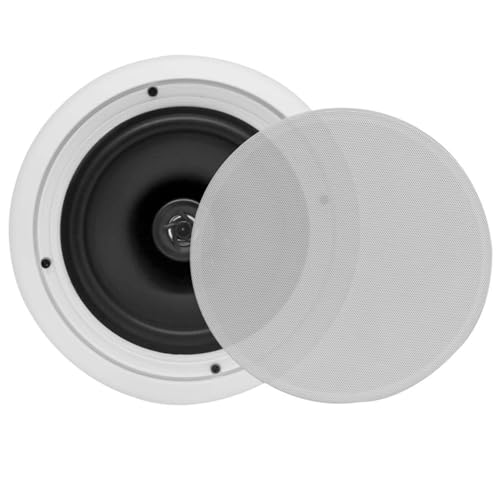
What I noticed first with the Pyle 8 Inch In Wall Ceiling Speakers is that they’re built for filling a room, not for impressing you with tiny hi-fi tricks. The sound comes across as broad and easygoing, which makes them a decent fit for background music, whole-room listening, or a casual TV setup.
I wouldn’t call them especially delicate or revealing, so if you’re chasing that last bit of detail in vocals or acoustic recordings, these aren’t the speakers I’d point you toward. But for everyday use, they do the job without sounding harsh, which matters a lot more than people admit when speakers are living in a wall or ceiling.
They’re the kind of speakers that make more sense when you stop expecting bookshelf-speaker performance from an architectural install. Once I treated them as part of the room instead of a centerpiece, they started making a lot more sense.
02Low-End Weight and Overall Balance
The 8-inch format gives them a little more authority than the smaller in-wall and in-ceiling options I’ve used. There’s enough low-end presence to keep music from sounding thin, especially at moderate listening levels where a lot of flush-mounted speakers start to feel lightweight.
That said, I still wouldn’t rely on them to deliver serious bass on their own. If you want full-bodied movie sound or you listen to bass-heavy music, pairing them with a subwoofer is the move.
What I like is that they don’t overdo the bottom end and turn muddy in the process. The balance stays friendly and forgiving, which is exactly what I want from speakers that are meant to disappear into a wall or ceiling.
03Install and Fit in the Room
This is the part that really decides whether these make sense, because architectural speakers live or die by how painless they are to place. The Pyle units are straightforward in the way you’d hope, with a design that’s meant to blend into the room instead of calling attention to itself.
Once installed, they look clean and unobtrusive, which is the whole point of this style of speaker. I like that they don’t dominate the space visually, especially in rooms where floor space is already spoken for.
They’re best for someone who already knows where they want sound to come from and just wants that sound out of the way. If you’re the type who likes to tweak speaker placement every weekend, in-wall and in-ceiling speakers will probably feel a little too fixed for your taste.
04Everyday Use and Listening Habits
In normal day-to-day use, these are easy to live with because they don’t demand much attention. I can see them working well for kitchen music, den listening, multi-room audio, or a simple home theater setup where convenience matters more than chasing audiophile drama.
They’re also the kind of speakers that make sense when you want sound throughout a room instead of a sweet spot on a couch. That makes them practical for family spaces, where not everyone is sitting in the exact same place or listening as closely as I usually do.
What I’d keep in mind is that they’re more about utility than personality. If you want a speaker that disappears and just quietly does its job, that’s a strength here, not a flaw.
05Who I’d Recommend Them For
I’d point these toward someone building a simple, tidy audio setup and not trying to turn the room into a listening lab. They make the most sense for people who want sound coverage, a clean look, and a straightforward install path.
They’re also a reasonable choice if you’re replacing older in-wall or in-ceiling speakers and want something that fits the same role without making the room feel cluttered. For that kind of use, they’re practical and easy to justify.
If your priority is critical music listening, pinpoint imaging, or the kind of texture that makes you lean forward and notice every layer, I’d keep shopping. But if you want solid, unobtrusive sound that blends into the room and gets used every day, these fit that lane well.