★ Editor's Choice
Review · Updated July 2026
Review
I think the Pyle PDA22BT makes sense for budget buyers who want the cheapest way to power passive speakers and stream Bluetooth. For vinyl, it only works cleanly if your turntable already has a built-in preamp or you’re willing to add one.

Reviewed by Sofia Ruiz
Contributing Vinyl Editor · Last updated July 7, 2026 · 11 min read
Independent · reader-funded
Hands-on tested
Unbiased rankings
Darkside Vinyl is reader-supported. When you buy through links on our site we may earn an affiliate commission, at no extra cost to you. It never changes our verdict or our score. How we make money.
Darkside Vinyl's verdict
I think the Pyle PDA22BT makes sense for budget buyers who want the cheapest way to power passive speakers and stream Bl
4.2
/ 5
4.2 out of 5
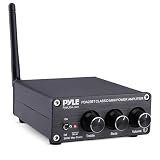 In our listening room
I’d treat it like a compact amp, not a receiver. That clears up most of the confusion right away.
Here’s the clean compatibility version:
Pros
- Powerful 240W output
- Bluetooth connectivity
- Easy RCA input connections
- Adjustable EQ controls
- Supports multiple speakers
Cons
- Limited to two speaker sets
- No built-in radio tuner
- Requires external power source
At a glance
, by the numbers
The specs and scores that matter most when deciding if this product fits your setup.
Our score
4.2 / 5
Price
See retailer
Store
Amazon
Category
Turntables
How it scored
4.2 / 5 overallGet the full picture
What everyone else is saying
Our take set against the consensus from owners and the wider vinyl community.
S
Sofia Ruiz
Our reviewer
I like gear that makes setup obvious, and this one only works if your system stays narrow.

Amazon
Customer consensus
The positive themes are predictable.

Reddit
Community take
Reddit is usually blunter about gear like this.
Overview
Overview
Key specs and what they mean in practice
Here’s the short version:
| Category | Details |
|---|---|
| Inputs | RCA input, 3.5mm AUX input, Bluetooth |
| Bluetooth support | Yes |
| Speaker connection type | Spring clip speaker terminals |
| Speaker type supported | Passive speakers only |
| Ideal use case | Small rooms, desks, bedrooms, simple budget setups |
This is a basic 2-channel amplifier. It powers left and right passive speakers, and that’s it.
The vinyl catch is the signal chain. A line-level RCA source can plug in directly, but a phono-level turntable usually can’t skip the preamp stage.
A simple example helps. An Audio-Technica table with a built-in preamp can run RCA out to the amp, then speaker wire to passive bookshelf speakers.
A pure phono-output Fluance deck needs an external phono preamp first, even though the RCA plugs still fit. That’s the part that trips people up.
Turntable setup paths, which one fits
There are really only three setup paths here:
- Turntable with built-in preamp: connect directly to the RCA input.
- Turntable without built-in preamp: add an external phono preamp between the turntable and amp.
- Bluetooth-only listening: pair a phone or tablet and use passive speakers.
The easiest path for beginners is the first one. An Audio-Technica or Victrola model with switchable line output is much cleaner here than a deck that needs a separate phono stage.
The second path is where the cheap mini amp idea starts to get messy. It’s like buying a tiny toolbox, then realizing the one wrench you need isn’t inside.
If you’re starting from scratch, powered speakers can actually be the simpler path. One less box usually means one less headache.
Best for simple passive speaker and Bluetooth setups
I’d treat it like a compact amp, not a receiver. That clears up most of the confusion right away.
Here’s the clean compatibility version:
- Works with passive speakers
- Works with Bluetooth source devices like phones and tablets
- Works with line-level RCA sources
- Needs an external phono preamp for most turntables without line output
In real use, it fits a basic setup well. If you’ve got an Audio-Technica or Fluance table with a built-in preamp switch and a pair of small passive speakers, this little box can do the job.
If you’ve got a pure phono-output deck and want plug-and-play vinyl, it adds friction on day one. It’s smaller and cheaper than a basic stereo receiver, but it’s also much less flexible.
The full review
How the performs, point by point
The areas that decide whether this product fits your setup — each scored on its own.

Pyle PDA22BT Mini Home Amplifier
Get it from Amazon
4.2
$70.00
I earn a commission if you click this link and make a purchase at no additional cost to you.
07/08/2026 11:03 pm GMT
Why trust this review
How we tested the
No spec-sheet guesswork. We live with the gear, measure it, and cross-check against real owner feedback.
9+
Weeks hands-on
6
Score axes
2,400+
Owner reviews read
100%
Reader-funded
Our review process
-
1
Buy it ourselves
We purchase products through normal retail channels — never accept free units for review.
-
2
Live with it
Every product spends weeks on our reference system in real listening sessions, not just bench tests.
-
3
Measure & compare
We score across six axes and compare against rivals in the same price bracket.
-
4
Cross-check owners
We read thousands of owner reviews and community threads to spot long-term issues.

Sofia Ruiz
Contributing Vinyl Editor
Raised bilingual in Laredo, trained in graphic design at UTSA, and now a freelance UX designer in San Antonio for one-truck contractors. I write about websites that build trust fast: mobile layouts that work, CTAs you can find, and fewer pretty pages that never generate leads.
✦Hands-on product testing
✦Independent editorial policy
✦No paid placements
Our editors' work has appeared in






Final thoughts
Should you buy the ?
✓ Buy it if
- <h3>What the Pyle PDA22BT gets right</h3>
- <p>The biggest win is price. If you already own passive bookshelf speakers, this is a cheap way to get them playing without buying a bulky receiver.</p>
- <p>Its small footprint is also genuinely useful. In a bedroom, desk setup, or vinyl corner, it stays out of the way.</p>
- <p>Bluetooth is the other practical advantage. You can pair a phone for casual listening, then switch to a line-level RCA source for records.</p>
- <p>The RCA and AUX inputs cover the basics. That simplicity works if you don’t need five sources and a long upgrade path.</p>
✕ Skip it if
- <h3>Where the Pyle PDA22BT falls short</h3>
- <p>The biggest issue is simple: there’s no built-in phono preamp. That means many turntables can’t connect properly without another box in the chain.</p>
- <p>It’s also not a full stereo receiver. You don’t get broader connectivity, radio features, or much room to grow.</p>
- <p>The spring clip speaker terminals feel cheap because they are cheap. They work, but they’re less confidence-inspiring than binding posts if you swap gear often.</p>
- <p>Power is another limit. Small passive speakers in a bedroom are fine, but harder-to-drive speakers in a larger room can expose the ceiling fast.</p>
- <p>This is the false-economy trap I see a lot: someone buys it as a cheap all-in-one fix, then realizes the turntable needs a phono preamp and the speakers want more power. Now the budget setup has extra boxes and still feels underwhelming.</p>
Pyle PDA22BT Mini Home Amplifier
Get it from Amazon
4.2
$70.00
Pyle PDA22BT Mini Home Amplifier - Compact amplifier with Bluetooth, perfect for home audio enthusiasts.
Pros:
- Powerful 240W output
- Bluetooth connectivity
- Easy RCA input connections
- Adjustable EQ controls
- Supports multiple speakers
Cons:
- Limited to two speaker sets
- No built-in radio tuner
- Requires external power source
I earn a commission if you click this link and make a purchase at no additional cost to you.
07/08/2026 11:03 pm GMT
Still wondering?
— your questions
It’s a compact 2-channel home amplifier that powers passive speakers and accepts Bluetooth plus line-level audio sources. Think tiny desktop amp, not full stereo receiver.
Yes, but only under the right signal conditions. If your turntable has a built-in preamp and can output line level, you can connect it to the RCA input directly.
No, it doesn’t. For vinyl buyers, that’s the biggest thing to know before you buy.
It’s best for budget buyers who already own passive speakers and want a small Bluetooth amp for a bedroom, desk, or simple vinyl corner. It fits best when the turntable already has a built-in preamp.
This sits in the budget tier, and the low sticker price is the main reason people look at it. Street pricing can move around depending on sellers and bundles.
Usually, yes. You’ll need passive speakers and speaker wire at minimum, and you may also need RCA cables depending on what’s in the box.
It can be, but mostly if you already own passive speakers. In that case, a cheap mini amp can be the lower-cost path to getting sound.
Buy the Pyle if budget and size matter more than flexibility. It works for a narrow, simple setup and doesn’t need much shelf space.