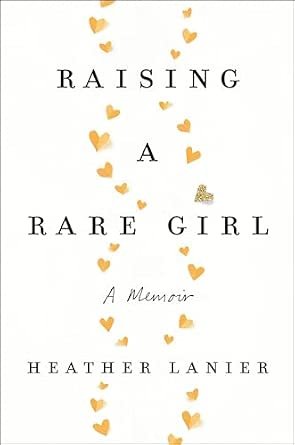
01Narrative Voice and Structure
I came away from Raising a Rare Girl: A Memoir feeling like I’d spent time with someone who was being honest without trying to perform honesty. The writing has a direct, lived-in quality that makes the story easy to trust, even when the emotions get messy.
What worked for me most was the way the memoir moves between memory and reflection without feeling stiff or overworked. It reads like someone thinking out loud in a very controlled way, which gives it a natural rhythm and keeps it from turning into a lecture.
This is the kind of memoir that lands because it doesn’t rush its feelings. I found myself sitting with certain passages longer than I expected, not because they were flashy, but because they felt earned.
There’s a real tenderness running through the book, but it never gets syrupy. The emotional weight comes from specificity, and that makes the heavier moments hit harder than they would in a more polished, distant memoir.
03Character and Family Dynamics
The family relationships are where the book really comes alive for me. The author doesn’t flatten people into heroes or villains, which makes the dynamics feel much closer to real life than to a tidy memoir arc.
I appreciated that the book leaves room for contradiction. People can be frustrating, loving, disappointing, and deeply important all at once, and that complexity gives the memoir a lot of its staying power.
04Writing Style and Readability
The prose is clean and easy to follow, but it still has personality. I never felt like I was fighting through the writing, which matters a lot in a memoir that depends so much on voice.
It’s also the kind of book that rewards reading in chunks or in longer sittings. Either way, the style stays steady, and I never felt like the momentum sagged just because the subject matter got serious.
05Who It Will Work Best For
I’d recommend this most to readers who like memoirs that are emotionally honest and character-driven rather than heavily plotty. If you want a book that feels intimate and reflective, this fits that lane really well.
It’s also a strong pick for anyone who likes family-centered nonfiction that doesn’t oversimplify the people in it. If you prefer memoirs with a sharper literary edge or a more experimental structure, this may feel a little more straightforward than you’d want.