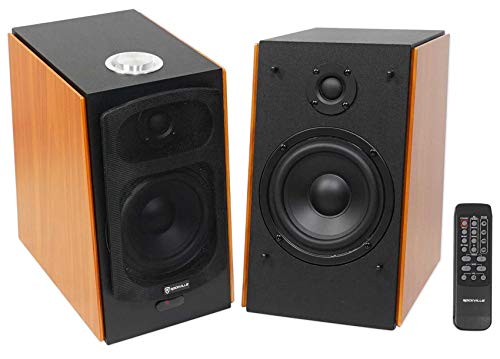
The Rockville HD5 delivers a surprisingly clean sound, especially for those of us who favor nearfield listening. The 5-inch woofers excel in smaller spaces, providing a clarity that allows you to appreciate the details in your vinyl collection without overwhelming your ears. In my experience, the bass is tight and controlled rather than boomy, which is a refreshing change from many budget speakers that tend to overemphasize low-end frequencies.
However, if you’re someone who craves warmth and a more forgiving sound signature, you might find these speakers a bit too clinical. They shine in a monitor-style setup, but if you’re expecting that cozy, enveloping sound, you may want to look elsewhere, like the Edifier R1280DB. Overall, the HD5 is a solid choice for those who appreciate accuracy over warmth.
The build quality of the HD5 feels decent for the price, but it’s not without its quirks. The cabinet is lightweight, which makes them easy to position, but that also means they can be a bit sensitive to vibrations. I’ve found that if you place them on the same table as your turntable, you might run into issues with unwanted resonance, especially at higher volumes.
Setting up the HD5 is relatively straightforward, but there’s a catch: the built-in amplifier doesn’t mean you can skip the phono preamp if your turntable lacks one. I’ve seen plenty of confused vinyl enthusiasts plug in a turntable with only a phono output, only to be met with weak, thin sound. That’s not the speaker’s fault, but it can definitely lead to frustration if you’re not aware of this requirement.
For those with turntables that feature a built-in preamp or a line output, connecting them is as easy as running RCA cables. This simplicity is a major win, allowing you to avoid the clutter of a separate receiver and keep your setup clean. Just remember, if you go the external preamp route, that adds another layer to your setup.
04Connectivity & Features
The HD5 shines when it comes to connectivity, especially with its RCA inputs. This makes it compatible with a wide range of turntables, provided you have the right preamp situation sorted out. I appreciate that I can easily connect my laptop or other audio sources without needing any adapters or extra gear, keeping my desk space tidy.
However, the lack of built-in Bluetooth or digital inputs may be a dealbreaker for those who want a more versatile setup. If you’re looking for a speaker that can do it all, including streaming from your phone, you might feel limited here. But if you’re focused on vinyl and simple audio connections, the HD5 fits the bill nicely.
In my day-to-day use, the Rockville HD5 has proven to be a reliable companion for both vinyl and casual listening. They’re perfect for a small workspace or bedroom where you want to enjoy music without taking up too much room. The sound quality holds up well even during longer listening sessions, which is a plus for anyone who likes to lose themselves in their record collection.
That said, I wouldn’t recommend them for large living spaces or if you’re planning to sit far away from the speakers. The performance really shines when you’re within six feet, and if you’re farther back, the sound can start to lose its body and presence. So, think about your setup before committing to these as your main speakers.
06Upgrade Path / Who It's For
The HD5 is ideal for those who want a simple, compact solution for their vinyl setup without the hassle of additional gear. I see them as perfect for a small bedroom office where you can enjoy records during work or study sessions. The monitor-style sound is great for critical listening, making it easier to appreciate the nuances in your favorite albums.
However, if you’re hoping to expand your system down the line or crave a warmer, more forgiving sound, you might want to explore other options. Brands like Edifier or Mackie offer more traditional home audio experiences that might suit a broader range of tastes. The HD5 is a solid choice, but it’s not the one-size-fits-all solution for every vinyl lover out there.