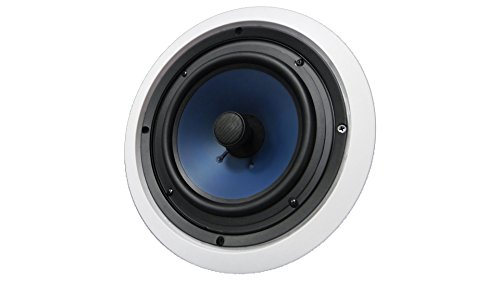
Specs table, and what each spec means in practice
| Spec |
Silver Ticket 82C |
What this means in practice |
| Driver size |
8-inch woofer |
More cone area, usually better room-filling sound than smaller ceiling speakers |
| Tweeter |
1-inch silk dome tweeter |
Smoother treble than many cheap budget tweeters |
| Tweeter aim |
Pivoting tweeter |
Helps direct highs toward seating, but won't fully fix ceiling-based imaging |
| Impedance |
8 ohms |
Easy load for most stereo amps and home theater receivers |
| Sensitivity |
Around 89 dB |
Fairly receiver-friendly, doesn't need huge power for normal listening |
| Frequency response |
Model-dependent published range |
Useful as a rough guide, not a promise of deep bass in your ceiling |
| Cutout size |
Check current product listing |
Decides whether it fits your existing opening |
| Mounting depth |
Check current product listing |
Tells you if your ceiling cavity has enough clearance |
| Recommended use |
TV, background music, surrounds, Atmos |
Better fit for mixed-use rooms than vinyl-first stereo setups |
The impedance and sensitivity are friendly enough for a basic home theater receiver. You don’t need exotic gear here, just honest power and clean wiring.
Frequency response numbers look nice on product pages, but don’t overread them. In a ceiling speaker, room construction often changes bass more than the published range suggests.
Install-fit checklist for retrofit ceilings
Before buying, check five things: cutout diameter, mounting depth, joists or obstructions, speaker wire route, and receiver power.
If you’re adding these to a turntable system, confirm your signal chain too: turntable to phono preamp if needed, then receiver, then speaker wire to the ceiling pair.
I’ve had jobs where the speaker choice looked fine on paper, then a joist or shallow cavity killed the plan. Measure the ceiling first and shop second. It’s less exciting, but it saves you from drywall regret.
Silver Ticket 82C vs bookshelf speakers
| Use case |
82C in-ceiling |
Bookshelf speakers |
| Vinyl listening |
Compromise |
Better choice |
| TV and casual room coverage |
Strong fit |
Good, but more visible |
| Background music |
Strong fit |
Fine, less even in open rooms |
| Setup simplicity |
Harder |
Easier |
| Reposition later |
No |
Yes |
If the fit and wiring check out, the last question is simple: does this tradeoff match how you actually listen?