01Setup and first impressions
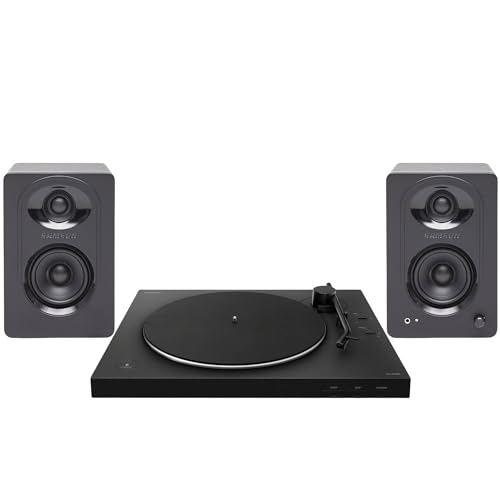
The Sony PS-LX310BT is the kind of turntable I’d point a beginner toward when they want vinyl to feel easy instead of fussy. If you’re coming from a suitcase player, this is a huge step up in both how it works and how it feels in a room.
What I like most is that Sony clearly built this for people who just want to play records without turning the hobby into a weekend project. It’s the sort of deck that makes sense if you want to listen tonight, not spend an hour learning the difference between a phono stage and a line input.
The fully automatic start and stop is a bigger deal than it sounds. For daily use, it takes away a lot of the intimidation, and that makes it easier to actually use the thing instead of treating it like fragile gear you’re afraid to touch.
02Bluetooth and wired connectivity
The Bluetooth output is genuinely useful here, especially if you live in an apartment or you’re setting this up in a casual room where running cables is a pain. It gives the Sony a nice flexibility that makes sense for modern listening, not just vinyl purist setups.
That said, Bluetooth is convenience first, sound quality second. It’s perfectly fine for relaxed listening, but if you’re comparing it against a solid wired setup, the wired path still has the edge in clarity and punch.
I also appreciate the built-in phono preamp because it keeps the setup simple. You can hook it straight to powered speakers or a basic receiver without needing extra boxes, which is exactly the kind of plug-and-play experience a lot of first-time buyers are after.
03Everyday use and convenience
This is where the PS-LX310BT earns its keep. The automatic operation makes it feel friendly in a way a lot of entry-level turntables don’t, and that matters when you’re actually living with it day to day.
I’d call it a safer, cleaner step up from cheap all-in-one players with built-in speakers. Those usually get you into vinyl with a lot of compromises; this at least gives you a proper separate turntable setup without making the process complicated.
It’s also the sort of deck that works well in real life, not just in a “starter system” diagram. I can see it fitting into a bedroom, office, or living room where the goal is simple listening and not constant tweaking.
04Sound quality and stock tuning
The Sony sounds practical, which is both the good news and the catch. It’s tuned to do the job cleanly and politely, but it doesn’t really chase the more engaging, tweakable character I’d expect from enthusiast-focused tables.
For casual listening, that’s absolutely fine. It doesn’t make records sound broken or dull in a disastrous way; it just doesn’t have the kind of lively, open presentation that makes you immediately start thinking about upgrades and experiments.
If you mostly want records to play reliably and sound decent through Bluetooth or powered speakers, it gets there without drama. If you’re already the kind of person comparing cartridge profiles and phono stages, you’ll probably start hearing the limits pretty quickly.
05Upgrade path and long-term fit
This is the part where I’d be honest: the Sony’s upgrade path is limited compared with manual turntables from Fluance and other brands. It’s built around convenience, and that convenience comes with tradeoffs in how far you can take it later.
I think a common mistake is buying this for the person you might become six months from now, not the person you are today. If you’re already reading about stylus swaps and external phono stages, the Sony can start to feel limiting faster than you expect.
It’s not a great fit if you want to experiment with cartridges beyond the stock setup or build a more hands-on vinyl system over time. For that, I’d look at something with more room to grow, even if it means giving up some of the Sony’s beginner-friendly ease.
The PS-LX310BT makes the most sense for someone who wants an easy, polished vinyl setup without extra boxes or a bunch of setup anxiety. It’s especially appealing if you want Bluetooth for casual listening but still want the option to go wired later.
Where it gets tricky is value. If it lands too close to an Audio-Technica AT-LP70XBT or a Fluance RT81, I start thinking harder about what kind of buyer I’m talking to, because those alternatives can make a stronger case depending on whether you care more about convenience or future flexibility.
So my take is simple: this is a very good “right now” turntable. If you want the easiest possible path into vinyl with modern convenience and minimal fuss, Sony gets a lot right; if you already know you want a more ambitious long-term setup, I’d keep shopping.