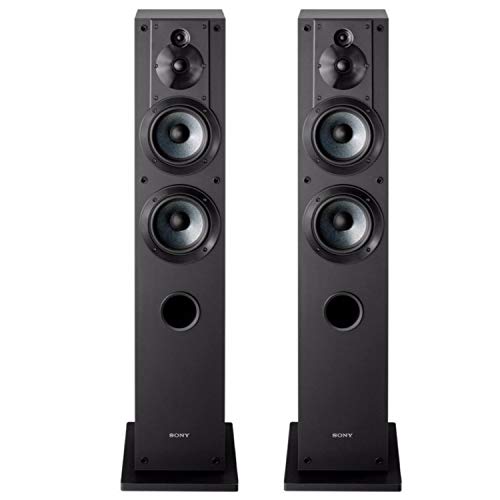
Specs and design, what they mean in practice
The SS-CS3 is a passive 3-way bass reflex tower speaker. It uses a 5.12-inch woofer, a 1-inch tweeter, and a 0.75-inch super tweeter.
In practice, that means you should expect a fuller and more spacious sound than small speakers can usually manage. It doesn't mean you'll get room-shaking bass just because the spec sheet says 45 Hz to 50 kHz.
The bass reflex cabinet helps add low-end weight, but it also makes placement more important. Give the rear port some space if you can.
The 6-ohm impedance and 88 dB sensitivity make these reasonably receiver-friendly, but not foolproof. Clean power matters more than chasing giant watt numbers.
Turntable compatibility and amplifier needs
This is where buyers get tripped up most often: the Sony SS-CS3 Floor-Standing Speakers are passive, so they always need an amplifier or receiver.
Your signal chain should look like this:
- Turntable with built-in phono preamp → stereo receiver or amp → SS-CS3
- Turntable without built-in phono preamp → external phono preamp → stereo receiver or amp → SS-CS3
If you have a Fluance turntable without a built-in preamp, these speakers won't work on their own. You need that phono stage and amplification in the middle, or nothing plays.
An AV receiver can work fine, especially if you're also using the system for TV. For a vinyl-first setup, I usually prefer a stereo receiver.
Bookshelf vs tower for vinyl listening
Towers aren't automatically better. They're better when the room and system support them.
| Factor |
Bookshelf speakers |
Tower speakers like SS-CS3 |
| Room size |
Better for small rooms |
Better for small to medium rooms with space |
| Bass output |
Usually lighter |
Fuller, with more presence |
| Placement flexibility |
Easier |
Less forgiving |
| Visual footprint |
Smaller on furniture, larger with stands |
Taller, more obvious |
| Upgrade path |
Strong in passive systems |
Also strong in passive systems |
If you live in a small apartment with furniture tight to the walls, the Sony SS-CS5 or another passive bookshelf speaker may actually work better. In a medium living room, the SS-CS3 has more room to show why towers exist.